


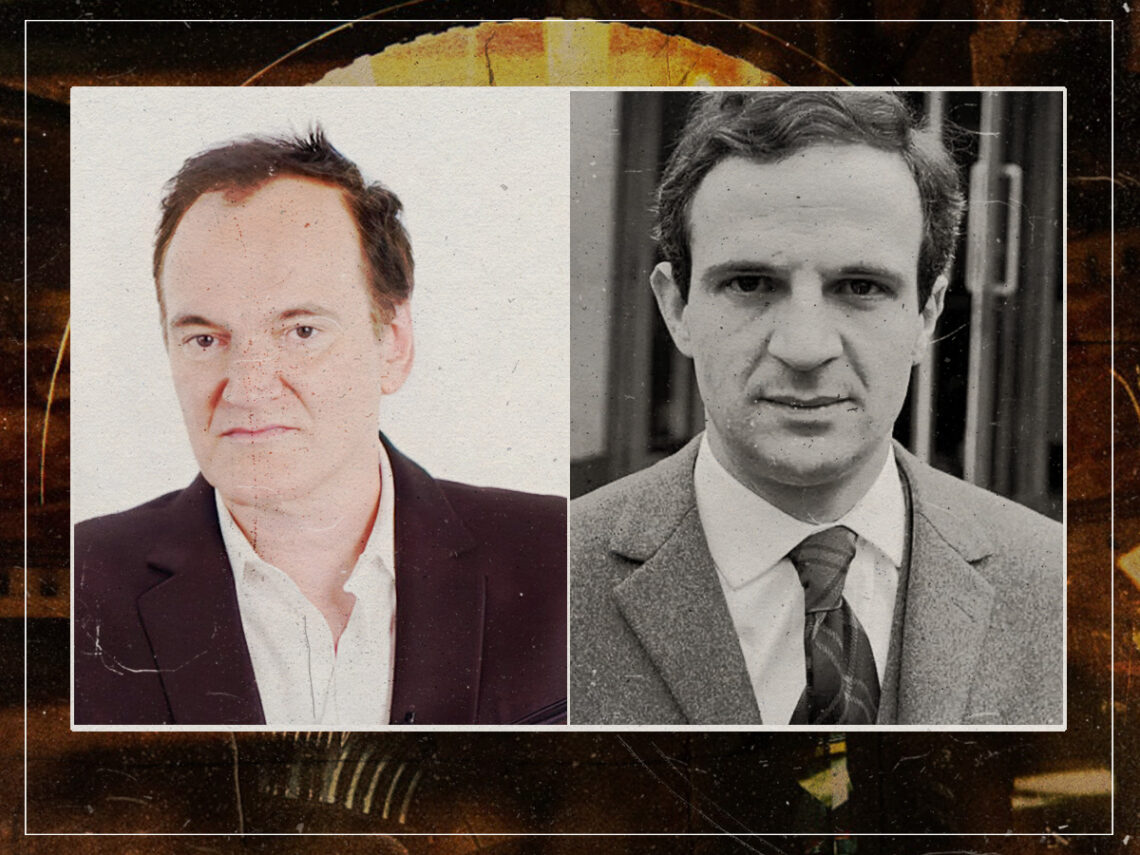
“Abysmal”: Quentin Tarantino’s big problem with Francois Truffaut

As soon as Quentin Tarantino released his first film, Reservoir Dogs, in 1992, he was instantly praised for utilising a distinctive style that felt wholly his own. His use of highly aestheticised violence, witty, irreverent dialogue and flashy filming and editing techniques, such as extreme close-ups, came to define Tarantino as a filmmaker, and he has brought these features to his subsequent movies.
In fact, the filmmaker possesses such an idiosyncratic style that the term ‘Tarantino-esque’ has been coined by film fans to discuss other pieces of media or music that seem as though they could’ve come from the brain of Quentin himself. Thus, many critics have labelled Tarantino as one of the best examples of a modern auteur. The idea that certain directors act as the main author of their work – threading common themes and images through each of their movies – is incredibly relevant to Tarantino’s practice as a filmmaker.
Auteur theory was significantly devised by François Truffaut, the French New Wave filmmaker known for making movies such as The 400 Blows and Jules and Jim. He remains one of France’s most lauded filmmakers, his legacy as one of the most honest and human directors of his generation living on today. His influence can be seen in the work of directors ranging from Steven Spielberg to Xavier Dolan and Wes Anderson, but certainly not Tarantino.
The Pulp Fiction director only likes one Truffaut movie, The Story of Adele H., a later work. For Tarantino, the French filmmaker is highly overrated, going as far as calling him (via Sight and Sound) “a very passionate, bumbling amateur.” He also labelled his movies “abysmal” and “just awful,” believing that Truffaut merely copied his hero, Alfred Hitchcock, whom the French filmmaker believed to be one of the ultimate auteurs.
It is baffling that Tarantino could find Truffaut – a champion of auteurship – disagreeable. Every movie that Truffaut made was full of humanity, humour and style, pioneering a new style of filmmaking alongside his contemporaries, such as Jean-Luc Godard and Agnes Varda. The innovative approach to filmmaking championed by Tarantino several decades later would not have been possible without the influence of the French New Wave, which Truffaut helped spearhead with The 400 Blows.
The film uses techniques such as handheld, on-location filming, unusual editing, and atypical filming practices such as POV shots and fourth wall breaks. With the success of The 400 Blows, Truffaut helped liberate cinema from its reliance on studio dominance and lack of originality during the late 1950s, giving way to a wave of pioneering new filmmakers in the following decade.
Without Truffaut, modern cinema would look very different – the fact that Tarantino can so easily disregard Truffaut’s influence is bizarre. Sure, not every movie he made was amazing, but his legacy cannot be disputed.

Never Miss A Take
The Far Out Quentin Tarantino Newsletter
All the latest Quentin Tarantino content from the independent voice of culture.
Straight to your inbox.