


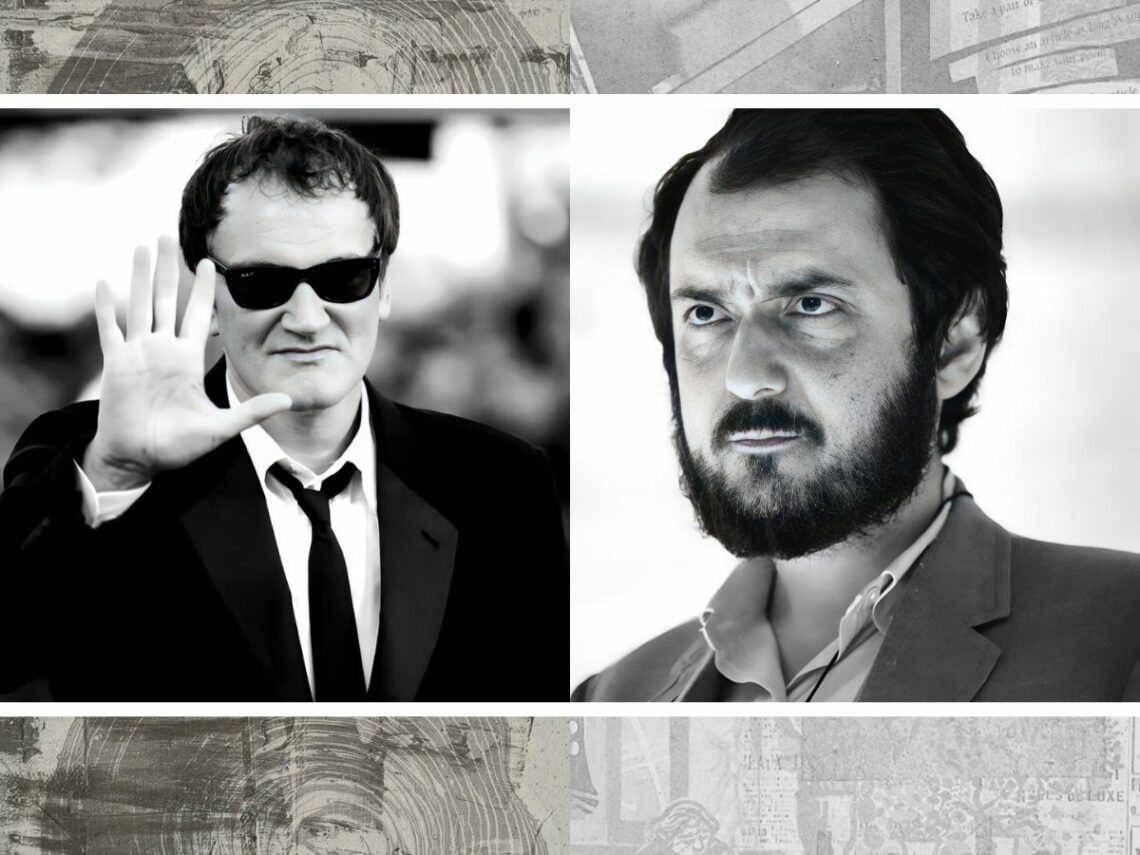
Quentin Tarantino explains what makes Stanley Kubrick so “vital” to cinema

After making his magnificent directional debut with Reservoir Dogs in 1992, Quentin Tarantino struck his creative peak with Pulp Fiction, thus cementing his status as a serious player in Hollywood’s brutally competitive game. As his career progressed, Tarantino established a distinct lineage of dark comedy, exaggerated violence, and a recurring ensemble of A-listers. Whether he’s exploring tales of vengeance in the Wild West or satirising Hollywood’s Golden Age, his movies never fail to entertain.
While Tarantino’s approach to filmmaking is undeniably unique – so much so that he has become an inspiration to a new generation of filmmakers – he readily acknowledges the invaluable influence of the giants on whose shoulders he stands. Born in 1963, Tarantino had the privilege of beholding the groundbreaking milestones achieved by legendary filmmakers such as Stanley Kubrick, Francis Ford Coppola, Martin Scorsese, and Steven Spielberg as they rolled out on the big screen.
As possibly the world’s most ardent movie geek, one might assume that Tarantino grew up with 2001: A Space Odyssey posters on his wall and reveres Kubrick as the unbeatable height of cinema. After all, most other film buffs seem to. However, the West Coast auteur was actually never particularly moved by Kubrick’s foundational triumphs. He was much more interested in the work of Sergio Leone, whose film The Good, the Bad, and the Ugly was the “greatest achievement in the history of cinema”.
Speaking to Rolling Stone in 2003, around the time Kill Bill: Volume 1 arrived in cinemas, Tarantino discussed his comparatively sparse output compared to his prolific contemporaries. As an auteur, he spends a lot of time creating his narratives, devising soundtracks, and corralling the perfect cast. In contrast, many directors rely on others to take on screenwriting and production duties.
Tarantino’s approach is considered by some as risky, given that he pools so much time and effort into each project. “Risk in one form or another is all part and parcel of art. You’ve got to risk something. I actually think that’s what robs the vitality of a lot of the major auteur directors. I’ve watched the Movie Brats of the ’70s go gray and get lethargic,” he said. “They make one film every year or year and a half. And, like, usually you watch those audiences get smaller and smaller and smaller.”
Elaborating on his point, Tarantino discussed how Kubrick was one of the few late 20th-century directors who didn’t sell out by valuing volume over quality. “I’m not even the hugest Kubrick fan,” he admitted, “But his shit didn’t get old. And I think the reason he was so vital was because he didn’t make a movie every two years. He made them when they mattered to him. That’s the problem I see with directors from the ’70s.”
Tarantino observed that directors like Scorsese and Coppola have “those first twenty years that are pretty fuckin’ rock ‘n’ roll,” with masterpieces like Taxi Driver and Apocalypse Now. He claimed such directors burn out due to excessive volume. “You have the second twenty years when they’re making excuses, making a lot of apologies for a lot of their work,” he said. “And I never want that. I want the movies I do at the end of my life to be as good as the movies I did at the beginning of my life.”
Tarantino has long claimed that his career would amass just ten directional credits. With both volumes of Kill Bill counting as one movie, he has just one title left before retirement. After working on The Movie Critic for several months, the director announced in April 2024 that he had abandoned the script to work on a different story entirely.
If Tarantino didn’t have the ten-movie rule, he likely would have stuck with The Movie Critic. “I’m an entertainer. I want to leave you wanting more, you know, and not just work, and I don’t want to work to diminishing returns,” he explained in a 2022 interview with CNN, touching upon the above sentiments regarding prolific peers.
Concluding: “I don’t want to become this old man who’s out of touch when already I’m feeling a bit like an old man out of touch when it comes to the current movies that are out right now.”

Never Miss A Take
The Far Out Quentin Tarantino Newsletter
All the latest Quentin Tarantino content from the independent voice of culture.
Straight to your inbox.