


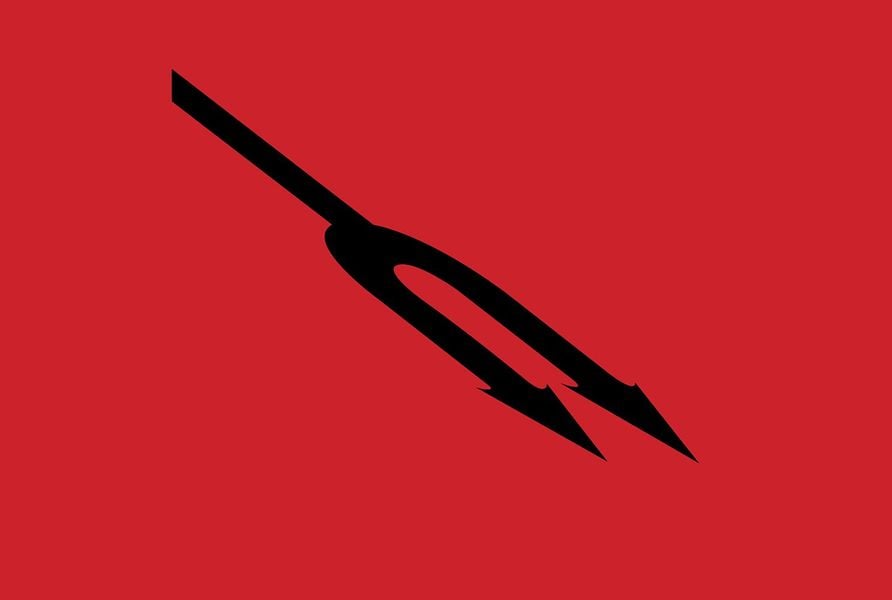
Queens of the Stone Age and ‘Songs for the Deaf’ at 20

It starts like a joke: an audibly confused speaker asking, “Huh, what?”, followed by a heartbeat that’s way too similar to the beginning of The Dark Side of the Moon. Perhaps because it was so silly, ‘The Real Song for the Deaf’ wasn’t actually the first song on the third Queens of the Stone Age record, Songs for the Deaf. If you bought the CD, you had to rewind the disc to the pre-gap to hear the blur of noises that acts as an intro to ‘You Think I Ain’t Worth a Dollar, But I Feel Like a Millionaire’.
When you listen to Songs for the Deaf today on streaming services, it’s a solid two minutes before you get to any music at all. You also have to wade through a car door opening, an engine revving, and a brief fake radio ad before Dave Grohl’s drums, Josh Homme’s guitar, and Nick Oliveri’s bass finally come crashing in for the first time. When they do, you’re off and running on one of the best hard rock road trips ever put to tape.
When Homme and Oliveri’s original band, stoner metal gods Kyuss, split for good in 1995, Homme was left to fend for himself. After a brief spell as a touring guitarist for Screaming Trees, Homme decided to lead his own project, gathering together some of his favourite musicians to collaborate with him in the middle of the California desert. Eventually, when it came time for QOTSA to settle on a solid lineup, Homme tapped Oliveri and Screaming Trees frontman Mark Lanegan as the only other stable members.
A succession of drummers and guitarists filtered in and out of the band’s second LP, Rated R, and the band quickly gained a reputation for sludgy riffs and drug-fueled antics. One notable fan was former Nirvana drummer and current Foo Fighters leader Dave Grohl, who had befriended Homme and Oliveri while they were still in Kyuss.
Grohl was experiencing his own difficulties with Foo Fighters at the time: the recording of their fourth album, One By One, was hampered by infighting and creative tensions, especially between Grohl and Taylor Hawkins. Grohl was having difficulty fully giving up the drum stool, so when Homme extended an invitation to play on Songs for the Deaf, Grohl enthusiastically accepted. For a while, it appeared as though Grohl was going to break up Foo Fighters in order to play with Queens of the Stone Age full time.
Grohl’s hard-hitting style perfectly complimented the low rumble of Homme and Oliveri’s guitars. Over the top came Lanegan, whose signature gravelly drawl elevated songs like ‘Song for the Dead’ and ‘God is in the Radio’. The quartet hunkered down to create what would become the signature QOTSA sound: dry drums, detuned guitars, molten riffs, and aggressively sun-scorched vocals.
Helping bring the album’s sound to life were a revolving door of diverse musicians. First and foremost was the producer and engineer Eric Valentine, the man responsible for Grohl’s drum separation that became an iconic element to Songs for the Deaf. Also there to help flesh out the album was guitarist Alain Johannes, keyboardist Natasha Shneider, fellow desert rock legend Chris Goss, sisters Paz and Ana Lenchantin, and Ween co-leader Dean Ween.
Still, the majority of Songs for the Deaf rests of Homme, Oliveri, and Grohl’s collective shoulders. The maniacal fury of ‘Six Shooter’ and ‘Gonna Leave You’ finds the band at their most intense, while Homme was able to show off his melodic chops for the first time on radio-friendly singles like ‘No One Knows’ and ‘Go With the Flow’. When it came time to return back to aggressive riffing, ‘Song for the Deaf’ and ‘God is in the Radio’ without sacrificing a newfound swing and swagger that the unit fell into.
Songs for the Deaf is an unrelenting hour of punishing riffs, unrelenting energy, and surprising catchiness. It was truly lightning in a bottle, especially considering how quickly it disappeared – Grohl returned to Foo Fighters, Lanegan took a step back, and Homme eventually fired Oliveri. Homme had found the signature sound of Queens of the Stone Age and decided to largely go it alone, bringing in more sympathetic minds like Troy Van Leeuwen and Joey Castillo who could augment Homme’s vision without running interference.
That makes Songs for the Deaf less an accurate summation of Queens of the Stone Age and more a portrait of a band at its fleeting peak. Although Homme would continue to craft incredible rock music for years to come, QOTSA never sounded as exciting, as dangerous, or as vital as they did on Songs for the Deaf. 20 years of hindsight only confirms that the album was a singular moment in time, one that found the best in all involved parties. The end of the road was quick for this version of Queens of the Stone Age, but they got one truly classic record out of their brief union.
