


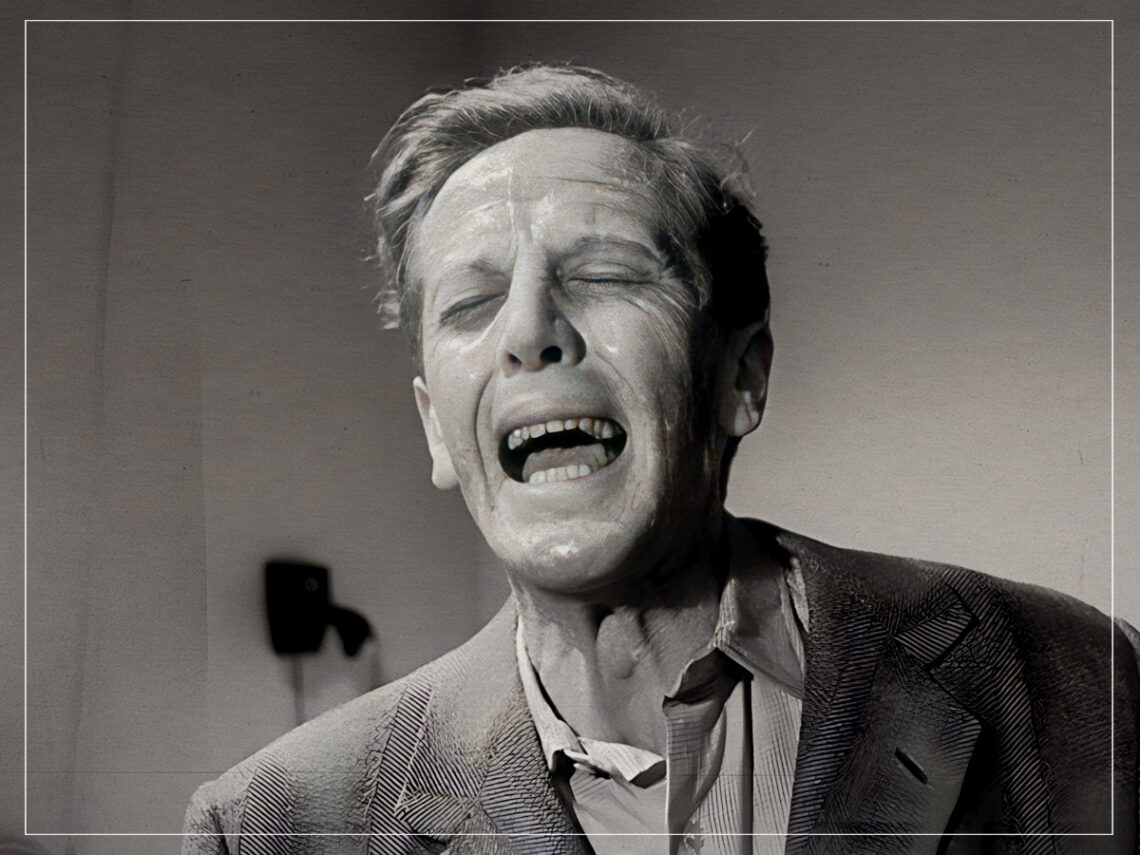
‘The Quatermass Xperiment’: the remake that became Britain’s most influential sci-fi movie ever

In 1953, the BBC aired a science-fiction serial that entranced the nation of Britain. It was the first of its kind, and it was such a raging success that an enterprising movie producer quickly snapped up the rights to turn the story into a feature film. Two years later, that movie raked in money at the UK box office and, in the process, helped give an identity to one of the most iconic movie studios the British Isles has ever seen. Even more impressively, the film crossed the water to the US, becoming Britain’s most influential sci-fi film ever.
When the BBC’s Head of Television Drama, Michael Barry, looked at the schedule for summer 1953, he saw something he didn’t like: nothing. A gap of six Saturday nights in a row needed to be filled with a serial, so he tasked one of the company’s screenwriters with filling that gap. Nigel Kneale had always been fascinated by the idea of science going wrong, so he wrote The Quatermass Experiment, the tale of the fictional British Experimental Rocket Group’s first manned flight into outer space. Two crew members are missing when the craft returns to Earth, and the third begins transforming into a terrifying alien creature. Professor Bernard Quatermass and Scotland Yard Inspector Lomax are forced to team up to prevent the mutated crewman from destroying the world.
Quatermass was the BBC’s first adult science-fiction drama, performed live at the Alexandra Palace studio in London. By the time the sixth and final episode aired, nearly five million people were watching. To put that into context, only a year before Quatermass, the entire television audience in the UK was four million, and in March 1953, it was estimated that the BBC’s average evening audience was 2.25m. By anyone’s standards, Quatermass was a phenomenon.
One of the five million Quatermass viewers was Hammer Films producer Anthony Hinds, who immediately knew the story would make a great film. He contacted the BBC only two days after the finale aired to ask about the status of the rights. As Kneale was a BBC employee, he didn’t receive a fee for the rights being sold to Hammer for a £500 advance, and this would stick in his craw until the company begrudgingly paid him £3,000 in 1967 to officially recognise his creation of Quatermass.
Hammer wasn’t known for horror films during this period, but Hinds knew an opportunity when he saw one. The BBC was afraid that a movie adaptation would be branded with the dreaded “X” certificate by the BBFC, which would mean only those older than 16 could see it. Hinds, though, saw this as the perfect marketing opportunity, as it would make the film seem dangerous. He even changed the title to The Quatermass Xperiment to exploit the salacious “X” rating.
Once again, Quatermass was a roaring success in the UK, this time at the box office. Interestingly, though, when it was shown in the US, it had another title change. The Creeping Unknown was shown as the second part of a double bill with the Gothic horror movie The Black Sheep and was so popular that United Artists immediately commissioned a sequel. Two years later, Quatermass 2 hit cinema screens, again produced by Hammer and directed by Val Guest, before Quatermass and the Pit followed in 1967.
The success of its Quatermass films helped cement Hammer’s reputation as a producer of horror movies, and the studio is still synonymous with that genre today. The films also reached a much wider audience than the BBC’s serial. Kneale’s biographer Andy Murray noted that several generations of sci-fi and horror creatives have spoken in glowing terms about Quatermass’s influence on them.
“The likes of Stephen King, Joe Dante, John Landis and Dan O’Bannon grew up watching them and adored them,” Murray told the BBC in 2022. “There’s what looks suspiciously like a nod to the Quatermass and the Pit film at the climax of Steven Spielberg’s Raiders of the Lost Ark. In Mexico, Guillermo del Toro was first exposed to Nigel Kneale through the Quatermass films, too.”
John Carpenter is also an avowed Quatermass devotee. In fact, when he and Joe Dante were first putting together Halloween III: Season of the Witch, Dante hired Kneale to write the script based almost entirely on the love he and Carpenter had for Quatermass. In the end, the three men all walked away from that movie over creative differences with producer Dino De Laurentiis, but it didn’t stop Carpenter from saying The Quatermass Xperiment “had an enormous, enormous impact on me – and it continues to be one of my all-time favourite science-fiction movies.”
In addition, Murray believes there are traces of Quatermass throughout British television history—most notably in Doctor Who, The Avengers, and Black Mirror—while American shows like The X-Files and Andromeda also owe it a debt. That level of influence over generations isn’t bad for a sci-fi serial that was only commissioned because there was a hole in the BBC’s summer schedule.
