


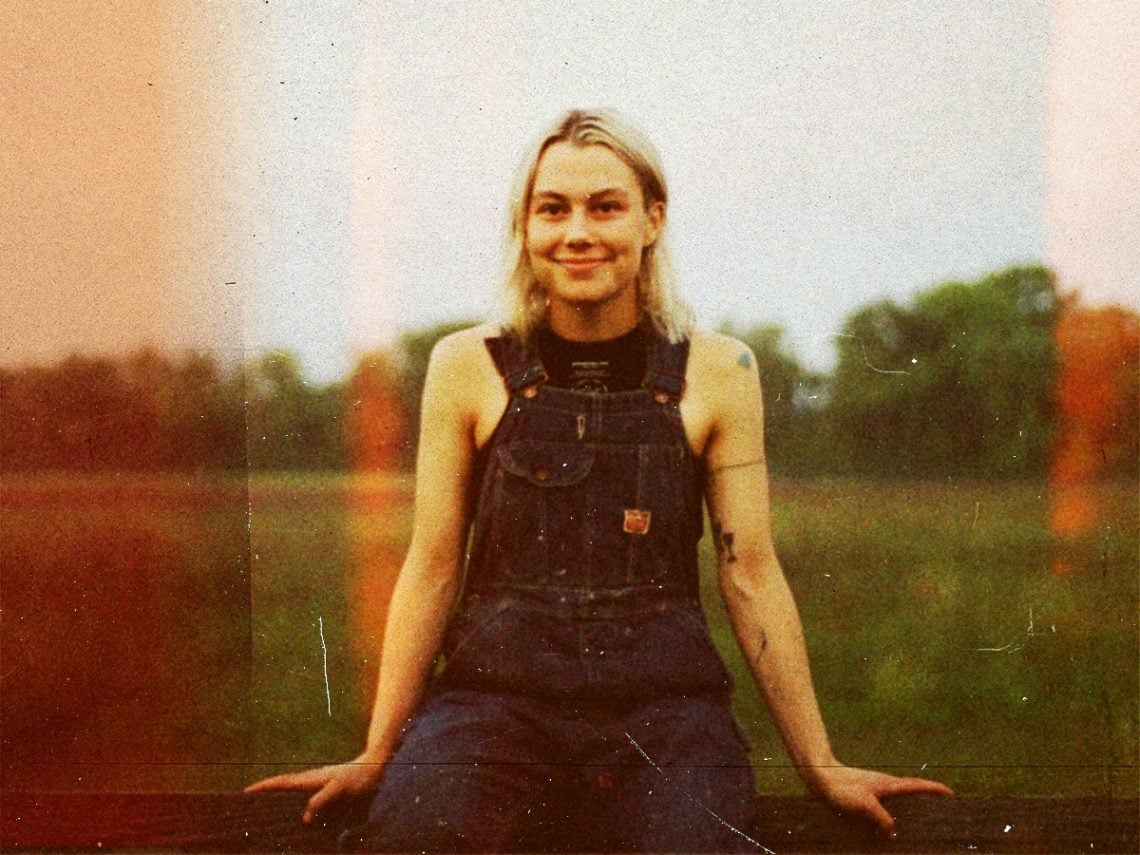
‘Punisher’: Phoebe Bridgers’ complex contemplation of fandom and fame

Fame is a strange beast. Especially for artists, in a world where art almost always demands a level of vulnerability on the maker’s behalf, notoriety becomes an odd thing, at once both intoxicating for the person who has always dreamed of making a name for themselves but often terrifying for the person under that, the deeper inner self. Since the dawn of fame, and by that I’m talking the dawn of modern celebrity and fan culture, the issues it brings along with it have been recycled back into the art in a fascinating cycle. Art, notoriety, weirdness, art, notoriety, weirdness, art… and so on. Phoebe Bridgers’ ‘Punisher’ follows that spiral, but with an even more meta caveat.
Because what that cycle doesn’t account for is a fact that often gets lost or forgotten when a person ascends from a mere mortal to this new tier the world puts celebrities on. The fact is that before all this, Phoebe Bridgers was a fan. So too was Bob Dylan, writing to his hero Woody Guthrie trying to get his attention, or Prince near enough hounding Joni Mitchell. There is a long list of stories; Patti Smith obsessing over Jimi Hendrix or Keith Richards, Lana Del Rey jumping through hoops for Joan Baez, The Beatles freaking out over Elvis only to be let down by him.
In the heart of every idol, there is a kid who loves music. That’s how this goes. A person doesn’t stumble into a career as a musician without first being deeply inspired by the world of another, becoming a huge fan of them, and seemingly obsessing to the point where they decide to try their hand at making something themselves. It’s one of the most beautiful things about art and how it’s passed down through these lineages of influence. But then there comes a splinter where the beauty of fan culture meets the bleakness of fan culture.
Passed down inspiration is one thing. Fans surrounding hotel rooms, stalking people, grabbing at their bodies on stage, hounding them for more time, cornering artists with heavy personal stories they demand to share; that’s a whole other thing. The weirdness in Phoebe Bridgers life is that she’s more than aware of both because she was both, and has now witnessed both.
Bridgers has written and spoken a lot now about the strangeness of fan culture. “Who do you think you are? / Who do you think you I am? / What do you wanna say? / What do you think will change? / Maybe I’m afraid of you,” her band Boygenius sing at their fans on ‘Bite The Hand’, a track directed at the type of fans that have made the band feel deeply uncomfortable, like people who shared photos of her in an airport with a new boyfriend while she was on her way to her late-father’s funeral. Bridgers especially has never been shy about calling these people out, talking to them via GQ when she said simply, “I fucking hate you, and I hope you grow the fuck up”.
But at the same time, she kind of gets it; and that’s what ‘Punisher’ deals with. “I did use to do that. I would come up to people and ask for a picture. I hung out at the bottom of the stairs for James Blake at the Troubadour where there is no other exit. I was like, ‘He’s trapped, but he’ll be glad to talk to me’”, she explained to Stereogum, adding as a splinted, “And now it’s happened to me.”
That’s what ‘Punisher’ means; it’s a slang term used to describe a fan who is so obsessed with an artist and is always around to the point of it feeling like a punishment to the person on stage. It’s a fan who’s too enthusiastic and loses sight of the line between being appreciative of the artist and being exhausting.
On the track, Bridgers is both. “What if I told you I feel like I know you / But we never met?” she sings about her own personal hero, Elliott Smith, sounding much like the kind of fans she questions. While contemplating her own deep connection to Smith, her desire to have met him and the importance he holds in her life, the lingering idea of a ‘Punisher’ taking the shape of Bridgers and also of Bridgers new life and understanding as someone now famous and now aware of how fan culture can make a person feel, the track becomes a complex two-sider where the artist is the fan and the famous.
