


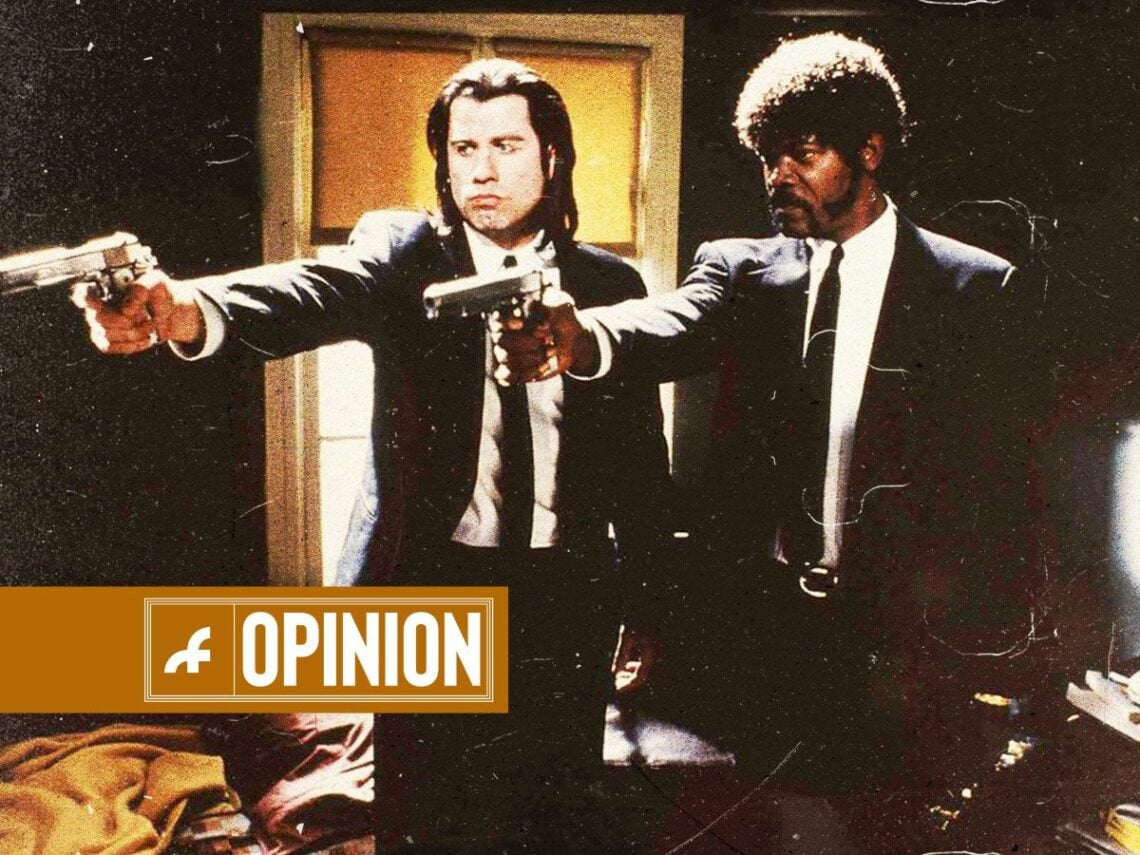
How ‘Pulp Fiction’ killed indie cinema

Next year will mark 30 years since the sophomore feature from Quentin Tarantino was released. Pulp Fiction is so ingrained in our consciousness, so deeply embedded in our pop culture, that it seems hard for us cinephiles to imagine a world without it. It feels like there have been posters of Uma Thurman on walls for as long as there has been cinema (or walls). Nevertheless, the release of Pulp Fiction in 1994 marked a monumental turning point in independent cinema that has changed it forever since. In fact, his audacious masterpiece sent such powerful shockwaves rippling through the industry that it damn near well killed indie cinema altogether.
In the years leading up to its release, independent cinema was a haven for diverse voices and unique, experimental storytelling. They were marked by their creative freedom, their willingness to take risks and their indifference to box office figures. An independent film was considered ‘commercial’ if it managed to break even. Since the collapse of the ‘New Hollywood’ age in the 1970s, where studios lumped tens of millions of dollars into director’s laps and more or less left them to it, cinema had separated into two very definitive categories. Christine Vachon, a trailblazing indie producer in the 1990s who worked with the likes of Harmony Korine and Todd Haynes, explained in Interview magazine that “there were Hollywood movies, and then there were aggressively anti-narrative films.”
However, Pulp Fiction changed that. Drenched in pop culture references and gratuitous violence, the film’s non-linear narrative was lauded as ground-breaking and set a new benchmark for independent cinema. It was unique and edgy, a strange hybrid of experimental indie cinema that leaned proudly and unashamedly into mainstream sensibilities. This leads us to the most important fact: it was commercially successful. Fuelled by the success of Reservoir Dogs, Tarantino had his new script optioned and partly financed by Miramax, who, seeing as they weren’t a studio, were considered independent. Pulp Fiction received a budget of $8million. It grossed $214m worldwide.
The film’s financial success marked the beginning of a seismic shift in the industry. Major studios, which had previously dismissed independent films, suddenly began to take note. Not only did Pulp Fiction showcase the potential for creative storytelling, but it also revealed the potential for profits in the independent scene. To top it all off, it went ahead and won both the Palme d’Or at Cannes and the Academy Award for ‘Best Screenplay’.
Suddenly, mainstream Hollywood wanted a slice of the pie. The major studios began to invest in independent films – and in the process, began to exert their influence and control over them. This shift led to an identity crisis for independent cinema. In their quest to replicate the success of Pulp Fiction, filmmakers began to compromise on the originality and authenticity that were once the hallmarks of indie films. In doing so, they altered the essence of what it meant to be ‘indie’.
In the aftermath of Pulp Fiction, the independent scene began to resemble its big-budget counterparts. The studios’ influence diluted the creative freedom that had once defined indie films, turning them into yet another profit-making mechanism. Tarantino had demonstrated beyond reasonable doubt that a cheap, weird, narratively fractured film could pull in x25 what it cost. The question directed at all filmmakers seeking funding seemed to be, “Well, why can’t you?”
James Mangold, known now for directing huge studio hits like Logan, Ford vs Ferrari and Indiana Jones and the Dial of Destiny, recalls the atmosphere at the time. Quoted in the book Down and Dirty Pictures, he remembers trying to get his next film made following 1997’s Cop Land. Approaching Miramax to see if they’d support it, he was rebuked for not being more like Tarantino: “Quentin made this goddamn company what it is today!”
Pulp Fiction didn’t outright murder indie cinema, but it did spark a transformation. It brought it into the mainstream, but in the process, it caused the independent scene to lose some of its original spirit – and made it significantly harder for emerging filmmakers to catch the same break. Tarantino’s success story started as a source of inspiration, a glimpse into the possibilities of making authentic films for you and you alone. It became rapidly clear, however, that his success came at everyone else’s cost. Almost three decades later, as we look back on the legacy of Pulp Fiction, we’re reminded of its bittersweet impact on the independent landscape – a world it helped shape and define, but also, in some ways, a world it forever changed.

Never Miss A Take
The Far Out Quentin Tarantino Newsletter
All the latest Quentin Tarantino content from the independent voice of culture.
Straight to your inbox.