


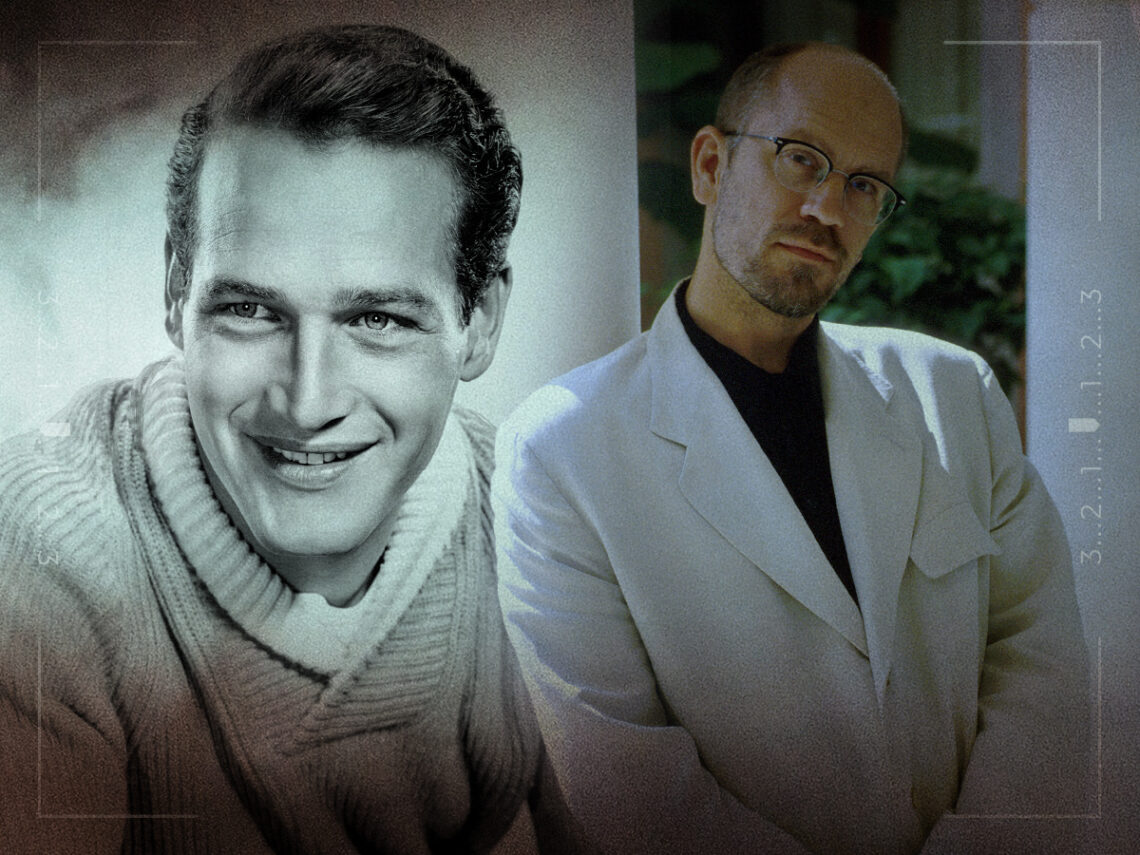
The prank Paul Newman pulled on John Malkovich for being “such a dick”

Alongside silver screen titans like Marlon Brando and James Dean, Paul Newman represented cinema’s accelerating maturation across the 1950s, when human nature’s darker, more complex sides were depicted in an unseen frankness to the day’s audiences.
He could do The Hustler’s and Butch Cassidy and the Sundance Kid’s charisma, but was just as adept at wrestling the gnawing, tortured fury that blisters across Tennessee Williams’ Cat on a Hot Tin Roof adaptation. Continuing to turn out classic roles such as his vintage turn in 2002’s gangster drama Road to Perdition, Newman’s magic in front of the camera barely dimmed ahead of his death six years later.
Newman also forged a second career behind the camera. While not as celebrated as other actor-cum-directors, Clint Eastwood or Ron Howard, Newman counted four features behind him when signing up to tackle one of the many versions of the old favourite – Williams’ The Glass Menagerie. Released in 1987 to a warm critical reception, John Malkovich’s turn as the trapped poet Tom Wingfield would equally enjoy similar plaudits, if having to endure a shock to his professional system during its production.
Reportedly, after the last round of rehearsals, Malkovich had made a fleeting visit to London before returning to his New York residence on the night before the shoot’s first day. Stricken with jetlag, an awakening in the early hours promoted a return to bed, before being awoken again by the activity of the building manager letting himself into the apartment to see if everything was OK.
It turned out, Malkovich had overslept by as much as seven hours, and the crew were getting worried. Racing to the studio, Malkovich made his profuse apologies and tried to whiz through as much of the schedule with the time remaining.
This hadn’t gone unnoticed by the boss. When the day’s shoot was over, Newman signalled for Malkovich to accompany him out of the studio, with a little prepared stunt awaiting him.
“As I left the set,” Malkovich recounted in Paul Levy’s 2009 biography, “about 60 or 70 alarm clocks went off. There were cars, there were ducks, there were golf balls, there were fancy alarm clocks and not-fancy ones and electric ones and battery-powered ones and song-playing ones. And he pushed his sunglasses down and said, ‘They’re all for you.’”
Malkovich took the joke in his stride, however. “And I said, ‘Thank you, that’s very kind. But tomorrow, if my car breaks down on the way to work, does this mean you’ll buy me a Ferrari?’ And he said, ‘Try me.’ And I thought, ‘Probably I won’t.’ They packed up all the clocks and gave them to me, and I gave them away for years. It was such an incredible thing that you could give someone an alarm clock that Paul Newman had given to you because you were such a dick as to sleep through your call on his film.”
The panicked response to an alarm clock after hitting snooze too many times happens to the best of us, but it’s hard to imagine the sheer terror of a young actor behind schedule on his big Newman gig. Could have been worse, and it’s unlikely Malkovich has ever been able to hear an alarm clock quite the same way ever since.
