


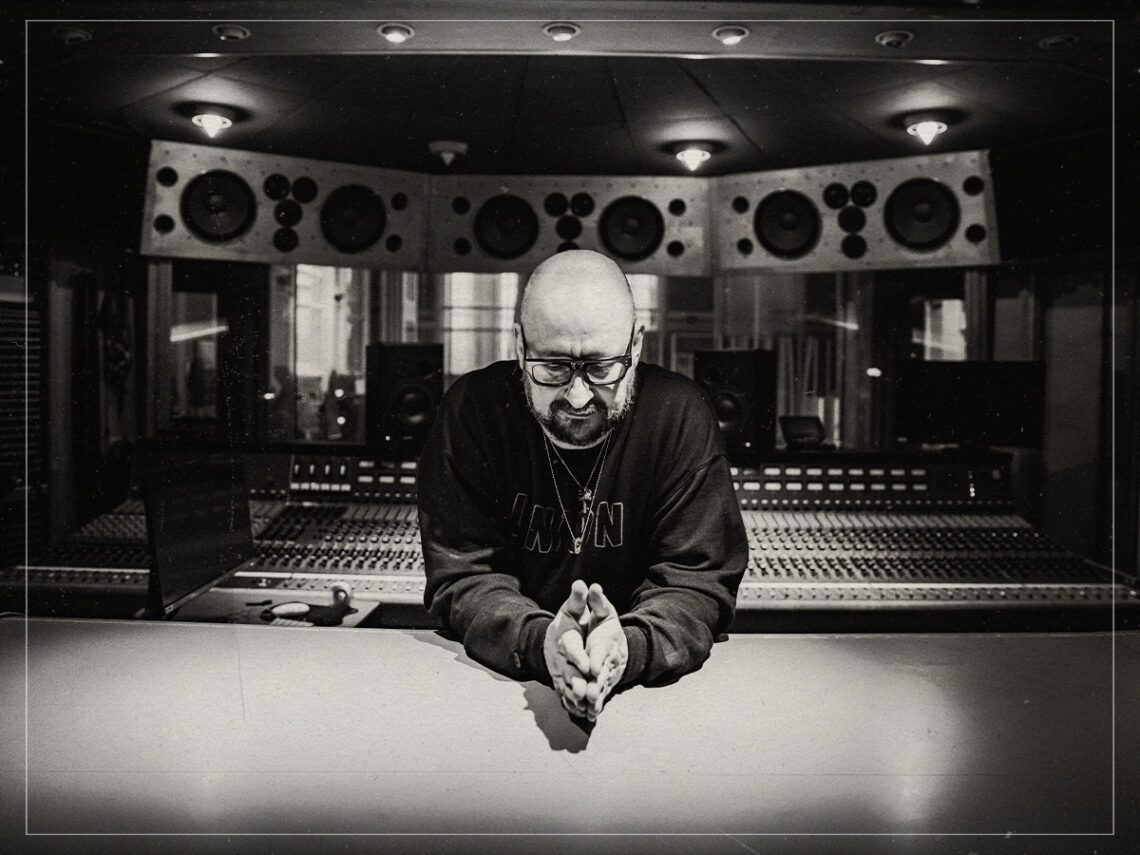
Pop Will Eat Itself: Clint Mansell’s punk-rap beginnings

In the late 1990s, a mutual love of hip-hop and a shared opinion that film scores were in a dire state at the time yielded a fruitful friendship and creative partnership between rising Hollywood filmmaker Darren Aronofsky and then the relatively unknown Clint Mansell.
Having not long moved to America, Mansell quickly found himself scoring Aronofsky’s directorial debut Pi, followed by the acclaimed 2000 drug-drama Requiem for a Dream, its ‘Lux Æterna’ theme standing as one of the most celebrated modern movie leitmotif pieces of all time. The two would continue to work together on further projects such as The Fountain, The Wrestler, and Black Swan, as well as many of Ben Wheatley’s features.
Long before Britpop had seized the UK’s pop and indie charts, the early 1990s music scenes were largely dominated by Manchester’s baggy dance-flecked neo-psychedelia, London’s smattering of shoegaze noise blasters, and the smorgasbord of rave DJs that littered the free parties up and down the country. Peppered across England’s Midlands were the Grebo crowd, a clashing mulch of indie rock, sampled beats and a curious Black Country-affected rap attack.
Leaning toward a more power pop direction, for a brief moment, bands like Ned’s Atomic Dustbin or The Wonderstuff were slapped on the covers of NME and Melody Maker and played to mammoth crowds at Reading—the latter remarkably headlining the 1992 festival along with Nirvana and Public Enemy.
Grebo was big, yet one band defined the fleeting subculture and even handed it its irreverent name. Formed in Stourbridge in 1986, Pop Will Eat Itself gloried in comic book lyrical raps, bedroom sonic collages, and plenty of snotty humour with a potent brew of industrial big-beat swagger and skewed hip-hop. Hailing from the same record-rifling culture as The KLF or MARRS, Pop Will Eat Itself wavered on a confounding intersection of alternative rock and dance music.
Having been involved from its earliest roots as From Eden in 1981, the tech-focused permutation would evolve to its full realisation in 1987’s Box Frenzy debut, with Graham Crabb moving away from the drum kit to immerse himself in sample-sourcing as well as writing songs with Mansell as joint frontmen.
After dates in Europe including the USSR during the socialist state’s final years and a semi-disastrous tour with Public Enemy and Run-DMC, Pop Will Eat Itself released 1989’s sophomore and definitive This Is the Day…This Is the Hour…This Is This!, a hectic bluster of sci-fi obsessions and satirical snark that crushed everything from heavy metal, disco, punk rock, and a volume of B-movie and action film clips for a giddy burst of cartoon electronic attack.
Mansell would co-front the group into the 1990s to considerable success, but a shift in label management at RCA meant top-down bewilderment at a band proving difficult to market. Ironically, they were dropped just before 1993’s ‘Get the Girl! Kill the Baddies!’ single, reaching number nine in the charts and their Top of the Pops slot, making the highest charting entry for a band without a record deal at the time. Signing to Trent Reznor’s Nothing Records, the band toured with Nine Inch Nails, eked out a remix album and won some extra attention featuring on The Prodigy’s ‘Their Law’ a year earlier and some tracks on the PlayStation shooter Loaded.
Pop Will Eat Itself finally ran out of steam in 1996, with Mansell heading to the States. Living in New Orleans, near to Reznor for three years, a studio visit during the recording of The Fragile brought an encounter with Pro Tools software and the seeds of future score work.
Before long, he was one of Hollywood’s most in-demand film composers, praised for his simple but emotional affect and stirring textures. Never forgetting his old Grebo comrades, Mansell rejoined Pop Will Eat Itself for their 2005 Reformation Tour, the last time the predominantly classic line-up took to the stage together.
