


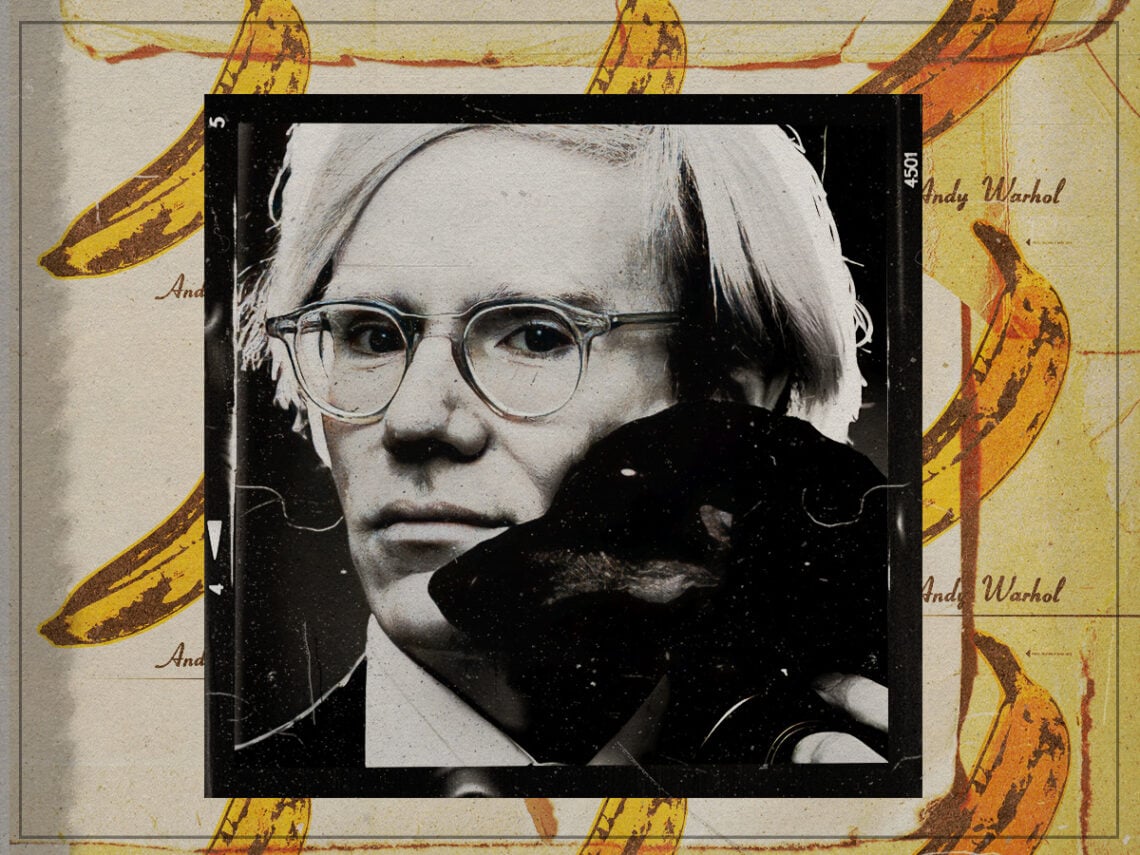
A playlist of every album Andy Warhol worked on

While best known for his Coca-Cola bottles and Campbell’s Soup Cans, the artistic world of Andy Warhol stretches far and wide. Making it big in the 1960s when he became the darling of the art world as his pop style defined an era, Warhol’s vision was also vital in contemporary music.
Warhol had been a working artist for years before his pop art took the world by storm. Getting his start as a commercial creative, Warhol worked on illustrations for brands, shops, advertisements and beyond. Trying to make ends meet and get his name known, Warhol would draw for anyone who paid him well enough. His clients included Tiffany’s, Condé Nast, Chanel, Volkswagen and more.
Some of his major clients, providing him with the most work, came in the form of record labels. Quickly getting known as a unique talent, RCA and Columbia both hired Warhol on a freelance basis. Working on album artwork, packaging and promotional content. From his early days as a commercial artist to his late period as an iconoclast in the art world, Warhol continued his interaction with music.
RCA’s art director Robert M. Jones remembers the time fondly, reflecting on Warhol’s earliest commissions: “I gave him three little spots to do for the corners of the standard albums. He needed money. I never kept any records but I know that these little spots must have been amongst the first things he did, certainly in the first three to six months he was here.”
He continued: “I gave him three different ones to do, at $50 apiece. And two days later he came back with a stack of drawings like that to satisfy the three drawings we needed.”
In the early days, it didn’t matter what the genre or style of the world was; Warhol would do it. His first cover work was for A Program for Mexican Music by Carlos Chávez, designed when Warhol was only 21. In the signature comic book, doodle style of all his early illustrations, his first record covers have all the little details that would become iconic. After proving his ability with a series of instrumental albums or cover designs for classical compilations, such as Gioachino Rossini’s William Tell Overture; Semiramide Overture, labels gradually offered him bigger titles.
One of his earliest, big-name covers was for Count Basie, the famed jazz pianist. Designing the cover of his 1955 self-titled record, Warhol’s portrait of Bassie paired with bold block type feels like the start of the Warholian style we’ve come to know.
After the success of his Count Basie cover, Warhol worked on a series of jazz albums, including releases from Thelonious Monk and Kenny Burrell. He was also called in to illustrate the cover of a spoken word piece by Tennessee Williams. With Warhol going on to have a close connection with several great American writers, including Truman Capote, this early commission in 1960 feels prophetic.
Warhol’s own art, namely his soup cans, began to gain attention after a Time article in 1962. From then on, everything changed. Warhol quickly became the favoured artist of the decade, spearheading silk screening and heralding in a brighter, bolder pop art era. As he became more and more popular, artists started seeking him out.
Allowing him to take on more creative projects and lean further into what he wanted to create rather than working to a brief, his album artworks became far more adventurous. Starting with This is John Wallowitch in 1962, the artwork he created for the cabaret performer John Wallowitch’s debut album is an early example of the photography that would later dominate Warhol’s career.
From that moment on, Warhol designed some of the most iconic album artworks in music history. Including The Velvet Underground and Nico’s instantly recognisable banana cover, the tongue-in-cheek zipper artwork for The Rolling Stones’ Sticky Fingers and the classic portrait of Liza Minnelli’s Live At Carnegie Hall album – Warhol’s artwork graced some of the most defining covers of all time.
Warhol’s resumé of artworks included icons like John Lennon, Aretha Franklin, Diana Ross, Paul Anka, John Cale and more. Even The Smiths got their own slice of Warhol, using a still from his 1968 movie Flesh as the cover of their self-titled debut album and one from Women In Revolt for their ‘Sheila Take A Bow’ artwork.
Having art credits on over 60 albums, listen to the playlist of every record Andy Warhol worked on or contributed to:
