


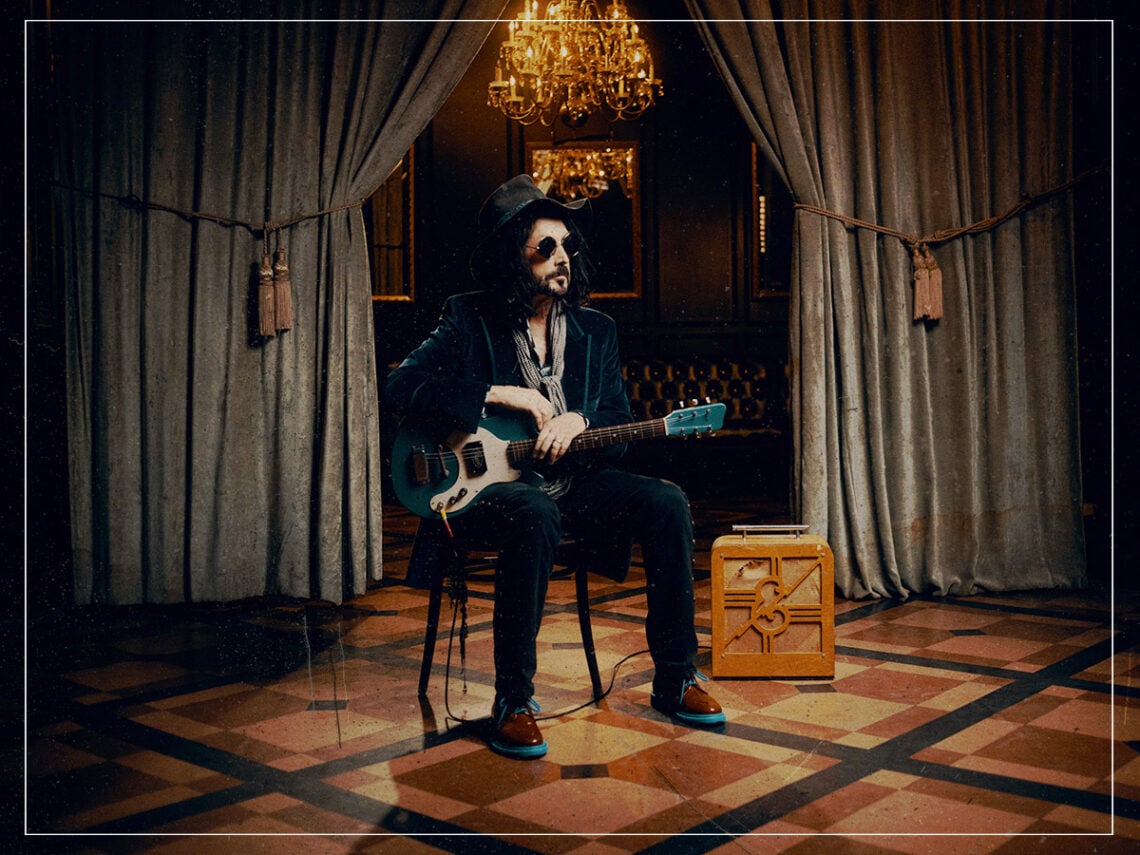
What does playing guitar mean to Mike Campbell?

At the moment, careers making art seem to be exclusively reserved for scions of the 1%. There’s the long-running joke that whenever you see an up-and-coming star of the stage, screen or song, their parents’ names will almost certainly be written in blue on Wikipedia. With that in mind, it can be a truly depressing reminder of just how good we had it to look back on those who came from nothing to become the biggest rock stars on the planet. One of the best examples of this is Mike Campbell, guitar extraordinaire and Tom Petty’s right-hand man.
Campbell was so much more than a sideman. It’s fitting that he first met Petty when he joined his first band, Mudcrutch, because, in many ways, he never stopped being a bandmate to his more famous bandleader. Not only was he playing a key part in the band’s sound, but he also had a hand in writing several of Petty’s biggest hits, like ‘Refugee’, ‘Here Comes My Girl’ and ‘Runnin’ Down a Dream’.
So respected was his talent and ability that he was one of the two guitarists and vocalists selected to join Fleetwood Mac when Lindsey Buckingham flounced on them. The other was Neil Finn of Crowded House, which shows the esteem Campbell was held in. Like so many others, he was also someone who saw rock stardom as the only way out of a pretty impoverished background.
Mike Campbell wrote about this at length in his memoir Heartbreaker. He was raised by a single mother in Jacksonville, Florida, and very often didn’t have the money for both milk and her pack of cigarettes, deciding at the counter which one to bring home. Like millions of other kids all over the country, Campbell’s life completely changed watching The Beatles on The Ed Sullivan Show.
How did Mike Campbell take up the guitar?
Suddenly, the one thing that he wanted more than anything was a guitar. Now, when people talk about getting out of tough situations through music, most assume they mean via the riches and fame that come with rock stardom. The truth is that just being able to express the way you’re feeling is also a way out of the sadness that comes from everyday life, as Campbell found when he found his “unplayable” first guitar at a local pawn shop.
In an interview about his memoirs conducted with Under the Radar, he talked about what playing guitar meant to him at the time. He recalled, “There’s something about the guitar that’s very magical. It was a conduit for me to joy and confidence, and I just loved it so much. When I got the guitar, I lost interest in everything else. No sports, nothing really. I was just so absorbed in the guitar, trying to learn it. I felt like I found my calling.”
Even long after success came calling, and he was a key part of one of the biggest bands in the world, playing guitar meant exactly the same thing to him. Mike Campbell elaborated on this later in the interview, saying, “To this day, if I’m ever feeling confused or sad or whatever, I can go to the guitar and play. It’s like therapy for me. It makes me feel centred and in contact with some kind of higher, beautiful power. It can take me out of my darkness and make me feel better.”
The best part is that we don’t have to be rockstars for music to have that effect on us. Whether we’ve been playing for ten years or ten minutes, playing the guitar can be a form of therapy for anyone, whatever their background. In there lies its true beauty, just waiting to be discovered.
