


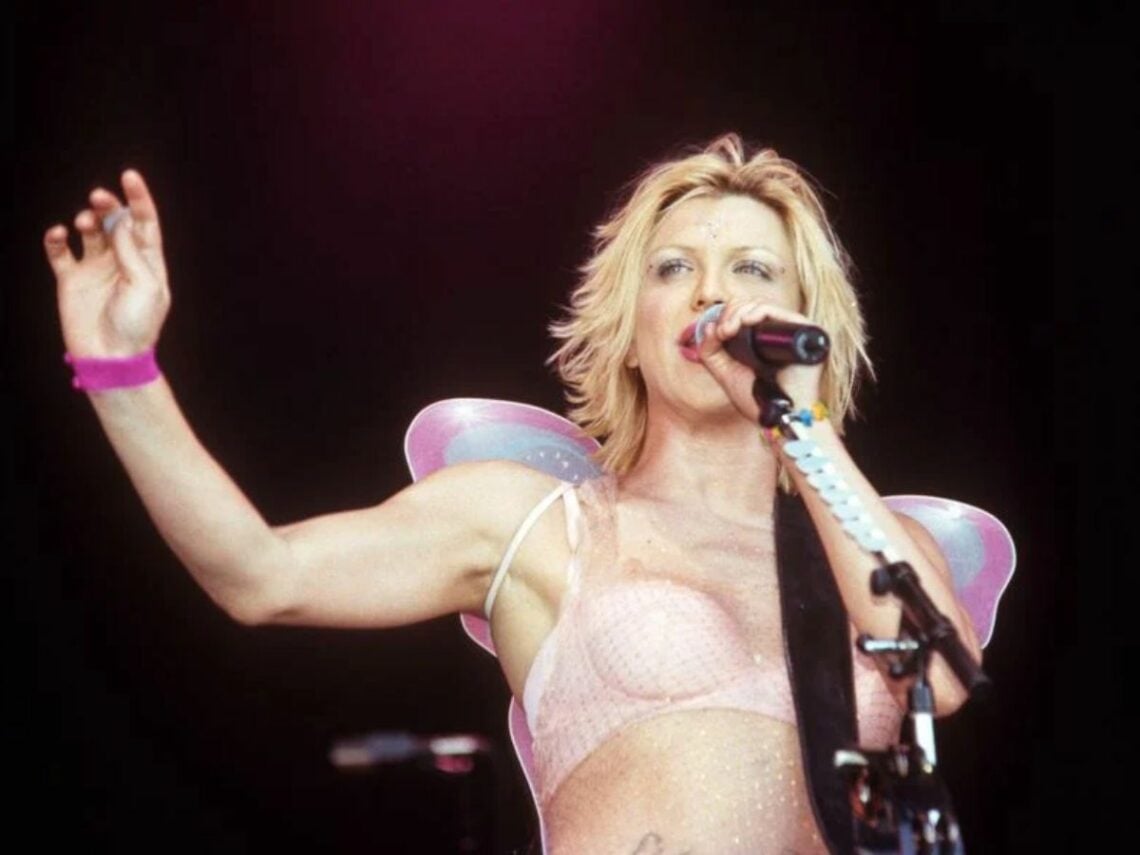
The pivotal moment Courtney Love sued her own record label

Courtney Love has always mastered things her way and never done things by halves. That’s just how she rolls.
It’s a mantra and mindset that has made the singer iconic within many different prisms of the industry – some successful, some controversial, and some stuck in a place in between. But regardless of any of it, Love has always just continued keeping on – because in many ways, that’s the only thing she’s ever known how to do.
While there are a myriad of past situations that you could apply this to in terms of the Hole frontwoman, between love triangles and band break-ups, nothing proves the point more solidly than the moment she headed to the courtroom in 2001. And no, this was not to admit any wrongdoing or settle any personal disputes: she was taking on her own record label.
It’s true that musicians are no strangers to facing the law at many points over their careers, but thinking back to 25 years ago now, Love’s decision to hold Universal to account and challenge the status quo of unfair contracts being placed on artists was pivotal and monumental in its time, changing the landscape of the industry as it was known forever.
Up until that point, it was the norm for musicians to be entrenched in contracts that they could never leave. To this end, Hole had faded into dormancy, and the record label was not pleased: they were expecting at least five more albums, but Love had not recorded a single thing since 1999. Putting it bluntly, she was done with the bullshit.
As such, when Universal sued the singer for not fulfilling the five unreleased records, she set about a countersuit, arguing that the protracted contracts she and the band had been forced into were “impossible to perform and hopelessly one-sided”. Suddenly, the eyes of the world were on Love. She was finally saying what needed to be said, and not only that, shouting it loudly.
Without getting bogged down in too many of the legal complexities, the whole point was that if the case were to go to trial, it would be an independent jury who would set out the score on the music industry, not the bigwigs attempting to cover it up. For a time, the whole lifeblood of what the business had survived on thus far hinged on Love’s shoulders.
In the end, an aspect of the battle was won, without conquering the whole war. Love settled the suit a year later, negating the need for a trial but granting her freedom from the record label, the full rights to all the previously unreleased music from Hole, and an advanced payment of $4million on all future Nirvana releases, owing to her relationship with Kurt Cobain.
No, she may not have managed to pull off the feat of overturning the entire contractual powers of the industry, but beyond the initial and superficial disappointment, this was never really the point. Of course, Love got her own personal vengeance out of the case in the end, but it took someone of her inimitable position and wrath to stand up and state something that would often be left unsaid: artists were not just pawns, and they could use their voices to speak as well as sing.
