


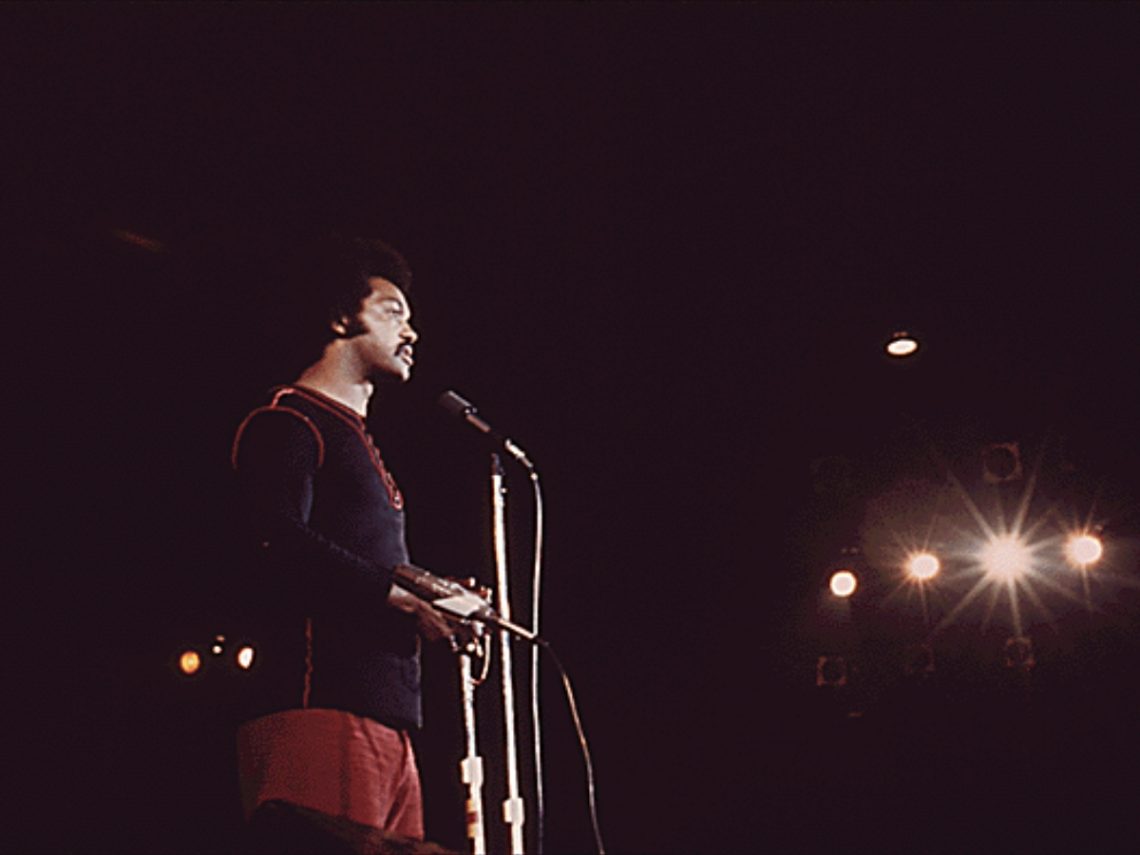
“Our people have got a soul”: The pivotal importance of Jesse Jackson’s Wattstax speech

Across the febrile cultural climate of the early 1970s, civil rights activist Reverend Jesse Jackson found himself at the centre of pop and politics’ explosive clash.
In August 1965, anger at the Los Angeles Police Department’s violent response to the resisted arrest of 21-year-old Black man Marquette Frye and his mother’s bludgeoning to the face with a truncheon sparked widespread riots across the Watts neighbourhood and surrounding area, fuelled by the simmering grievances over the city’s employment discrimination, institutional racism, and poverty. The riots raged for six straight days, and the California Army National Guard was called in, resulting in 34 deaths and as much as $40million in property damage.
Every summer since, the Watts Summer Festival had been held in the area to commemorate the Watts Rebellion that still burned in the Black community’s consciousness. For its seventh anniversary in 1972, Stax Records’ West Coast director Forrest Hamilton sought to mark the event with a special benefit concert, roping in the label’s head Art Bell to expand operations and secure the Los Angeles Memorial Coliseum venue.
Some shrewd branding was at play alongside the social cause, Stax’s standing having taken a knock after the loss of Otis Redding, and Detroit rivals Motown expanding their presence in the wider entertainment industry.
Still, taking to LA’s famed stadium on August 20th, a glittering roll call of the era’s biggest names across soul, gospel, R&B, blues, funk, and jazz all lined up to join the Wattstax programme, from The Staple Sisters, Isaac Hayes, and Carla Thomas. Amid the charged soundtrack of rousing Black pride, a young Jackson stepped behind the mic shortly after 3pm to address the crowd with his commanding oratory.
“Today on this program you will hear gospel, and rhythm and blues, and jazz,” Jackson informed the audience. “All those are just labels. We know that music is music… All of our people have got a soul, our experience determines the texture, the tastes and the sounds of our soul.”
He furthered, “We may say that we are maybe in the slum, but the slum is not in us. We may be in the prison, but the prison is not in us. In what we have shifted from, ‘burn baby burn’ to ‘learn baby learn’. We have shifted from having a seizure about what the man got, to seizing what we need”.
“We have shifted from bed bugs and dog ticks to community control and politics.”
Jesse Jackson
Attesting to the power of political organising and Black solidarity, Jackson rounded off his speech with a rendition of Rev William Holmes Borders Sr’s ‘I Am – Somebody’ from 20 years earlier, the chanting affirmation of dignity across all racial, gender, and socio-economic lines popularised by his then recent PUSH-Excel initiatives aimed at Black students.
It was Jackson’s presence on the bill that turned Wattstax from merely a benefit show to a key stamp of Black political resistance and the broader counterculture, ensuring the day’s celebratory marker of establishment challenge was viewed with the same cultural essentiality as Woodstock’s totemic pop relic.
