


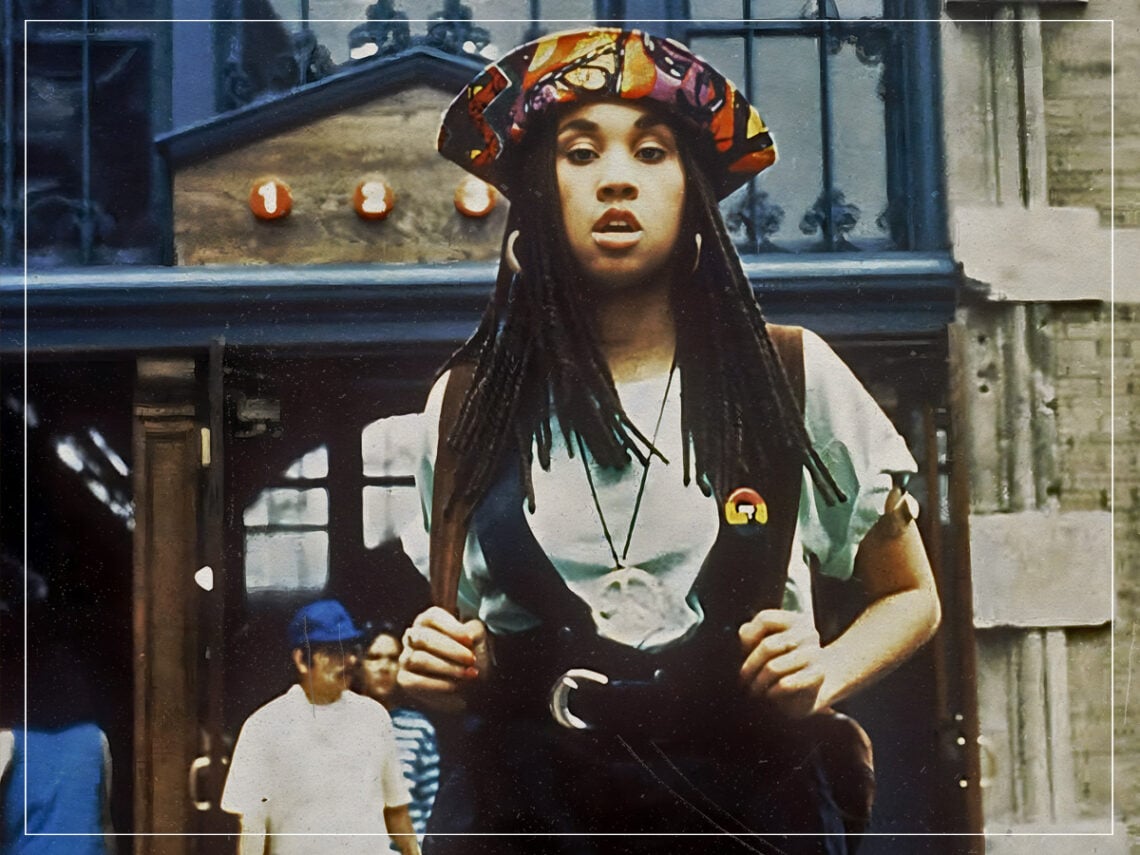
‘Just Another Girl on the I.R.T’: a pioneering yet forgotten coming-of-age 1990s classic

In the early 1990s, Boyz n the Hood became a box office success, a critical darling, an awards season favourite, and a touchstone in modern American cinema. Shortly afterwards, another coming-of-age story written and directed by a first-time filmmaker told another story rooted deeply in the Black experience of the era but didn’t gain anywhere near as much attention, but Just Another Girl on the I.R.T completely deserved it.
Scripted, helmed, and produced by Leslie Harris, the drama follows Ariyan A. Johnson’s Chantel Mitchell and takes its title from a line on the New York City subway system. Over the course of its 92 minutes, Just Another Girl on the I.R.T tackles pertinent socio-political issues like teenage pregnancy, abortion, racism, and poverty head-on, refusing to shy away from its stark subject matter.
17-year-old Chantel is razor-sharp and highly intelligent, but she’s often painted as being her own worst enemy. She harbours dreams of escaping from her poor neighbourhood to go to college and become a doctor, but a combination of rampant ego and regular displays of naivety threatens to get in the way.
Coming-of-age stories are a regular part of cinema, but Harris wanted to put a spin on the familiar formula that spoke directly to the people who often went overlooked. The majority of similar movies are told from the perspective of male protagonists, which is what helped make Just Another Girl on the I.R.T. such a breath of fresh air.
“I actually wanted to bring the female characters to the foreground and deal with issues that really deal with young women coming of age in the ’90s,” she told Charlie Rose. A real, relatable, and intimate coming-of-age story told from the point of view of a teenage African-American girl was hardly a regular occurrence in the early 1990s, with the filmmaker exhaustively researching and refining the screenplay for a year and a half before shooting the production on location in 17 days on a budget of only $130,000.
Harris was “just tired of seeing the way black women were depicted, as wives or mothers or girlfriends or appendages all from the point of view of male directors,” spurring her to craft her first feature and make a point of noting how “there’s no male character to validate her” along the way as regularly tended to be the case.
The main thrust of the narrative – which contains many breaks of the fourth wall- stems from Chantel becoming pregnant after starting a relationship with Kevin Thigpen’s Tyrone. Not only could it shatter her dreams of further education, but it could add more pressure onto her already-strained bond with her parents and the crises of both self and confidence that emerge from either of the most likely scenarios should she decide to keep the baby and inform her friends, family, peers, and educators.
There’s serious drama at the heart of Just Another Girl on the I.R.T., enhanced by its insightful examinations of the trials and tribulations of adolescence and the complexities that come with it, all underscored by a magnetic central performance and lashings of comedy that inject welcome rays of light into a deftly-assembled and tonally mature whole that belies its status as the work of a first-time filmmaker.
Harris refers to it as ‘A Film Hollywood Dared Not Do’ in the credits, a bold statement that was undeniably true. The mainstream simply wasn’t interested in telling those types of stories regardless of how much they needed to be told, but the director simply made the decision to do it herself. Independent cinema was all the better for it, and even though she hasn’t made another movie since then, Just Another Girl on the I.R.T. endures as a remarkably assured debut that spoke to a generation who very rarely had their voices heard on-screen.
