


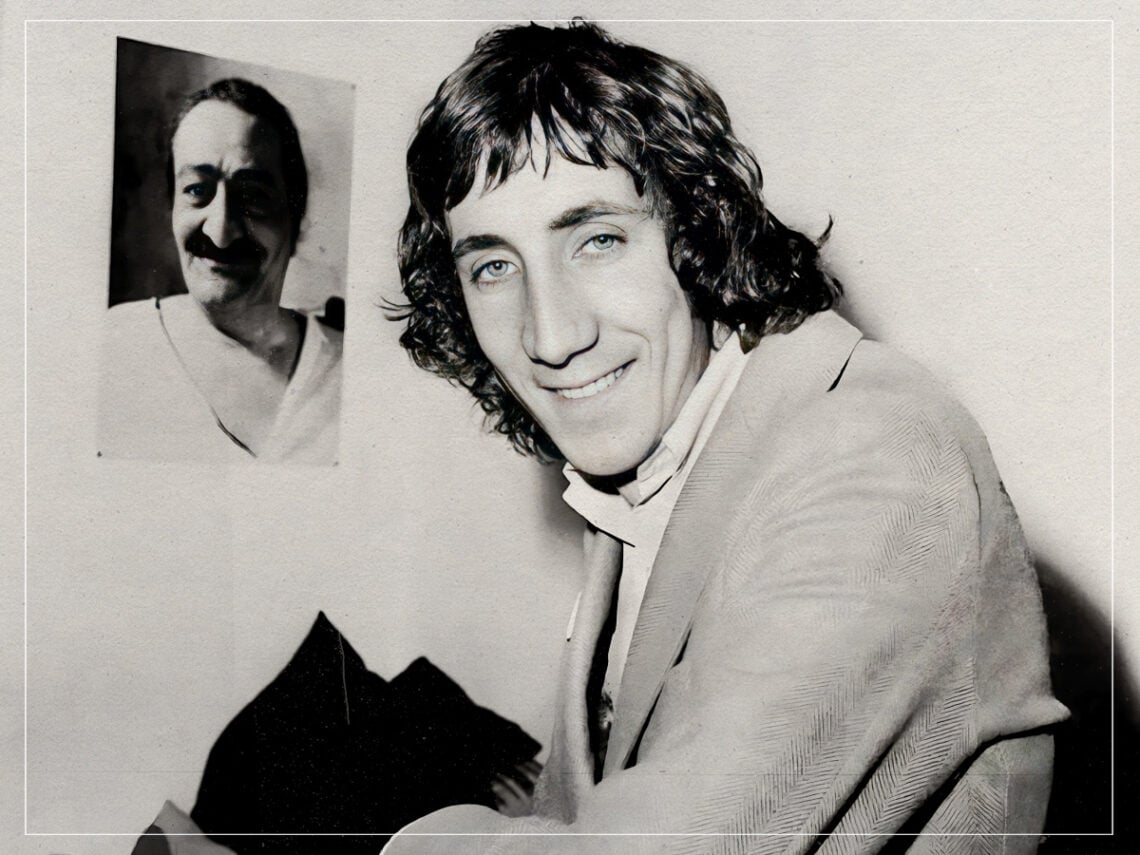
The only three bands that matched The Beatles, according to Pete Townshend

The 1960s witnessed a cultural revolution that saw The Beatles become “more popular than Jesus”. Their religious mantra was “all you need is love“. But in the end, they would run out of it themselves and fail to see the dawn of the new decade.
As Joni Mitchell said in her subsequent autopsy of the era: “There were so many sinking, but I had to keep thinking I could make it through the waves. You watched that high of the hippie thing descend into drug depression. Right after Woodstock, then we went through a decade of basic apathy where my generation sucked its thumb and then just decided to be greedy and pornographic.”
Society had become that way, too. Manufacturing jobs were being culled like no tomorrow, and this caused a ripple of spiralling depression. If you take New York as an example, murders hit a horrific high of 1690 a year, and drug use tripled. It was becoming clear that a sense of dystopia was setting in. A revolution was needed. Then, on February 21st, 1976, a piece in NME written by Neil Spencer ran with the headline: “Don’t look over your shoulder, but the Sex Pistols are coming”.
Therein it documented tales of band members cavorting with half-dressed members of the public on stage, chairs and tables being utterly Chernobyled in a seeming mutiny against anything perceived as banal. A Frenchman shouted to Steve Jones, “You can’t play!” and the guitarist flippantly replied, “So what?”, setting the tone for the future. Punk might have been born before then, but Jones’ cutting utterance was the moment it came of age, and fittingly, that mental age was about 16/17, the perfect age for a new generation to strong-arm culture in a new direction.
Previously, Pete Townshend had sung of his own ‘Generation’, but as a child of the 1960s, he could see that a new wave was cresting upon the shore of art, and it was every bit as vital as the peace and love of the hippie age. In an interview with Time, he delineated the acts that typified this loose rebellion. “Three extraordinary artists like The Sex Pistols, The Clash and Elvis Costello under the banner of Punk is really an indication of how categories fail, miserably to attend to what was actually happening,“ he said.
Continuing, he added: “At the time, there was this need for another tidal wave. I suppose that everybody wanted one band to do it like it had happened to The Beatles. It turned out not to be one band but a lot of bands.”

Townshend had never even been that much of a fan of the Fab Four; however, he recognised that the wave they rode meant something and that every movement needs a spearhead.
For him, in terms of punk, that fell upon one band. “The Sex Pistols were obviously the most significant,“ he said, “Because they were the first and because [Malcolm] McLaren was organising them and allowing their anarchy. He gave them the space to play, the space to be anarchic. But also because I think, Paul Cook and Steve Jones in the band are great rock ‘n’ roll players. They say they couldn’t play but they actually could play very, very well. John Lydon is a fucking star! You know, he is a star! He is just one of the world stars, you see him and you know: ‘He is going to be famous’”.
This sentiment was instantly recognised by John Cooper Clarke, too. In his memoir, I Wanna Be Yours, he details the profound impact that the band’s evidently singular swagger had on him. “After reading the reviews, I was expecting ineptitude,” he writes, “That never materialised. All concerned seemed reasonably proficient in their respective capacities… The Steve Jones I heard was a one-man orchestra, a high-voltage practitioner with no visible equal. In fact, the sonic overload had me scoping around for the other nine hundred and ninety-nine guys. The gig couldn’t have been a better introduction to the punk phenomenon.”
But they weren’t alone; all movements need an army. And Townshend explains that punk was so interesting because of its inherent variety. “The Clash are different because The Clash were kind of a boy’s band. To some extent, like The Who were in the very early days. You know, a gang band. Kind of like a fellowship band. They gathered together people and they kind of went around following them around,” he says.
Of the trio, the windmilling guitarist crowns Costello as the ruling godfather. “I suppose that Costello was the brains in charge of the whole thing, I don’t know. But that’s a summing up of what happened. It was very, very exciting, challenging and there was a hell of a lot of pain there for Pete, I must say (laughs). Because I kind of welcomed, challenged and wanted it to happen. Then I realised that the person that they wanted to shoot was me,” Townshend concluded. Reeling from the revolution’s desire to do away with anything they considered stilted and old.
Interestingly, the Fab Four themselves were split on the punk movement. While Paul McCartney admired its spirit, John Lennon went as far as to say that the Sex Pistols reminded him of his old gang, George Harrison wasn’t exactly fond of it. Harrison said that most of it was the antithesis of music, telling Rolling Stone, “I don’t think punk was inventing anything except negativity. The old rock ‘n’ roll singers sang fantastically.”
He added, “They had great drummers, great sax players. As far as musicianship goes, the punk bands were just rubbish – no finesse in the drumming, just a lot of noise and nothing.”
Those in parliament begged to differ when they threatened to put the band on trial for tyranny. In truth, the punk’s aim was pretty much to put Harrison’s nose out of joint in the first place, so in some ways, his derision was as good as a pat on the back.

Never Miss A Beat
The Far Out Beatles Newsletter
All the latest stories about The Beatles from the independent voice of culture.
Straight to your inbox.