


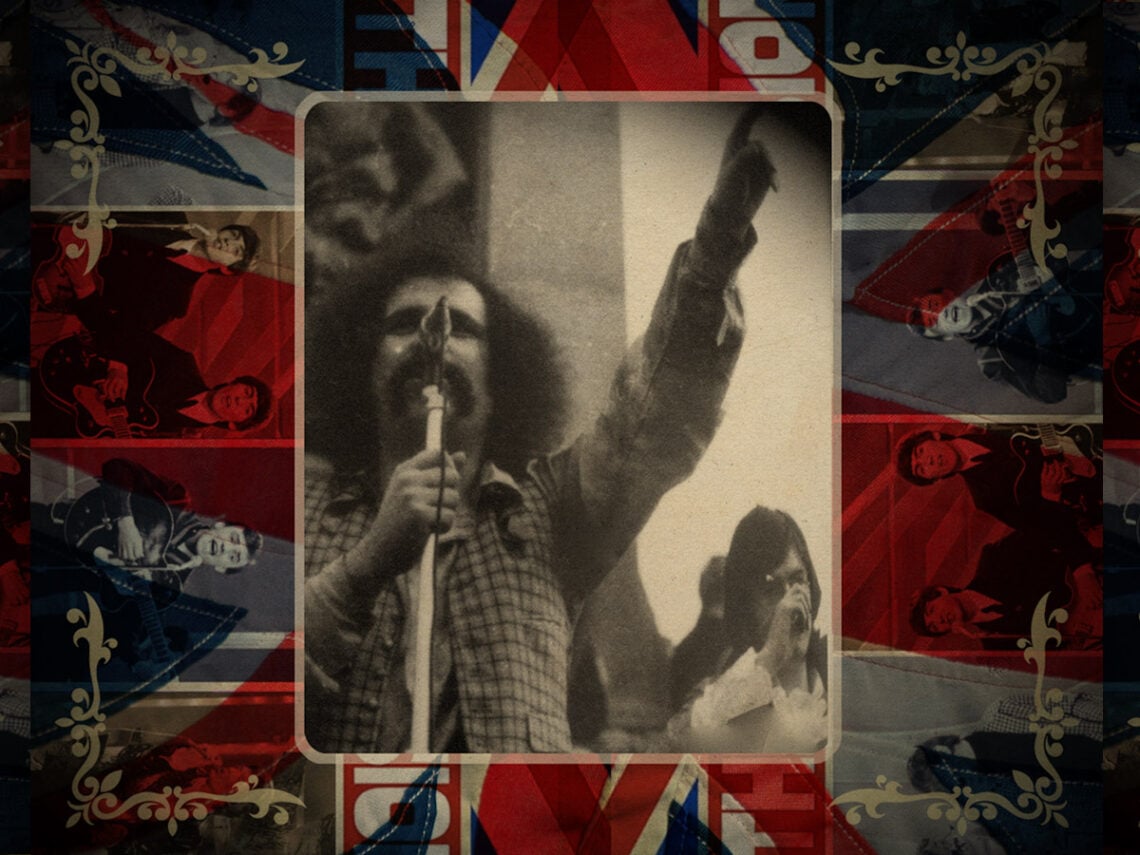
Pete Brown: the poet of the British invasion

“Pete was a great songwriter,” Martin Scorsese once enthused about Pete Brown, the writer who weaved poetry and lyricism into some of the counterculture‘s most defining works. “Whenever the lyrics are repeated in my head, these images stay with me.”
Born on Christmas Day, 1940, in Surrey, England, Brown began to write poetry in his early teens, with his first published poem in the US-based literary magazine, The Evergreen Review, when he was just 14 years old. His early introductions to poetry came from the works of Dylan Thomas and Gerard Manley Hopkins, the latter of whom he regarded as “a John Coltrane figure of poetry”, as he said to Please Kill Me in 2022. He also enjoyed the likes of Federico Garcia Lorca, Kenneth Patchen and Robert Creeley. For him, poetry was not a form that was taught to him but rather a fortunate instance of word-of-mouth from his school friends.
“When I would deviate from the schoolwork and take off writing these weird fantasies,” he recalled, “My English teacher, Dr Levine, got pissed-off and said, ‘Why don’t you write your own poetry and stories, away from the schoolwork?’” He took his teacher’s advice to heart, and soon, he immersed himself in Liverpool’s poetry scene at the turn of the 1960s and became the first poet to perform at the Morden Tower in Newcastle, prompting the first of its extensive poetry reading series.
Soon, Brown became a primary advocate of British Beat poetry, spurred by his first book of Beat poetry: Gregory Corso’s Gasoline. At the time, the works of the American Beats were only just beginning to become available in Britain, and he absorbed Corso’s works, alongside Jack Kerouac and later, Allen Ginsberg and William S Burroughs.
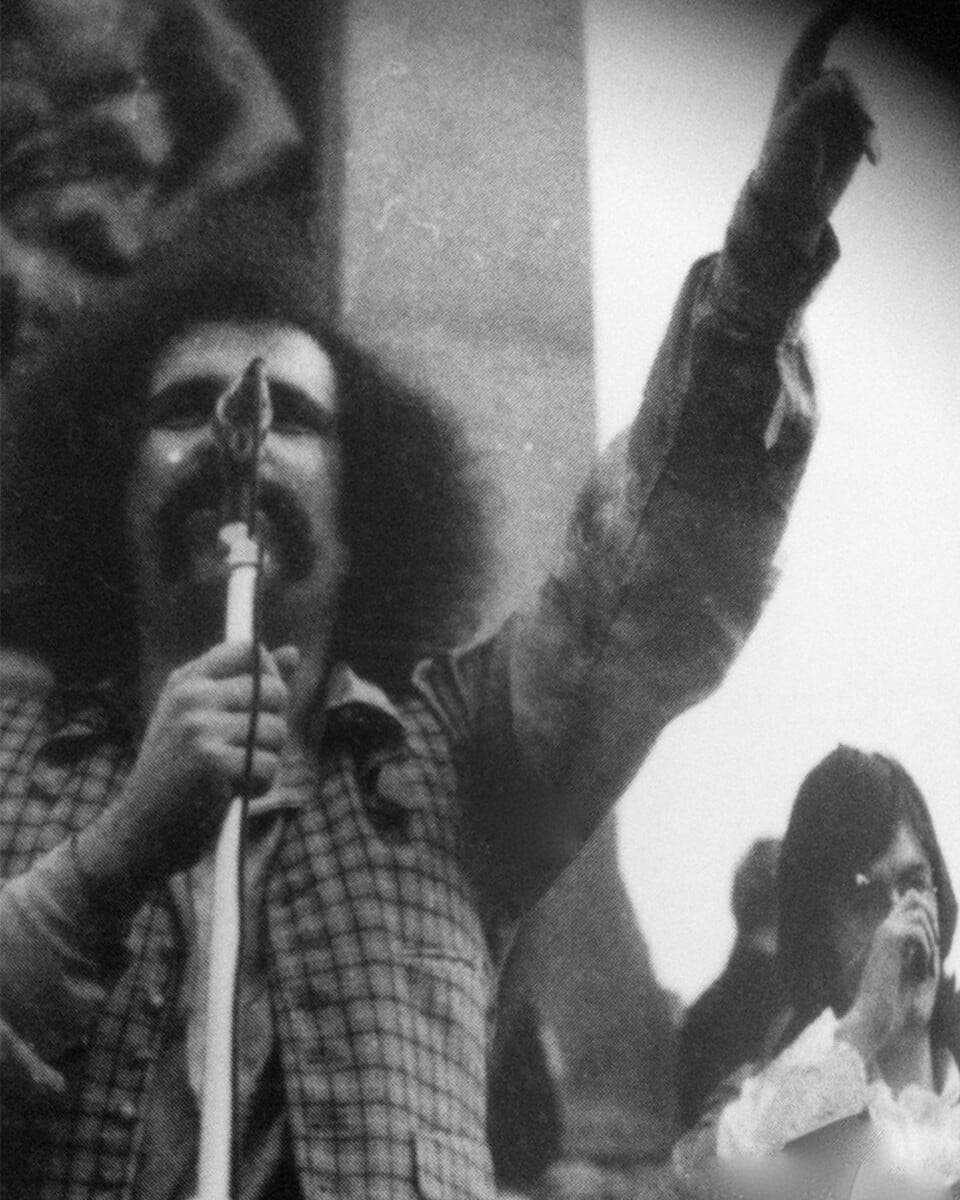
“I wanted to be a part of the bohemian scenery,” Brown expressed, of how being exposed to Beat culture impacted him. Their works prompted him, after being expelled from school, to hitchhike around Scotland, where he resided in hostels and former “ammo dumps” from World War Two, inspired by the narrator of Nikos Kazantzakis’ 1946 novel Zorba the Greek (portrayed in the film adaptation by Anthony Quinn) and Kerouac’s visions.
During this pivotal time, Brown struck up a friendship with Mike Horovitz, another champion of British Beat poetry who, in 1959, while still an Oxford student, founded New Departures, a literary periodical that focused on poetry in the same innovative vein as the Beats. There, he would go on to publish the aforementioned Burroughs and Ginsberg, alongside many other American and British beat poets. He and Brown had been travelling together as poets for some time, but in 1961, a friend sponsored a jazz and poetry show, with a band comprised of saxophonists Dick Heckstall-Smith and Graham Bond, drummer Laurie Morgan, bassist Jeff Klein and pianist Dudley Moore (during his pre-acting days).
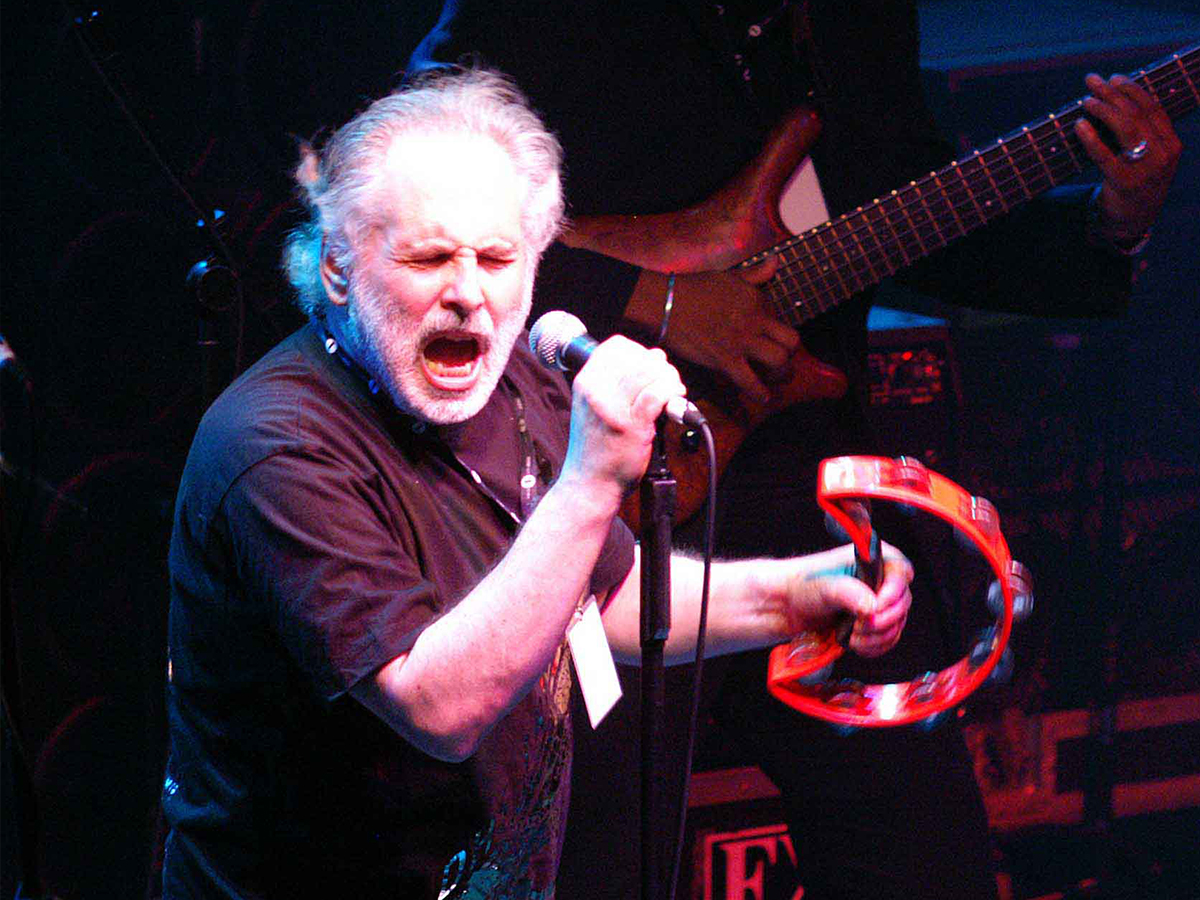
Brown began to set his poetry to song, performing his work live with the backing of a band. He formed the First Real Poetry Band in the early 1960s, which featured himself with a quartet of jazz musicians, including John McLaughlin – a soon-to-be jazz legend known for his work with Miles Davis – while performing at his jazz poetry residency at London’s Marquee Club. On-stage, Brown would try to improvise lyrics when working with Horovitz.

“Horovitz and I were certainly capable of improvisation. When I was very, very stoned, I would try to improvise, but most of it was gibberish, to tell you the truth,” he admitted. He cited one live recording of himself and Horovitz, Blues for the Hitchhiking Dead, as The New Departures Quartet, where, for over an hour, they responded to one another via alternating verses of poetry.
In a turning-point moment in June of 1965, Brown and Horovitz read their work at the Royal Albert Hall, for the International Poetry Incarnation showcase, alongside their continued idols in Ginsberg, Burroughs, Corso and Lawrence Ferlinghetti. The event was a key moment in the bridging of American Beat poetry with the British tradition, and it prompted an underground poetry culture to come to fruition. Pieces of the event were immortalised in the short film Wholly Communion, filmed by Peter Whitehead.
The First Real Poetry Band introduced Brown’s proficiency to the supergroup Cream. Brown was introduced through the broader jazz scene and Graham Bond, with whom he’d remained friends, and he soon met Jack Bruce and Ginger Baker, both former members of the Graham Bond Organisation and two-thirds of Cream, with whom he would continue working in the years to come.
Brown’s reputation as a writer preceded him, and therefore, he was asked if he would like to help write lyrics to their songs. For the next three years, Brown would pen some of Cream’s greatest songs, from their debut single ‘Wrapping Paper’, to their first hit, ‘I Feel Free,’ and the timeless classics, ‘Sunshine of Your Love’ and ‘White Room’.
“At that time, that was my poetic heritage,” Brown explained, of how ‘White Room’s lyrics had a personal resonance. “I had been one of Britain’s few professional poets, it’s mostly how I made my living, from performances, but it was a very precarious living until I started writing songs”.
“I worked hard at it. I was just trying to make an honest living.”
Pete Brown
In his writing, Brown cited film and comedy, alongside his Beat foundations. He favoured the filmography of John Ford and Luis Buñuel, and the comedies of Peter Sellers and Dick Lester. He also adored paintings by René Magritte and Salvador Dalí, invoking all of these eccentric, surrealist images into his lyricism.
Brown’s work with Cream coincided with the British invasion, as Cream came to soundtrack the waves of London’s swinging sixties culture that were felt over in the States. In a way, Brown’s poetry stood before his lyricism as a sort of precursor to the British invasion, bridging a cultural gap between the American and British literary scenes that would later reach a wider scale where music was concerned.
When Cream broke up in 1968, Brown went on to form bands of his own, beginning with Pete Brown and His Battered Ornaments (which he was later dismissed from) and later, Piblokto!, both cult staples of British psychedelia and jazz. He also released an album with Graham Bond, 1972’s Two Heads Are Better Than One, and a solo album, 1973’s The Not Forgotten Association. All the while, Brown maintained a relationship with Bruce, for whom he continued to write songs for most of his solo albums.
While the general conception of Beat poetry is largely defined by the work of Americans, Brown was foundational in bringing the adventurous, bohemian tone that the Beats championed to London’s then-underground scene. Brown remained cult-like in his presence across British poetry and rock ‘n’ roll circuits, never reaching the heights of fame that the likes of his Cream collaborators would achieve, but his writing persisted, whether it was through poetry, film script writing or later musical works in the 1980s.
His final lyricism was for Procol Harum’s final album, Novum, for which he wrote with founder/singer Gary Brooker, before Brown’s passing in 2022.
