


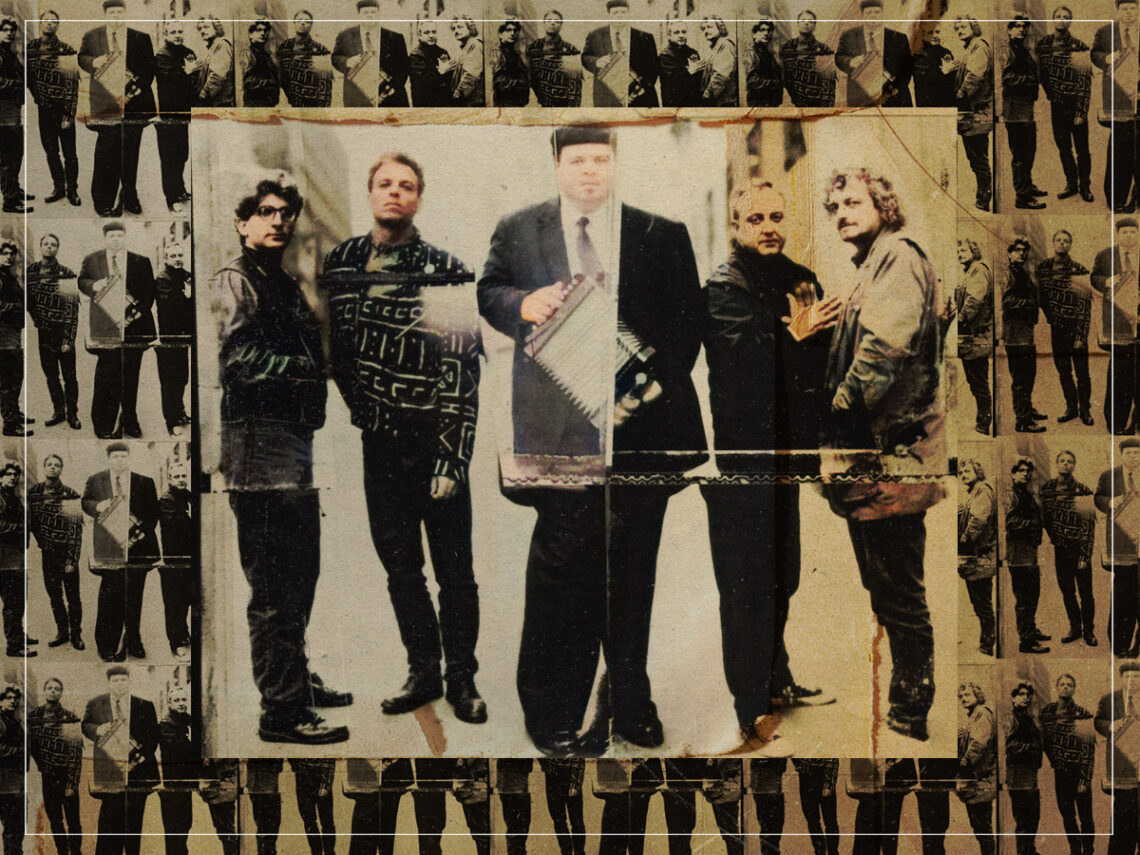
The life and times of Pere Ubu: Weird new America’s great origin

While an artist is typically remembered for their work if they’re lucky, only a select few get to take credit for initiating movements and altering the goddamn behemoth that is the cultural landscape. Exhibit A: Pere Ubu.
The United States remains segregated in countless ways, which is why each state is essentially like a country of its own. As a result, the cultures each of them birth have such distinct identities. Take, for instance, Ohio. Located at the core of what is commonly known as the country’s Rust Belt, it thrived and ultimately deteriorated under an industrial boom during the 1900s. For that reason, the state never really had a reputation for breeding art.
A bleak landscape, however, isn’t tantamount to the absence of potential. Contrarily, deprivation and unfavourable circumstances have gifted us the most eccentric minds in recent history. Amid its steep economic decline in the late 20th century, Detroit produced some of the most influential artists of the last hundred years, namely Death, Iggy Pop, Jack White, Eminem and countless others. With the odds stacked against them, David Thomas and Peter Laughner formed Pere Ubu in the mid-1970s with the very specific goal of releasing just one single — all they really wanted was to leave behind even the faintest trace of their creativity on a region that didn’t have too much going on at the time.
Regarding the group’s beginnings, Thomas said, “My ambition was to have a record in one of those Salvation Army record bins which somebody could come across in ten years’ time and say: ‘Wow, there was this band in 1975 in Cleveland.’”
Of course, they ended up releasing multiple singles before being discovered and signed to the short-lived Blank Records to put out their debut LP, The Modern Dance. Prior to its release, music journalist Jon Savage alluded to the band in an article while coining the term “post punk,” carving out a separate lane for them to operate in and eventually thrive.
Deriving their name from an avant-garde French play from the previous century, Pere Ubu’s obscure references were commensurate with their experimental and sometimes freakish sound. Despite Savage’s categorisation, they were impossible to pin down and restrict to any one scene, genre or even culture — from the very beginning, they kept on evolving rapidly while always bringing something new to the table.
Through several lineup changes, breakups and sleeper hits, they released a total of 19 full-length albums across 45 years. Right up there with the likes of fellow weirdos such as Frank Zappa, Captain Beefheart and Lou Reed, Pere Ubu took risks that created room for artists after them to move freely in their creative pursuits. Though Thomas never took kindly to people associating the group with punk, their disorderly approach did fit the definition perfectly. It’s no surprise, then, that so many artists of said genre have cited the Ohio outfit as an influence.
Aberrant, off-centre and audacious in the most compelling ways, their boundless scope has made them one of the most important bands of the past hundred years, even if they never got their due recognition in the commercial space.
With Thomas’ death earlier this year, Pere Ubu’s legendary run is finally coming to an end because there’s no band without his unmistakable voice. The surviving members plan on releasing one last album with contributions from their late singer, bringing the curtain down on a whimsical career that defied all expectations. Clawing their way past limited prospects, they left a mark far greater than the one they had initially planned on: a bulletproof legacy.
