


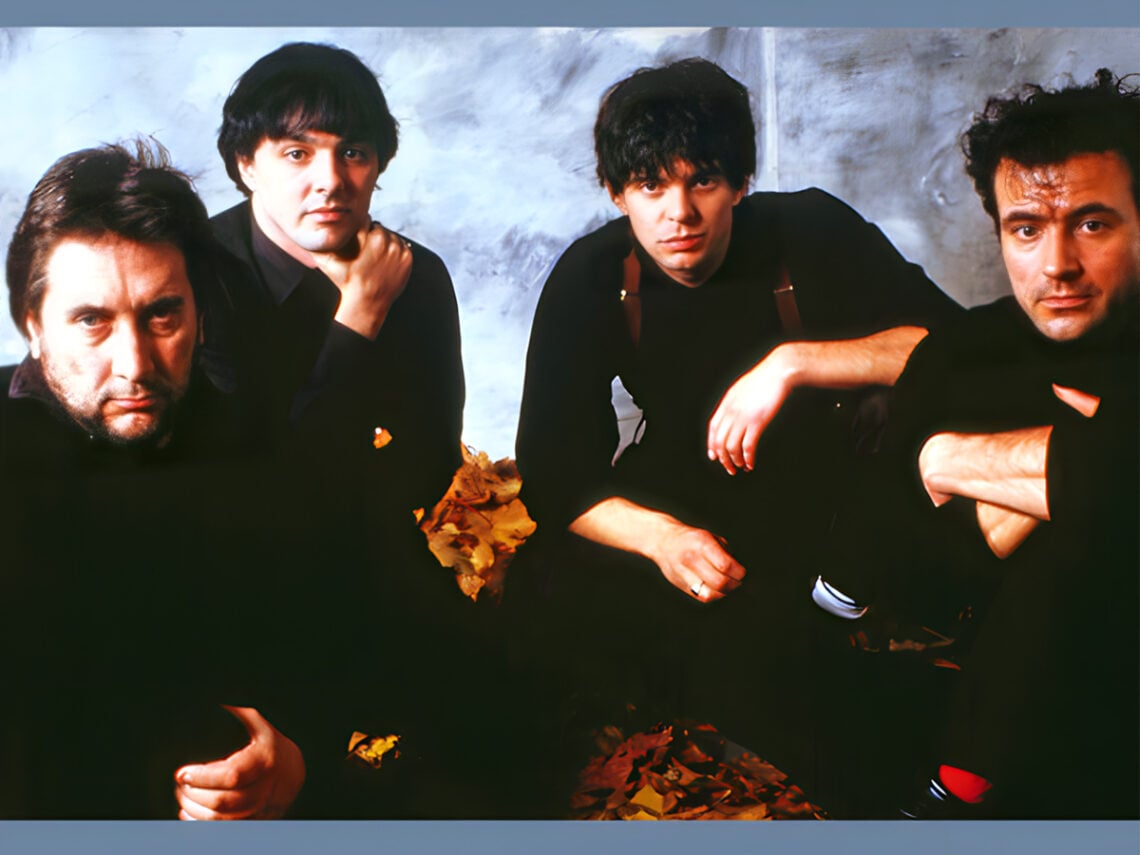
‘Peaches’: The Stranglers’ attempt to reinvent reggae

Retrospectives have pushed The Stranglers firmly into the centre of the UK punk canon on a near-same critical footing as The Clash or Sex Pistols, but such stature is far removed from their initial land on the charts in 1977. Dropped across 13 months, Rattus Norvegicus, No More Heroes, and Black and White offered a fiercely eccentric offering to the era’s ‘Year Zero’, conjuring a distinct sound centred on Dave Greenfield’s Hohner Cembalet organ drive and lyrical dwelling in esoteric history, literary excavations, and scabrous critiques of the era’s engulfing societal rot.
Organs would be swapped for Oberheim synthesisers, and the road to alien concepts and shimmering waltz numbers about heroin would follow into the 1980s. Before their offbeat pop wanderings into new wave’s aftermath, The Stranglers brandished a keen lyrical target on the supposed absurdities of everyday machismo and “men’s talk”.
Such a charitable lens has always felt dubious, as the satire feels hard to unearth on a cut like ‘Bring on the Nubiles’—”I’ve got to lick your little puss / And nail you to the floor”?—but second single ‘Peaches’ at least swaggers along with a cartoonish bravado too absurd to take seriously.
Enclosing ‘Peaches’ lecherous vignette of a lascivious ogler commenting on the beach bathing girls in his sordid sights is Jean-Jacques Burnel’s aggressively skulking bass. Its most memorable feature, Burnel’s bass attack hack and grooves with blustering stroll with a grasp of grimy funk at odds with the punk around them. While less praised than dub-focused groups like The Slits or The Pop Group, ‘Peaches’ made a no less eager grab for the reggae revivalism that orbited the punk community in London at the time.
“In the very early days, in order to earn a bit of money, we had a little PA, and one day we were signed to a Black label called Safari, which was more or less a reggae label,” Burnell told Songwriter in 2013. “We hadn’t released anything. But the owner phoned us up one day and said, ‘Look, do you want a few pounds to augment your PA to a sound system?’ Well, we didn’t know what ‘sound system’ was.”
Heading to a sound system party with the thick fragrance of weed in the air, the very white Stranglers were exposed to reggae’s voluminous history at the gathering by means of the rotating DJs and the art of toasting: an early form of rap that would thrill the crowd with stream of consciousness poetry spoken over bass and drum backing rhythms. Burnell was taking furious notes for when he would write material for Rattus Norvegicus.
“…we stayed there for the whole gig,” Burnell recalled, “and at the end of it, I was hooked on the idea that the bass should be the most dominant feature. So I went back to where we were living, and that night, came up with the three notes which constitute ‘Peaches’. And of course, I wanted to make a reggae song out of it. But we didn’t quite get the snare in the right beat. But never mind. We ‘Stranglefied’ it. We interpreted a reggae theme in The Stranglers way, which became ‘Peaches’.”
It’s a ‘vibe’ instinctively felt but could never be directly pointed out, just like their dabbles in proto-electronic music, but ‘Peaches’ twist of reggae is the ‘Stranglefication’ process in action. Still enduring as one of their defining hits, the track’s enthusiastic reach beyond the familiar harnessed a bass lick that stands with the best of the dub-post punks to follow.
