


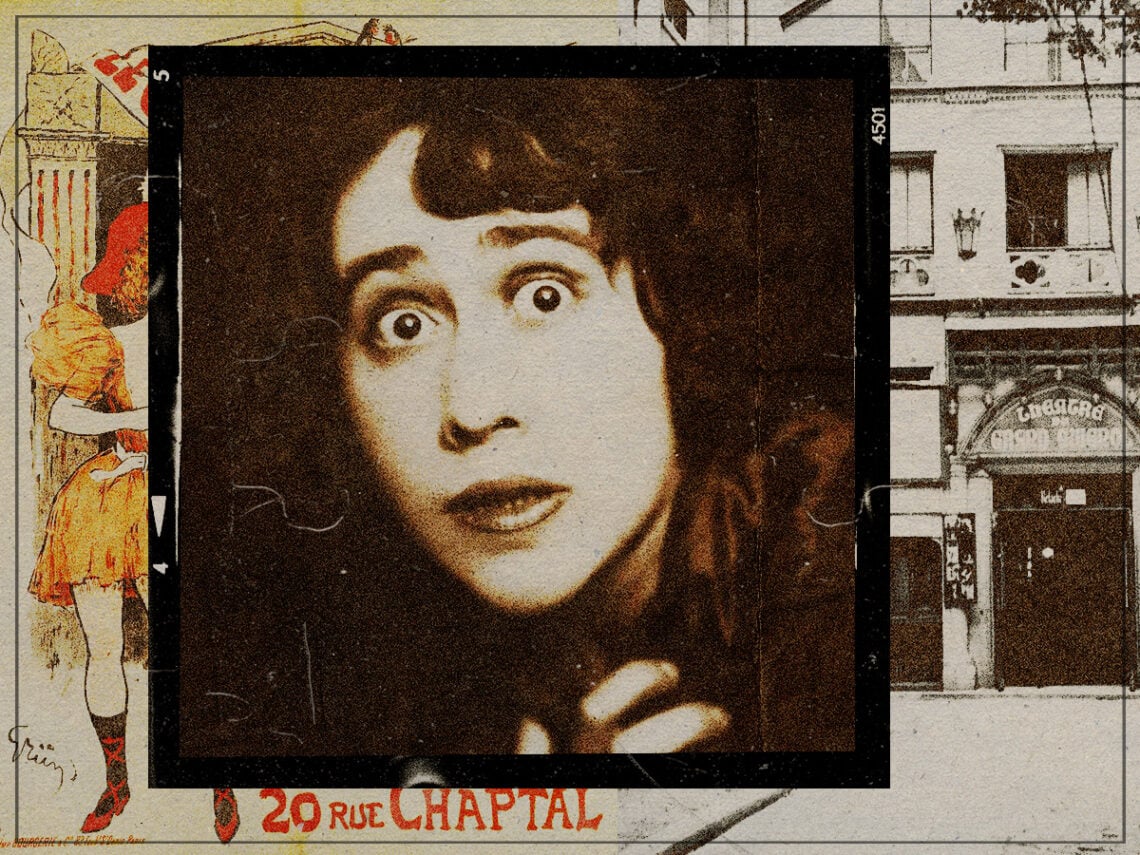
Paula Maxa: The scream queen of the Grand Guignol

A long-established horror trope is the female victim. She becomes the unwitting target of a typically male killer, often wielding a phallic murder weapon, such as a large drill or chainsaw. The frequency with which women become murder victims within horror movies has led to phenomenons such as ‘the final girl’ and the ‘scream queen’, a testament to the gender politics that infiltrate the popular genre.
Some of the most iconic ‘scream queens’ include Jamie Lee Curtis in the Halloween franchise and Scream‘s Neve Campbell, with more recent additions to the canon including Jenna Ortega and Mia Goth. However, the ‘scream queen’ trope has existed long before appearing on screen. The archetype can be traced back to Le Théâtre du Grand Guignol in Paris, where productions which featured intensely realistic simulated violence and gore were shown.
Here, spectators could watch Paula Maxa, one of the most prolific actors of the period who was often dubbed ‘The Princess of Blood’ or ‘The Most Murdered Woman in the World’. While the silent film was an incredibly popular mode of entertainment, Maxa opted to perform on stage, where people could actually hear her scream – which she did a lot, dying thousands of times for eager audiences. It has even been calculated that her characters were raped around 3,000 times during her career.
Although she briefly appeared on screen with a small role in Louis Feuillade’s Les Vampires, the iconic horror series that inspired Olivier Assayas’ Irma Vep, she was much more fond of the stage. Maxa’s first role was in Laboratory of Hallucinations, where she stepped in for one of the actors as an understudy.
Before she knew it, Maxa was the star of thousands of productions that took place in the theatre, attracting dedicated fans who couldn’t get enough of watching her face torture and death night. The actor once reflected on her gruesome career, writing, “I had to shriek in torture, wade in blood, disembowel people and descend to the profoundest depths of madness.”
Born in 1898, Maxa’s life outside of the theatre was just as grisly, so she claims, although many people have questioned the validity of some of her stories, such as having her throat slashed by a boyfriend as a teenager. Elsewhere, she told stories of violent affairs, resulting in an ex-lover’s attempt to take her life after he found her with another man.
Maxa believed that she was forced to live a life as brutal as her theatre performances, adding, “Even in my stage career, I felt this curse. From the beginning, I was given roles of victimised women. It is no wonder that most of my fan mail dealt with murder, sadism and fiendish perversions. The men who were drawn to me followed a tragic course. They became insane, killed in lust and killed themselves.”
The actor defined an era in French theatre history where the public revelled in gruesome entertainment, taking primary inspiration from true crime. Grand Guignol theatre shaped the course of the horror genre, which eventually flourished on screen. It popularised the use of realistic horror themes, such as murder and violence, over the supernatural.
