


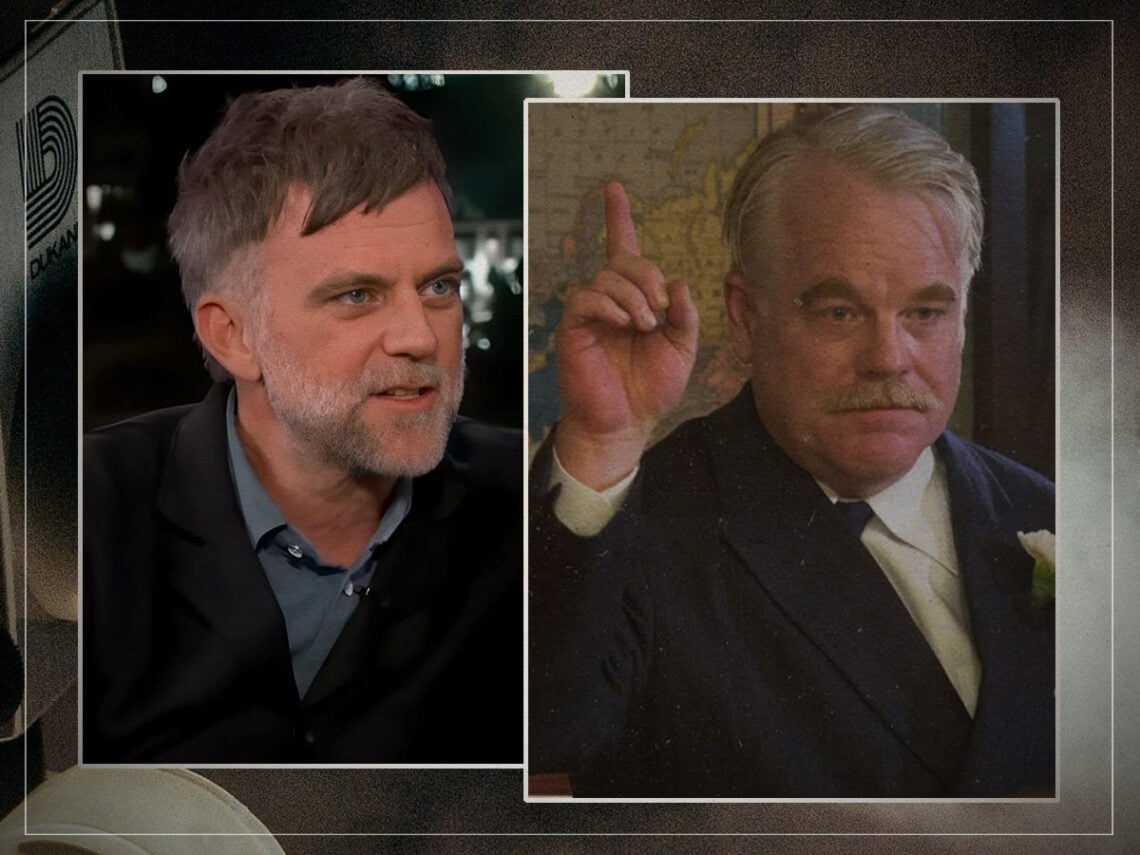
Paul Thomas Anderson on when he fell in love with Philip Seymour Hoffman: “That’s why I wrote Scotty for him”

There are some cinematic pairings whose influence has shattered the history books and redefined the world of filmmaking as we know it.
Whether it be the combination of Laura Dern and David Lynch or Greta Gerwig and Saoirse Ronan, countless decades of Hollywood history have been defined by creative couplings who took the world by storm through the sheer power of their combined prowess. From the infectious chemistry between Ginger Rogers and Fred Astaire to the tangible love between Emma Stone and Ryan Gosling, audiences of all ages have had the cockles of their hearts warmed by the electric connection between those on the big screen.
While there are many that have marked history, there has perhaps been no pairing more infamous than that of Paul Thomas Anderson and Philip Seymour Hoffman, with the director describing what drew him towards Hoffman and the one project that cemented his desire to work with him.
Ever since his first collaboration with Anderson, tackling the infamous role of Scottie in Boogie Nights, it was clear that something extraordinary had just happened, transcending his career to a new dimension through the discovery of his creative soulmate. The pair went on to work with each other many more times, becoming a constant for Anderson and returning to the familiar challenge of his layered story worlds.
Sure, Hoffman went on to rack up heavyweight turns in Magnolia, Almost Famous, Doubt and Synecdoche, New York, but you could make a good case that it was Boogie Nights that really shifted the ground under him. Playing that awkward, desperate-to-please boom operator in the middle of the porn circus – right as the whole industry starts to nosedive – felt like the moment he went from “promising actor” to “bloody unforgettable”.
The role fits Hoffman like a glove, leaving audiences unable to imagine this world without him in it. But for Anderson, the path that led him towards Hoffman was a serendipitous road marked by a strange feeling of fate, with the director describing the one performance of his that blew him away and led him to form an intense obsession about the idea of working with him.
When discussing this, Anderson recalled, “I thought that when I saw him for the first time in Scent of a Woman, that I just knew what true love was. I knew what love at first sight was. And it was the strangest feeling sitting in a movie theatre thinking, ‘He’s for me and I’m for him’. And that was it. Whoever this guy is, I gotta have him, I gotta see him, I gotta know him, I just gotta have this guy. It’s such an incredible performance.”
It also made him evaluate the kind of creative he wanted to be himself: “I said, ‘Well, I’d like to be the kind of writer and director that gives actors sort of an opportunity to do something they haven’t done before’. But I essentially knew I was calling Philip Hoffman up to do something that he’d done a version of before, but I didn’t feel bad about it because I thought, ‘well, I’ll make it the best version’. We were all just really blown away by him… that’s why I wrote Scotty for him”.
Many people have described the involvement of fate in the film business, likening the casting process to a series of divine interventions in which some higher power swoops down and hand-picks somebody for a role that you’d never otherwise find. The partnership between Hoffman and Anderson feels exactly like that—a match made in heaven that somehow stemmed from the most miraculous of beginnings.
