


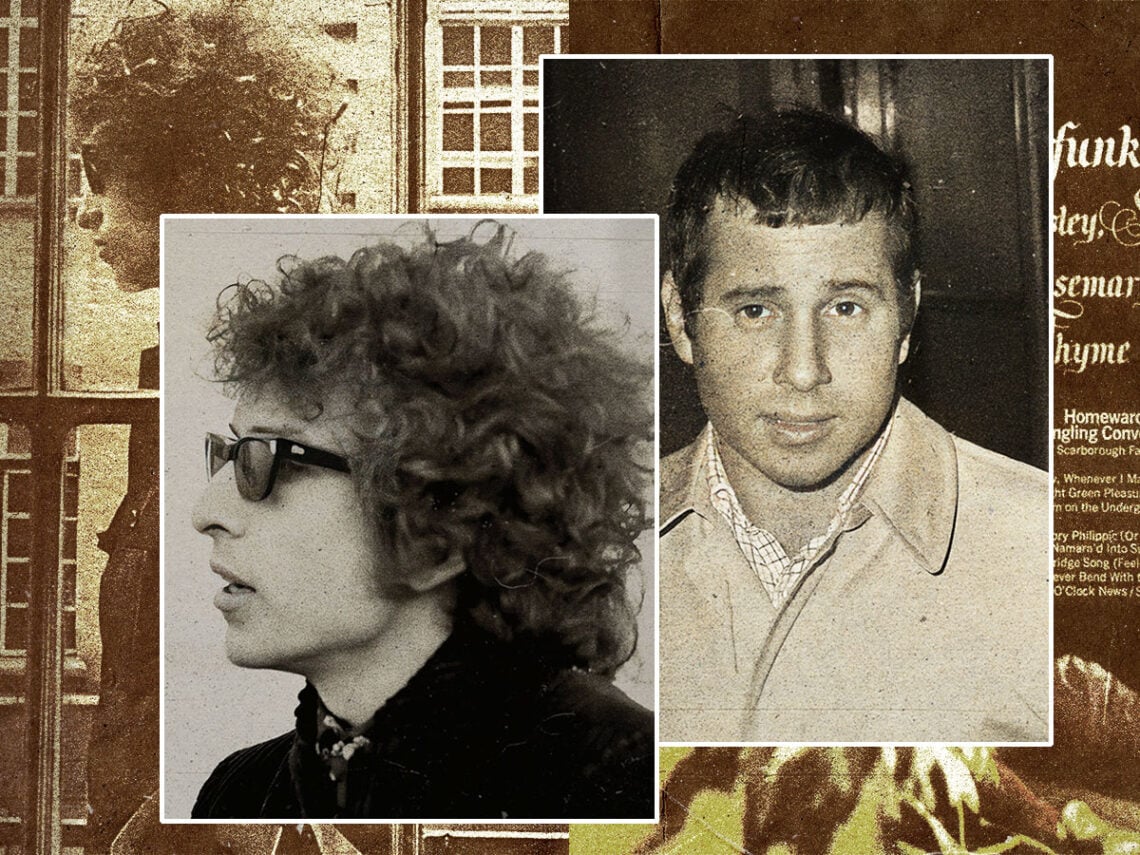
Paul Simon on the unique quality that sets Bob Dylan apart

Every list of the greatest songwriters of all time is almost guaranteed to include two names: Paul Simon and Bob Dylan. The former first earned his place in the ranks through his collaborations with Art Garfunkel, as the pair penned moving folk that would win over Grammy voters and The Graduate watchers alike. But Simon didn’t stop there.
Simon earned his place twice over when he embarked upon a solo career, creating one of the most well-loved albums of all time in Graceland. Between the bouncy titular track and the endlessly catchy ‘You Can Call Me Al’, between genre experimentation and literary lyricism, Simon had well and truly secured his place as one of the greats.
Meanwhile, Dylan had earned his own position in songwriting history with a harmonica and a knock on heaven’s door. His lyrical style was just as poetic as Simon’s, but he delved further into protest songwriting with enduring tracks like ‘Hurricane’ and ‘The Times They Are a-Changin’, turning his music into an outlet to voice his frustrations with the world, reaching for justice and for equality.
Dylan’s legacy as a songwriter often outshines Simon’s, something the latter has not taken kindly to. He also resists comparison between the pair, quoted by Peter Ames Carlin in Homeward Bound: The Life of Paul Simon as stating, “Unfortunately, I’m always being compared to Bob Dylan. Our philosophies are different.”
In an oxymoronic statement, Simon suggested that Dylan was “always [dumping] on people” more than he did. Though he didn’t seem too willing to compliment his fellow songwriting great, Simon did acknowledge one quality Dylan honed that he never could: the ability to give his words a double meaning through his vocal style.
“One of my deficiencies is my voice sounds sincere,” Simon explained, “I’ve tried to sound ironic. I don’t. I can’t.” On the other hand, he suggested that Dylan gives two meanings to each lyric he voices. “He’s telling you the truth and making fun of you at the same time,” he continued to explain, “I sound sincere every time.”
Once again, this may seem like a slightly back-handed compliment from Simon, but it’s certainly true that Dylan seems to sing as if he knows something we don’t. It’s part of his charm and his appeal – his complex lyrics are just waiting to be dissected and deconstructed, while his vocal style dares you to try and pin down the meaning of his words.
In ‘Lay Lady Lay’, for example, Dylan’s nasal vocals veer high and low, knowing and inviting all at once. His words contain the sexual undertone of the track, but they don’t give it away too brazenly. Still, that’s not to say that there isn’t also a level of sincerity in Dylan’s vocals. Particularly when he sings words of protest, his raw singing style breathes real life and belief into each and every line, forcing you to sit up and listen.
Meanwhile, Simon’s singing is often playful and upbeat, sometimes steeped in real melancholy, but it’s never particularly mysterious. Even if there may be an irony or some kind of double meaning to his lyrics, it seems that Simon can’t quite get this across in his delivery. This isn’t necessarily a flaw in his work; it’s just his style.
Still, it’s not Dylan’s ability to portray a double meaning that has often led him to rank above Simon for his songwriting talents. Both are exceptional lyricists and musicians in their own right; whose music you prefer is simply down to personal taste.

Never Miss A Tale
The Far Out Bob Dylan Newsletter
All the latest stories about Bob Dylan from the independent voice of culture.
Straight to your inbox.