


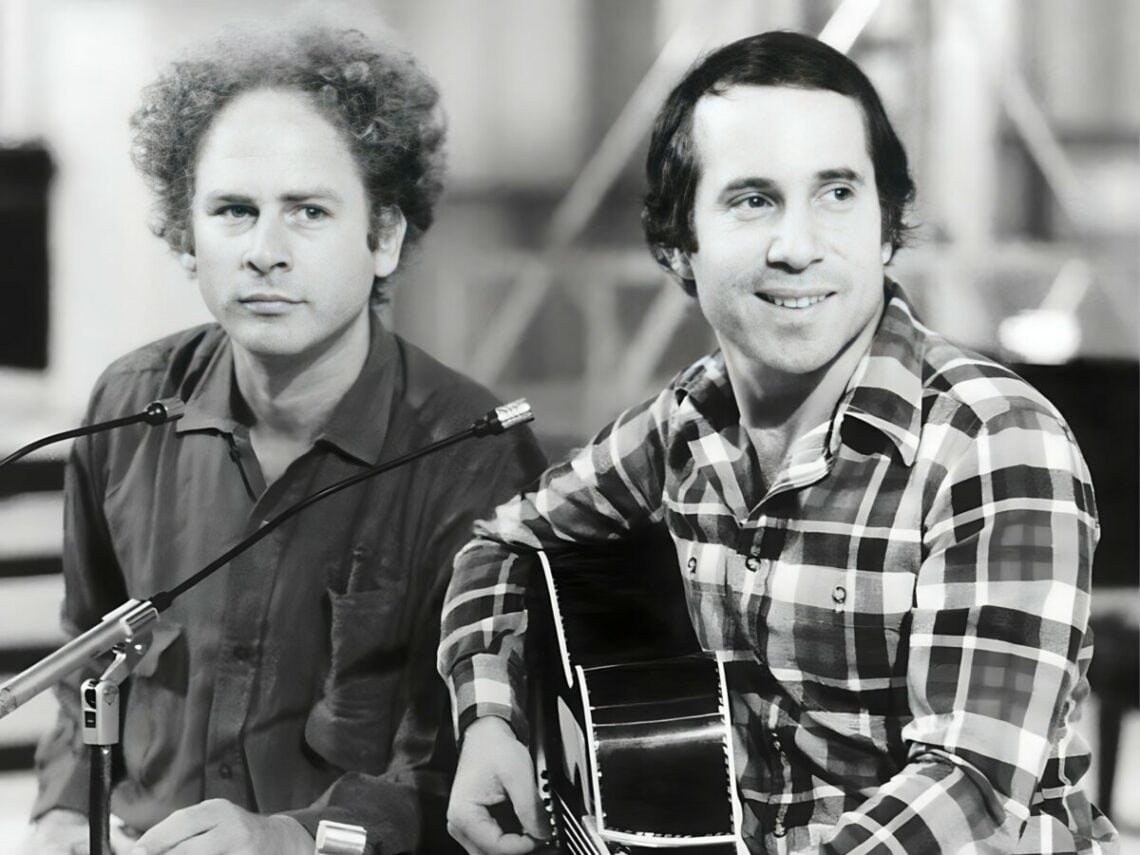
Why Paul Simon found the success of Simon and Garfunkel scary: “We were still two individuals”

After emulating the Everly Brothers as Tom and Jerry in the late 1950s, singer-songwriter Paul Simon and harmonising vocalist Art Garfunkel reunited as Simon and Garfunkel. This time around, the duo embraced folk-rock in classic hits like ‘Mrs. Robinson’ and ‘The Sound of Silence’ and became the most significant double act in the 1960s pop scene. Unfortunately, it seemed no success could reconcile the pair’s turbulent working relationship.
The friction between Simon and Garfunkel was rooted in creative dissonance but elevated to volatility by the former’s controlling nature. Speaking to the Sunday Telegraph in 2015, Garfunkel described his former musical partner as a “monster” at times due to his overbearing “Napoleon complex”.
The singer later recalled a conversation he once had with George Harrison, who endured a similar situation in The Beatles in the late 1960s. “George came up to me at a party once and said, ‘My Paul is to me what your Paul is to you,'” Garfunkel recalled. “He meant that psychologically, they had the same effect on us. The Pauls sidelined us. I think George felt suppressed by Paul and I think that’s what he saw with me and my Paul.”
As Bob Dylan sang in his classic folk track ‘One Too Many Mornings’, “You’re right from your side/I’m right from mine”. There is always a story to both sides of an argument. So, while Garfunkel may have found Simon’s ego imposing, there were supposedly aspects of his personality and an unyielding nature that exacerbated the fractured relations between the pair.
The acrid divide that manifested between Simon and Garfunkel through the late 1960s, culminating in their first significant disbandment in 1970, may not have occurred if they shared the same creative vision. Alas, as the songwriter, Simon sought to drive the duo towards more pop-conscious pastures while continuing to evolve from their roots in folk. In contrast, Garfunkel preferred a more traditional folk sound, as exhibited in their famous 1966 reimagination of ‘Scarborough Fair’.

Though they saw eye to eye as budding hopefuls in the early 1960s, both were altered irreparably by their own fame and success. As previously mentioned, Garfunkel was never particularly fussed about contemporary pop trends. He simply wanted to sing for those who might care to hear, and his early-1970s career move to teach mathematics at a prep school attests to his dispassionate view of the limelight.
Meanwhile, Simon, the primary songwriter, sought and feared commercial success in equal measure. He found immense satisfaction in receiving a positive response to his music and took any criticism to heart. Fame became particularly difficult for Simon when commercial viability began to impose restraints on his creative vision.
In a conversation with The New York Times in 1972, Simon reflected on Simon and Garfunkel’s success, which seemed to run on an inverse trajectory with their personal relationship. He recalled that ‘Bridge Over Troubled Water’ was initially just two verses but was too brief to be commercially viable. “I’d already said what I wanted the song to say in the first two verses,” he said. “But now I had to come up with this third verse, which sounds to me like the Righteous Brothers or something like that. I mean, it fits in a record sense – it makes the record happen – but, as a song, the metaphor got ruined.”
Despite Simon’s reservations, the song prospered, with over 25 million dollars in sales banked in the first couple of years. Sadly, this positivity was not reflected in Simon and Garfunkel’s relationship. “Simon and Garfunkel had become so big it was scary,” Simon added. “But we were still two individuals, and after a certain point, it became very hard to take criticism from each other. I used to feel, ‘I don’t have to audition my songs for anyone.’ I didn’t want to have to say to Artie, ‘Would you like to sing this song?’ I wanted to say, ‘Here’s the song; let’s do it.'”
Speaking to Forbes in 2023, Garfunkel suggested that he generally consented to Simon’s songwriting ideas. “He loved my opinion because I always told the truth,” Garfunkel said. “He would show me the song, and invariably I’d go, ‘It’s great. You are a wonderful songwriter, Mr. Simon.'” Remembering their numerous reunions over the years, he added, “He’d show me other songs he was working on, and I’d try to fix them, sing them, and before you knew it, we were Simon and Garfunkel again.”
Though he admitted that his memory wasn’t what it used to be, Garfunkel only remembered one significant instance where he rejected one of Simon’s songwriting submissions. “‘Cuba Si, Nixon No’ was meant to be the 12th song on our Bridge Over Troubled Waters album. I said to Paul, “I think the politics are too blatant. “‘Cuba Si, Nixon No’ is too simplistic a way of thinking, and I won’t sign on to it. My sense of politics is more sophisticated.” Though the song never appeared on Bridge Over Troubled Water, it has cropped up as a live recording on unofficial platforms.
