


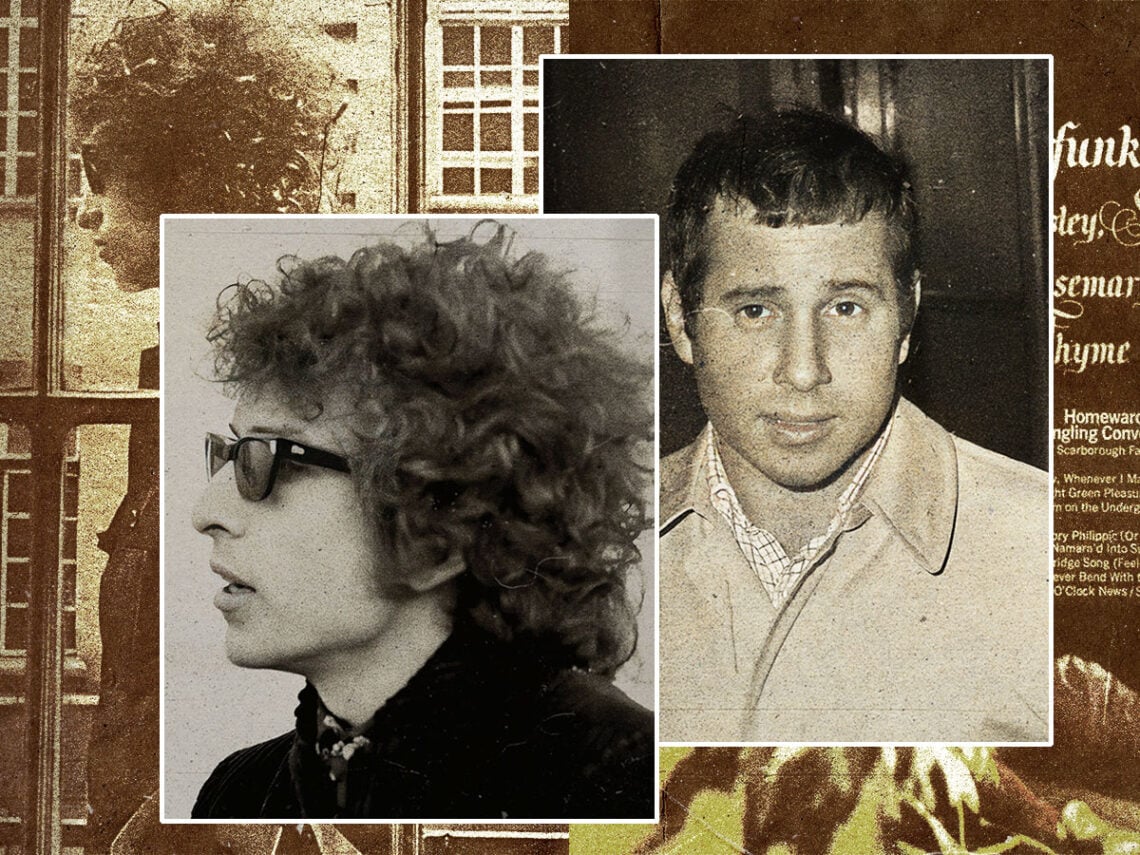
Paul Simon picks the strongest Bob Dylan melody

Bob Dylan made a seismic impact on music when he arrived in the early 1960s. A folk legend channelling the spirit of his ultimate hero, Woody Guthrie, Dylan galvanised the craft of songwriting, which had been languishing in the doldrums of cloying pop for years. His rise was the spark that lit the fire of what was to come, with titans such as The Beatles and Pink Floyd noting his importance to their art. Almost every icon from this era cites him as a defining influence, including fellow folk hero Paul Simon.
Dylan’s work affected all popular music after his arrival, but one area he was particularly significant for was folk music. While folk had been enjoying something of a revival outside of his emergence due to the popularity of his future partner, Joan Baez, and older pioneer, Bob Gibson, Dylan brought the genre to the masses by fusing it with his deeply perceptive poetic twists.
Dylan was so inextricable from the folk explosion of the early 1960s that after he went electric on 1965’s Bringing It All Back Home, a disaffected Scottish folkie was so enraged that he felt compelled to stab the American musician. That’s how cherished he was by the folk community, who saw his early acoustic work as the genre’s pinnacle. His decision to pick up the electric guitar was regarded as unadulterated treachery.
Paul Simon was one of Bob Dylan’s most prominent folk adherents. He was so greatly indebted to the Duluth minstrel’s work, such as his preference for potent melodies, that he even penned ‘A Simple Desultory Philippic (Or How I Was Robert McNamara’d Into Submission)’ from Simon and Garfunkel’s third album, 1966’s Parsley, Sage, Rosemary and Thyme, in the style of Dylan. In it, he adopted his scat-like singing style and surreal rhyme scheme.
“I thought that second Dylan album, Freewheelin’ Bob Dylan, was fantastic,” Simon told Rolling Stone in 1972 about the folk hero’s widely influential 1963 album. “It was very moving. Very exciting.”
In the same conversation, Simon also picked out what he believed was Dylan’s most powerful melody. Unsurprisingly, it was ‘Blowin’ in the Wind’ from The Freewheelin’ Bob Dylan, a track widely considered one of his very best. It’s a protest song that poses several rhetorical questions about peace and war, with the refrain, “The answer, my friend, is blowin’ in the wind”, driving the sentiment home.
“Well, you can go back and pick out five or six very important Dylan songs,” Simon said. “I’m aware of that because he became popular a year or so before we did. Many of his still make it for me, whereas only a few of mine make it for me. I like his earlier stuff. His early songs were very rich, simple but very rich, with strong melodies. ‘Blowin’ in the Wind’ has a really strong melody. He so enlarged himself through the folk background that he incorporated it for a while. He defined the genre for a while. That’s quite an accomplishment.”
Listen to ‘Blowin’ in the Wind’ below.

Never Miss A Tale
The Far Out Bob Dylan Newsletter
All the latest stories about Bob Dylan from the independent voice of culture.
Straight to your inbox.