


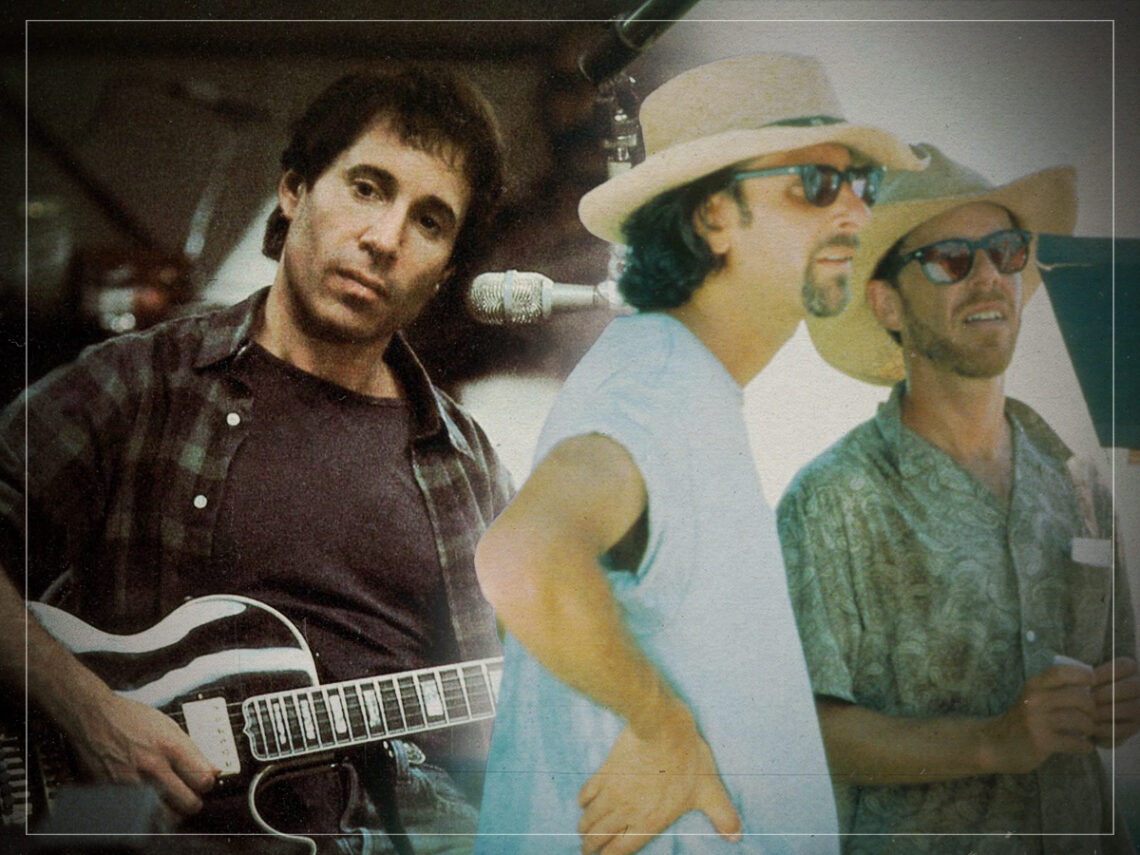
“It was terrible”: Paul Simon had no time for the Coen brothers’ folk movie

I’m curious to remind myself, at what point did music biopics truly get out of hand?
Way back when, some truly brilliant biopics were being delivered that provided a detailed view into one saturated slice of a musician’s career. But then a corner was turned, and legendary careers were being manipulated into IP, so that glossy highlight reels of an entire musician’s life could be greenlighted and fed to us like slop in the local cinema.
How can you truly compare Walk the Line with Elvis as two biopics that genuinely provide an impactful view into the life and times of a musician? One feels like a heartfelt drama that mirrors the complex life of a musician, while the latter is nothing more than a YouTube highlight reel projected onto the big screen.
Dexter Fletcher’s one-two punch combination of Bohemian Rhapsody and Rocketman has a large part to do with this, seemingly designed to win obvious acting awards while simultaneously boosting the ticket sales of one Elton John, who in 2026 is on the 50th year of his farewell tour.
Both films epitomised the glossy baselessness of a biopic gone wrong, but have proven that the formula is something of a box office certainty, and so everyone quickly followed suit, commissioning films about the next great legacy act.
It’s a shame, because done well, the biopic can be a compelling genre. The aforementioned Walk The Line proved that, along with Eminem’s 8 Mile, which gave a relatively non-glamourised look into the realities of America’s underground rap scene and subsequently made a wider comment on the country’s socio-economic politics. Ultimately, given how art and politics so regularly intersect, a biopic done well is an opportunity to engage with something wider than just the discography of whatever artist it focuses on.
Which I personally thought the Coen brothers did with their folk film Inside Llewyn Davis. Loosely based on New York folk singer Dave Van Ronk, it tells the story of the scene’s lesser-known artists, who were overshadowed by the booming popularity of Bob Dylan and the subsequent push by labels to capitalise on that and brutally commercialise folk.
But while its somewhat cold and melancholic portrayal of the lead character gave an authentic insight into the struggles often overlooked in that time, Paul Simon was less than impressed.
“I skipped it, I heard it was terrible,” he said when asked if he caught a screening of a film so linked to his career beginnings. He added, “It was based on Dave Van Ronk, who I knew, but they didn’t. I like the Coen brothers, I think they’re really good – really good, but I figured, you’re never going to get Dave Van Ronk right. He was a real character, and they’re going to try and capture the folk scene, and they’re not going to get it, and I’m going to look at it and say, ‘That’s not how it was.’”
If Simon is making that judgment on Inside Llewyn Davis, then it’s probably for the best that he steers well clear of the most recent fleet of biopics. Because, despite the emotional inaccuracy Simon claims to exist in the Coen brothers’ film, it is certainly not a glamourising puff piece like the rest.
