


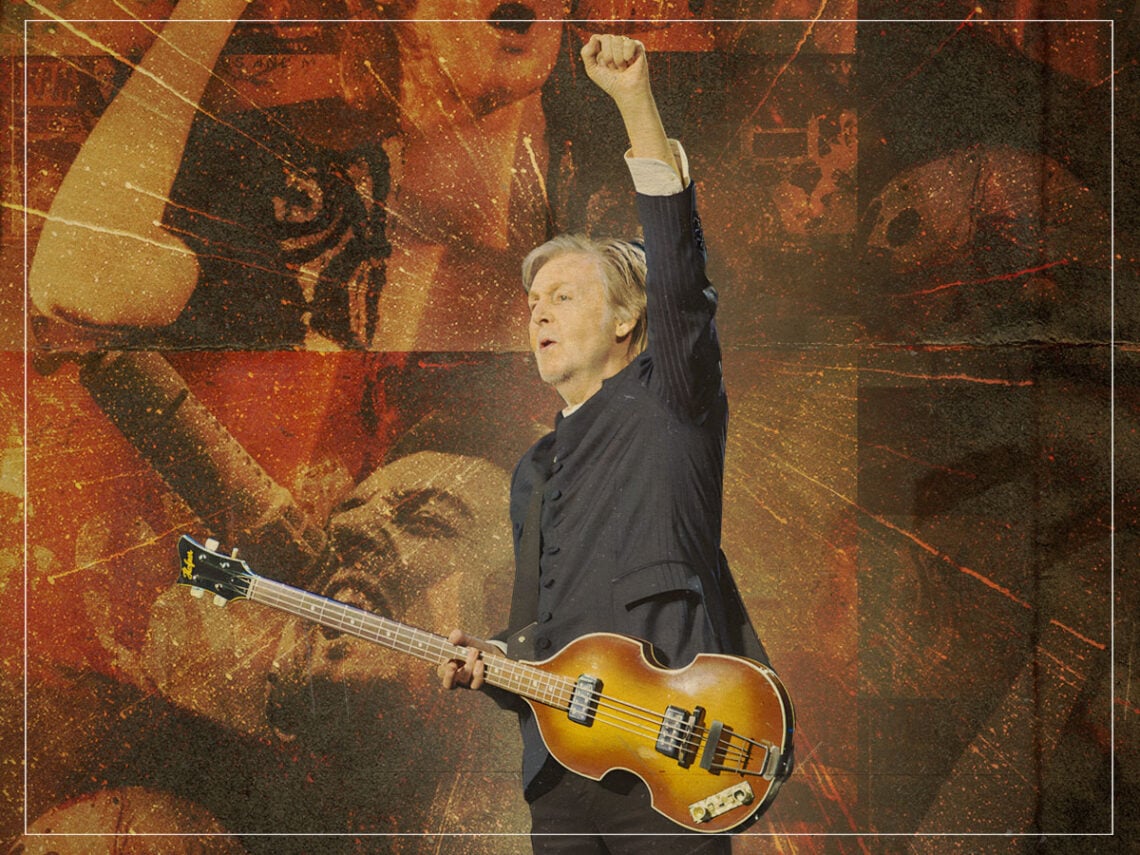
What is Paul McCartney’s strongest bassline on any Beatles album?

One of music’s most iconic songwriters and multi-instrumentalists, Paul McCartney’s association with the instrument that started it all is often overlooked. Whether picking the acoustic guitar for ‘Blackbird’ or sitting behind the piano for ‘Hey Jude’, his legacy has superseded the role he emerged with as floppy-haired bass player and vocalist in the early days of The Beatles.
Maybe that’s because, by his own admission, it wasn’t where he wanted to be in The Beatles line-up. In his book The Lyrics: 1956 to the Present, McCartney said: “We couldn’t have three guitars and no bass. Nobody wanted to be the bass player in those days because it was always the fat guy playing bass,” he continued, “There seemed to be some sort of stigma attached to it.”
While the early discography of The Beatles may have forced that opinion, with their rockabilly sound creating more of a facilitating rhythmic role as opposed to one of the flourishing basslines, the development of their music undoubtedly proved his proficiency as one of the instrument’s great players. In fact, in a 1980 interview with David Sheff, John Lennon said: “Paul is one of the most innovative bass players”.
He continued, “Half the stuff that’s going on now is directly ripped off from his Beatles period”.
McCartney’s basslines from what Lennon describes as ‘The Beatles’ period are a natural by-product of a band whose sound is so all-encompassing. As The Beatles’ sound developed through the 1960s and their touring career finished, McCartney could utilise the instrument as a means of rhythmic experimentation and thus developed countless bass lines that established the norms of root-note timekeeping.
By 1967, when The Beatles entered the studio for their groundbreaking experimental album Sgt. Pepper’s Lonely Hearts Club Band, the realms of possibility that existed within McCartney’s bass guitar, seemed limitless.
When asked about his individual performances on that record, in a 1994 interview with Tony Bacon for MusicRadar, McCartney said: “Yeah, that was really when I got into that. That was probably what ended up being my strongest thing on bass: the independent melodies. ‘On Lucy In The Sky With Diamonds’, you could easily have had [he sings a root-note version through the first few chords]. It would have been like Louie Louie or something. Whereas I was going [sings the Lucy bass-line], just running through that. It’s only really a way of getting from C to F, or whatever, but you get there in an interesting way. That became my thing, doing that.”
McCartney’s bass in this particular song fills the space between the melodies, walking up the scales in sixth beats in a way that only someone of McCartney’s melodic and songwriting prowess could. Being the songwriting powerhouse he was, once McCartney unlocked the melodic capabilities of the instrument, it blew open The Beatles’ ability to intertwine multiple melodies and motifs in one song.
In the same interview with Bacon for MusicRadar, McCartney said: “From the word go, once I got over the fact that I was lumbered with the bass [laughs], I did get quite proud to be a bass player, quite proud of the idea. Once you realised the control you had over the band, you were in control. They can’t go anywhere, man. Ha! Power!”.
Thereafter, McCartney’s contribution to the band’s records on bass was consistently melodic and flourished on Abbey Road, where standout tracks ‘Something’ and ‘Come Together’ showcased his penchant for creating distinct melodic lines and harmonic movements that existed within each record’s chord change.
While the legacy of The Beatles’ songwriting partnership focuses mainly on the penning of melodies and lyrics that platformed the progression of modern pop songwriting, the colouring of the lines in between gets largely overlooked. Sub-categorising Beatles fans as either Lennon or McCartney campmates is a reductive albeit clear indicator of people’s melodic preferences: poppier Paul and his jovial love songs or Lennon’s gritty and nonsensical mind. Regardless of what McCartney’s bass parts highlight where their contrasting styles are married in one song, their push to be heard individually always achieved greatness.

Never Miss A Beat
The Far Out Beatles Newsletter
All the latest stories about The Beatles from the independent voice of culture.
Straight to your inbox.