


How many musical instruments can Paul McCartney play?

Can the world’s most successful songwriter ever truly get the recognition he deserves? Sure, you could argue that the proof is in the title—Sir Paul McCartney—but therein lies part of the issue. Even before his knighthood, Macca was seen as the establishment Beatle. While John Lennon was the radical, George Harrison the spiritualist, and Ringo Starr the everyman, Paul was the knight of the realm. The perpetually cheerful thumbs-aloft figure, responsible for divisive Christmas tunes and forever associated with his peculiar-looking Hofner bass, has often been overshadowed by his own caricature.
I’d listen if you want to argue that’s enough for anyone. Despite the death of the monoculture, our celebrities are worshipped more than ever and maybe saying that there are hidden depths to a literal Beatle is part of the problem. However, McCartney has always been a braver, more boundary-pushing musician than he’s given credit for. Sure, Lennon and Harrison were both turned onto experimental and out-there art styles at the Fabs’ peak, but neither of them wrote ‘Helter Skelter’.
Even the music that Lennon famously dubbed “granny shit” takes a level of bravery. It’s one thing to freak out the squares and be feted as the height of taste for it, it’s quite another to wear your squareness proudly and embrace it whole-heartedly. This musical omnivorousness can be seen in the sheer amount of musical instruments the man has turned his hand to. Now, of course, he’s a superlative singer, bassist and piano player, but his first instrument was the trumpet, which he took up at age five.
While McCartney was an enthusiastic trumpeter, Lennon discusses his actual skill in The Beatles’ Anthology, saying, “He had this wild theory that he’d actually learnt how to play the oldie ‘When The Saints Go Marching In.’ He just blew away as hard as he could, drowning out everything we were trying to do. He thought he was doing a great job on the tune, but we didn’t recognise any of it!” It wasn’t the last time his musical ability failed him, though.
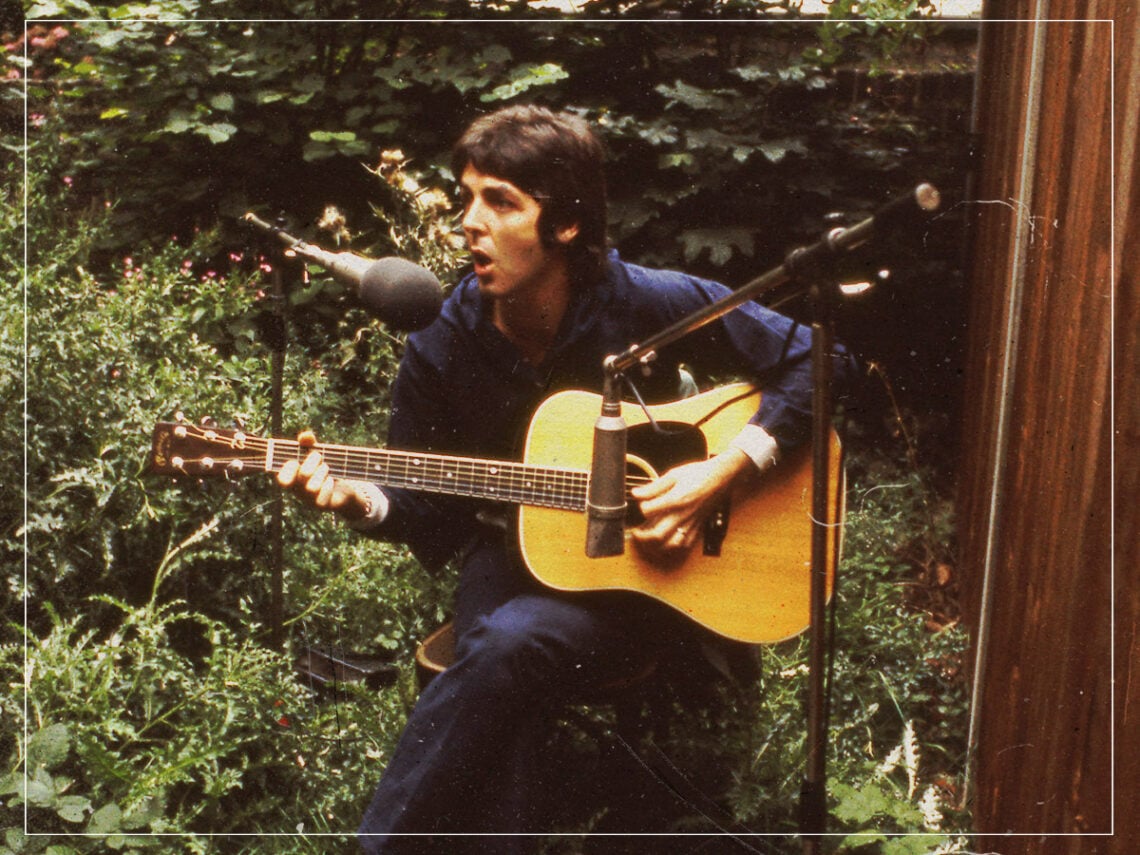
Even in the Beatles, his first instrument was the guitar. He was only handed the low end because his stage fright prevented him from soloing, which was a young George Harrison’s speciality. Once the band swore off touring, McCartney had the time to expand his musical palette, becoming a capable enough drummer to wield the sticks on tracks like ‘Back In The U.S.S.R’ and ‘The Ballad of John & Yoko.’ He’s no Ringo, but he’ll get you where you need to go. His solo career, though, is where you can really see what a musical polymath McCartney became.
On several of his solo records, including the feted ‘McCartney’ trilogy, feature no other instrumentalists beyond Maccers himself. Seeing him take on organ, Mellotron, synthesizers and on one baffling credit for McCartney I, wineglasses. I could have sworn that was Ringo’s solo career? McCartney III, recorded over the Covid-19 lockdown and documented for a film release by Jack White’s Third Man Records, is where Paul really cuts loose. Recording tracks on the mandolin, harpsichord, cello and the harmonica. There’s even a wonderful video of McCartney doing a solo cover of ‘Heartbreak Hotel’ on the double bass which has to be seen to be believed.
Of course, no one needs critical reappraisal less than the man who wrote ‘Yesterday’. However, it is always good to give credit where it’s due, and Paul has a lot more musical depth than many would assume. Dive into his solo career, and there’s no telling what you might find.

Never Miss A Beat
The Far Out Beatles Newsletter
All the latest stories about The Beatles from the independent voice of culture.
Straight to your inbox.