


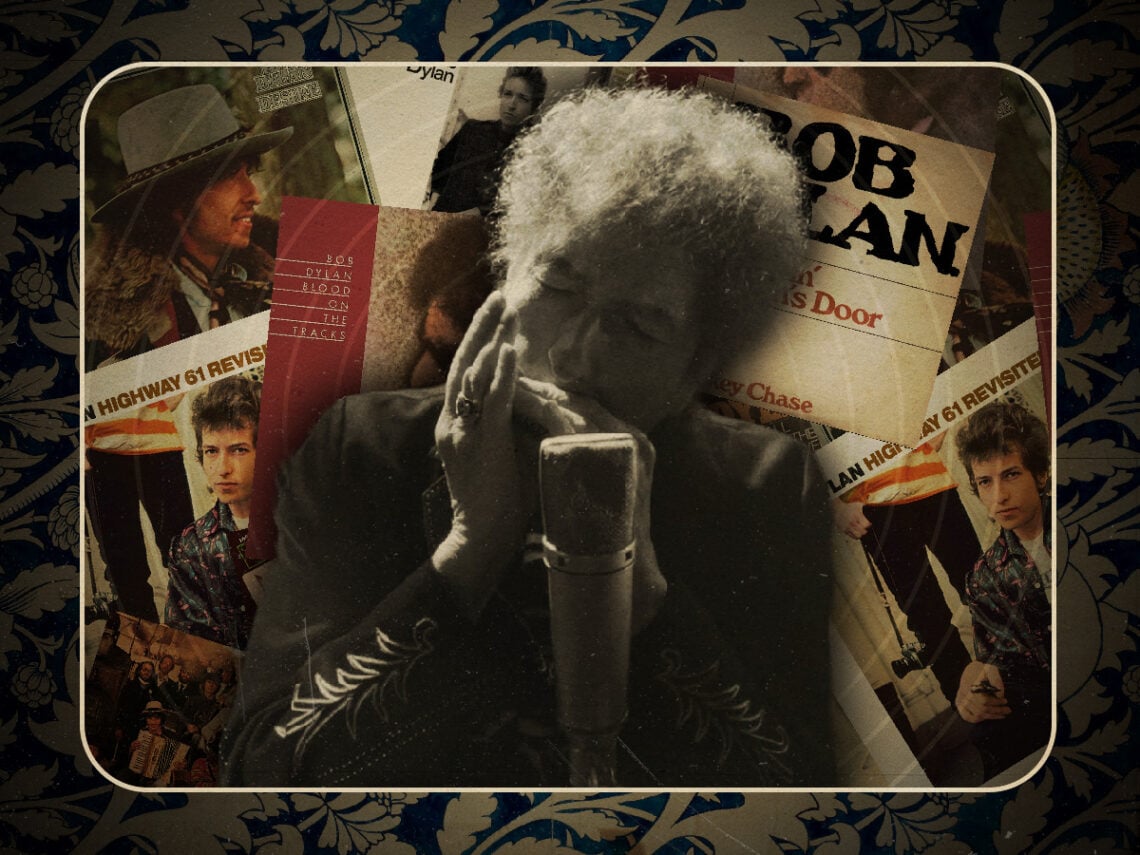
The song Paul McCartney, David Crosby, and Hunter S Thompson all agreed was Bob Dylan’s best: “The Hippy National Anthem”

As the 1960s hurtled to a close, Hunter S Thompson mused on the decade as time careened around the bend, “It seems like a lifetime, or at least a Main Era – the kind of peak that never comes again.”
His chin-stroking, cigarette-smoking rumination continued, “San Francisco in the middle ’60s was a very special time and place to be a part of. Maybe it meant something. Maybe not, in the long run… but no explanation, no mix of words or music or memories can touch that sense of knowing that you were there and alive in that corner of time and the world. Whatever it meant.”
Thompson had mused a lot during the decade, but that closing remark – “Whatever it meant” – has proven to be his most prophetic, and arguably, in its inextricable mysticism, profound. Even today, endless polemics continue to try and catch the soul of the decade like Fisher-Price nets trawling the Atlantic in search of a white whale.
The dastardly 1960s were elusive by nature, flitting between dreams and nightmares. So, it is perhaps fitting that Bob Dylan’s epic anthem about dodging sleep and soaking up a peak may well capture what life was really like in the decade better than any other. If its meaning was mystic, then at least Dylan brought clarity to its experiential high-point with ‘Mr Tambourine Man’.
As Paul McCartney rather mildly put it when selecting the 1965 track as his favourite song by his “idol” in a recent edition of Mojo, “A really good song, very much of the period. Totally nailed that year. I was lucky to be there.” Thompson seemed to think that it captured more than just ‘65 and came as close to encapsulating the fabled “whatever it meant” as anything.
As he documents in Fear and Loathing in America: “This, to me, is the Hippy National Anthem,” he writes about Dylan’s anthem. “To anyone who was part of that (post-beat) scene before the word ‘hippy’ became a national publicity landmark (in 1966 and 1967), ‘Mr Tambourine Man’ is both an epitaph and a swan song for the lifestyle and the instincts that led, eventually, to the hugely-advertised ‘hippy phenomenon‘”.
If you were to draw a child of the hippy phenomenon, the outcome might look like a photofit of David Crosby (of which there are plenty), so it’s little wonder that he also connected with the track. “Bob is a freaking wonderful poet. He’s a really skilful, inspired poet,” he said when selecting this song as his favourite for a Stereogum feature shortly before he passed away. “His handling of words at that point in his life is about as good as anybody is, period.”
“That’s what really struck me. Musically, it’s a really simple old tune. It’s no problem. But the lyrics are stunning.”
David Crosby on ‘Mr Tambourine Man’
McCartney firmly agrees. “I used to lose his songs in the middle, but then I realised it didn’t matter,” he told Flip in 1966. “You can get hung up on just two words of a Dylan lyric. ‘Jealous monk‘ or ‘magic swirling ship‘ are examples of the fantastic word combinations he uses. I could never write like that, and I envy him. He is a poet.”
On this occasion, with ‘Mr Tambourine Man’, he poeticised on the simple desire for freedom in youth. The swirling ships that populate the song are the mirage of a dreamy night out drinking in New Orleans. If Thompson figured the buzz of the era was borne from the “sense of inevitable victory over the forces of Old and Evil”, then Dylan’s ‘65 single removed the battle.
On weary legs, with scuffed shoes, ‘Mr Tambourine Man’ watches the sun come up and utters, ‘If this isn’t nice, what is?’ For one night only, maybe, that was victory enough.

Never Miss A Tale
The Far Out Bob Dylan Newsletter
All the latest stories about Bob Dylan from the independent voice of culture.
Straight to your inbox.