


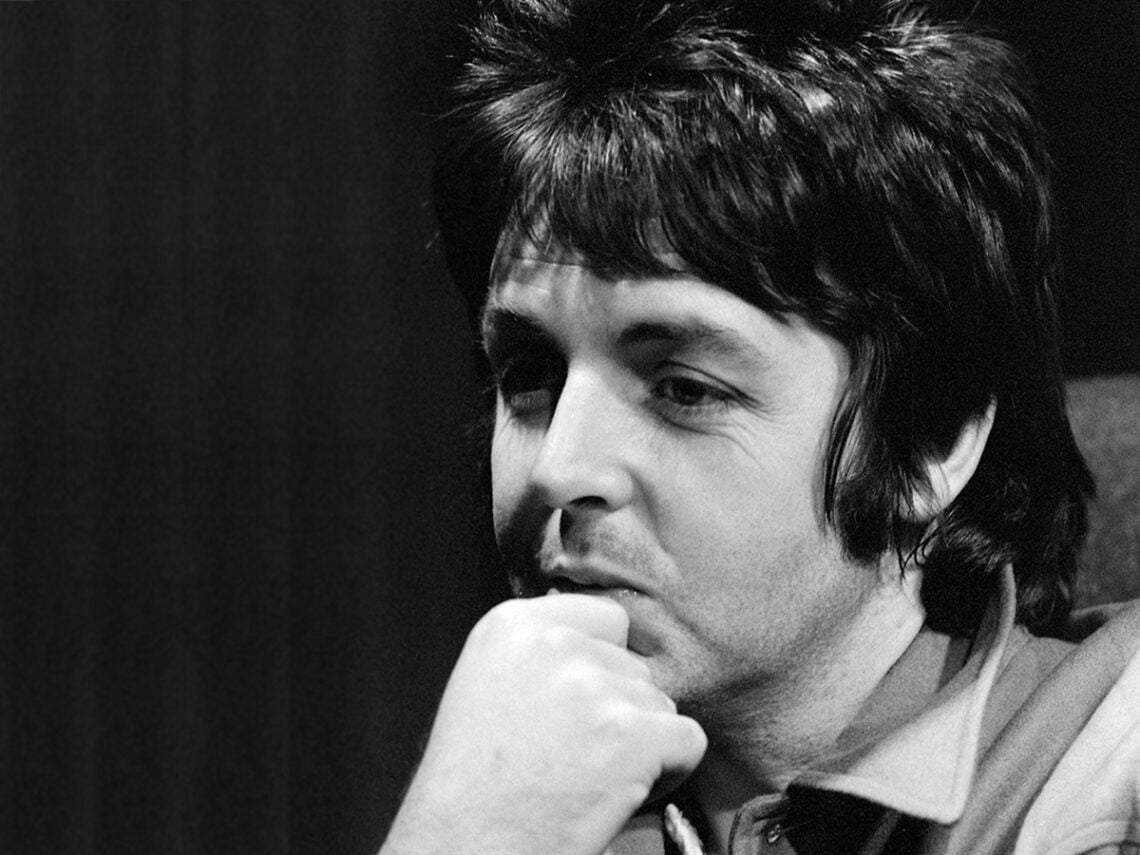
“Really risky”: Paul McCartney on Wings and his biggest professional gamble

Despite being one of the driving forces in The Beatles, the most inventive and innovative band in popular music of their time, Paul McCartney doesn’t have a big reputation for taking risks. When you are as naturally talented or as curious and creative as McCartney is, then most experimentation doesn’t really come with a high risk built in, anyway, as the chances that your ideas won’t work out are slim to none. Even if they do fall short of expectation, they will rarely, if ever, fall completely flat.
In fact, McCartney wouldn’t describe himself as much of a risk-taker. When asked if he was one in a 2023 interview for his website, he said, “Not really, no. I’m quite careful normally”, before going on to compare himself with the other half of the Lennon and McCartney songwriting team. “Inherently, I’m not a risk-taker. I weigh things up and try to be pretty careful. I was the polar opposite to John. If there was a cliff to be jumped off, John would jump! He would just dive into things, and I would sometimes have to rescue him and say, ‘Hey man, you shouldn’t be doing that!’”
But while he may always try to weigh things up or be careful, sometimes a situation calls for a little less contemplation and a little more action. When The Beatles broke up, taking the rest of his band to court was a risk, but McCartney took it, and ultimately, it paid off as the group kept control of their finances as a result of the action. Starting a new band so soon after The Beatles broke up was another risk, but again, McCartney took it and went on to write some of the best music of his career with Wings.
In fact, it was starting this second band that McCartney picked out as the biggest risk in his whole career, “The main question I had was whether to keep going after The Beatles because it was a hard act – some might say, an impossible act – to follow. The ingredients in The Beatles were so unique. You had John right there, who could have made any group brilliant. Then you had George’s talent, and Ringo’s, and then me.”
Adding: “Once that band had finished, I didn’t know what to do with myself, and trying something new was really risky. Then, of course, having Linda [McCartney] in Wings, when she was not a ‘musician’, was a risk too. When the reviews started to come in, a lot of them focused on her, asking, ‘What’s she doing in the band?’ And that was hurtful. But I rationalised it by thinking about when we started The Beatles and none of us knew our chords – over time, we got better and picked things up.”
Considering the backlash that Yoko Ono had received for her proximity to The Beatles towards the end of their time together, it was a bold move to start a band with his wife, Linda, but one that ultimately paid off. Naturally less experimental than the work that John Lennon and Yoko Ono would do together, the McCartneys proved to be perfectly suited to song-writing together and came up with a vast number of songs – such as ‘Jet’, ‘Band on the Run’, ‘Live and Let Die’, ‘Let Me Roll It’, ‘Silly Love Songs’ and plenty more besides – which could rival anything that McCartney and Lennon had done together ten years earlier.
But they didn’t want to just pick up where The Beatles left off. McCartney recorded most of Wings’ first album by himself, but when he got the band together, he felt they needed to take some time away from the spotlight to gel and work on their chops: “In the early days of Wings, we decided to go right back to square one, taking a van up the motorway and playing little spontaneous gigs at universities for students, rather than jumping straight in with big live shows. I’d doubled back to almost being nothing – just some guy in the band – and now I was earning my fame again.”
Perhaps this was the biggest risk of all. What if the McCartney moment had passed and Wings never earned his fame back? Like that would ever happen. Concluding, “By the time the mid-1970s came around when we were doing a big American tour, that was the vindication of it. We were so tight and had come up together, as it were. The risk paid off.”
