


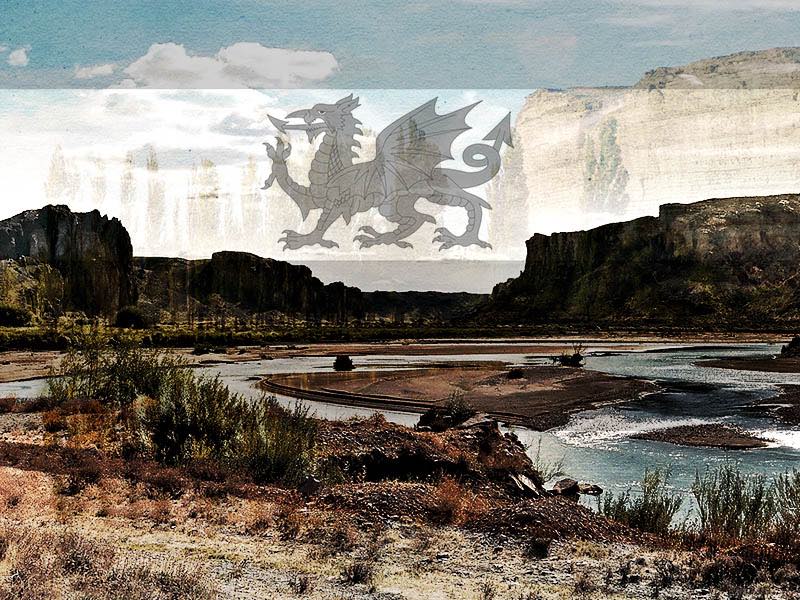
Patagonia: Understanding the Argentinian community who sing in Welsh

In 1865, around 150 Welsh natives decided to leave their homeland behind to start a new life on the other side of the world. Rather than follow the Irish’s lead and choose America, a small community in Wales opted for a small corner of Argentina to descend upon.
Why Patagonia, you ask? It was nothing more than a wasteland in Argentina, but it was a blank canvas and a location in which they could create a miniature version of their home. In Britain, there had been a push on Anglicanism, which threatened the future of the Welsh language, and radical nationalist Michael D Jones decided that Patagonia presented the solution to their problems.
Convincing people to leave their life behind and start fresh was not an easy sell for Jones, but he had enough loyal followers who hung off his every word to make a start. The Welsh fascination with Patagonia began three years prior when publisher Lewis Jones and liberal politician Sir Love Parry-Jones became the first to move to Patagonia. They were handed a plot by an Argentinian minister and then wrote about the promised land in a pamphlet distributed back home.
Some of those 150 who made the 8,000-mile journey across the Atlantic were the ancestors of Super Furry Animals frontman Gruff Rhys. His side of the family stayed while their relations helped create a Welsh-speaking utopia in the Chubut Valley area of Patagonia.
Once arriving in the valley, the Welsh founded the town of Rawson, which is now the capital of the Chubut Province. At first, the relationship between the settlers and the native Argentinians was uneasy, but they learned to live peacefully alongside one another in harmony.
In the 20th century, Welsh became a minority language following immigration from southern Europe, but remarkably, it never died out. In 2022, three Welsh/Spanish primary schools are standing in the province of Chubut, which is a mark of the journey made in 1865, and proof of how these two cultures have intertwined — albeit on a micro level.
From the moment that Rhys discovered his family roots as a child, he was compelled by the idea of Chubut and wanted to meet his long-lost relatives. In 2009, he finally made the voyage out to South America and made the documentary Seperado, which explored the phenomenon of Welsh language music in Argentina.
“It was an idea that got completely out of hand,” he told The Guardian about the project. “When I was a kid, I used to watch this guy on television wearing a cape, riding a horse, and singing Welsh in a strange accent. I asked my grandmother who he was and she said, ‘That’s your uncle’. It was René Griffiths. Because of personal hardships and a horse race that went wrong, our family was divided – with René Griffiths growing up in Patagonia and my side of the family staying in Wales. I wanted to find out more”.
“They were promised the earth,” Rhys added about his family, who left everything behind for the Argentinian dream. “But really, they ended up in Patagonia because it was the only place that would have them, and they were escaping poverty in Wales. They survived by being resilient, inventing new methods of irrigation and sticking it out in the desert, even when they were offered better land elsewhere”.
Music is helping to keep the language alive, as Rhys discovered when he visited the idyllic region. “It’s remarkable that I can play a gig of Welsh language songs in South America, and they understand what I’m singing about, even if they find the music a bit suspect,” he jokingly added.
Although Chubut Valley wasn’t the promised land when they arrived, those 150 Welsh natives helped turn it into their home and left their imprint on Argentina. Today, there are an estimated 5,000 Welsh speakers in the region, and the music of René Griffiths is a direct result of their brave decision in 1865.
