


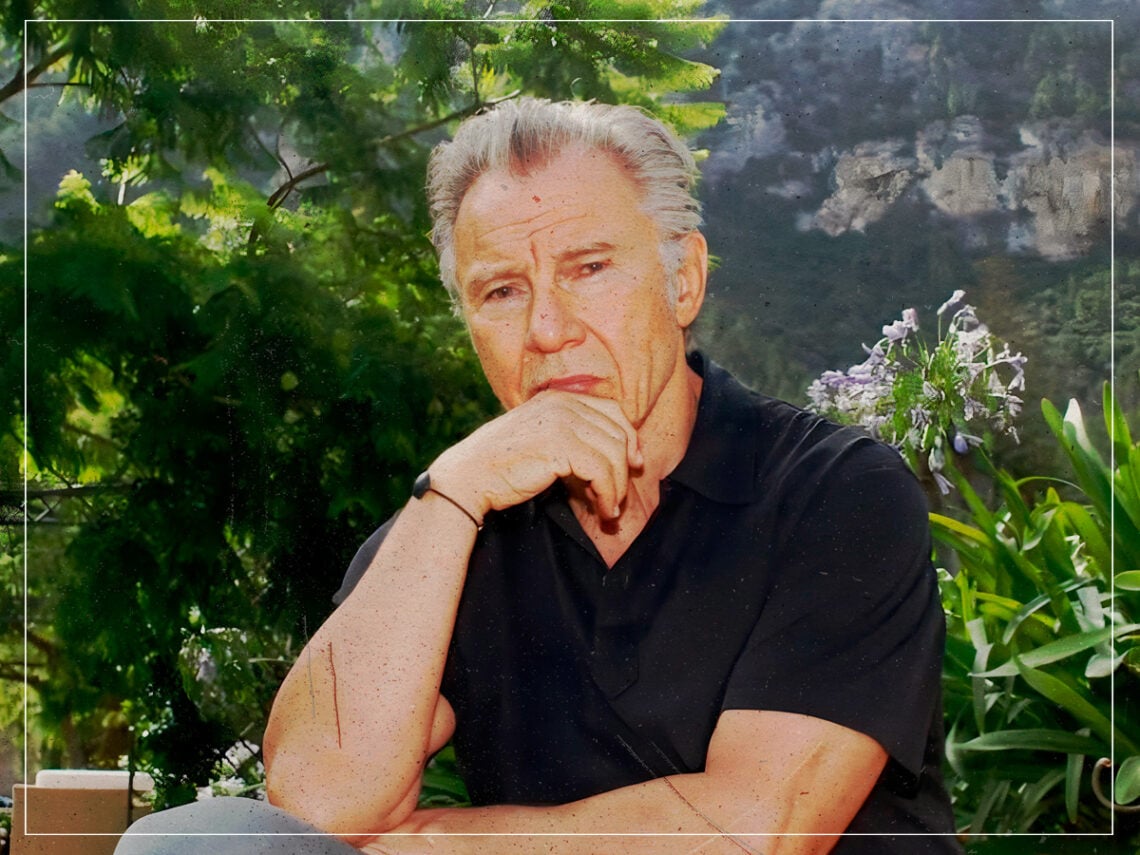
The movie Harvey Keitel enjoyed “more than any role I’ve ever played”

The New Hollywood period ushered in some fresh actors alongside innovative filmmakers, such as Al Pacino, Robert De Niro and Harvey Keitel. These actors brought a sense of grittiness to the screen, signalling a new era for big stars and the kinds of movies being championed in the mainstream. For the first time, filmmakers were able to include more explicit content within their work, such as violence and sex, and these actors became representative of this transition towards increased creative freedom.
Keitel got his start when he partnered up with Martin Scorsese on his directorial debut, Who’s That Knocking At My Door, which took five years to make. Talking to Sight and Sound in 1993, he revealed, “I think it was fate that Marty and I met up at the beginning of our careers. I vividly recall sitting down together to watch a scene that had been cut. It was inside the church, when the title song is played, and I was aware of being in the midst of some extraordinary experience… I was deeply stirred by a whole cacophony of emotions, and I felt I was in the right place.”
The pair teamed up again for Mean Streets, Alice Doesn’t Live Here Anymore, and Taxi Driver during the ‘70s, establishing him as one of the decade’s most notable actors. Since then, Keitel has appeared in a wide range of movies, from commercially successful hits to bizarre indie films. Throughout his career, his dedication to the art of cinema has always been apparent, with many of his roles reflecting the boundary-pushing nature of his earlier films, which changed Hollywood.
For example, Keitel starred as the titular character in Abel Ferrera’s 1992 film Bad Lieutenant, which saw him play a corrupt officer with a penchant for drugs, even forcing two teenagers to watch him masturbate. It’s a shocking film, but his commitment to such a challenging character is unwavering. That same year, he appeared in Quentin Tarantino’s Reservoir Dogs, which helped change the course of ‘90s cinema by proving that independent films had the power to be as successful as Hollywood blockbusters.
Despite starring in many acclaimed films dealing with violent and transgressive themes, Keitel once admitted that the role he’s enjoyed the most was in a children’s film called Dream One or, as it is sometimes called, Nemo. The 1984 movie was directed by Arnaud Sélignac and follows a child as he encounters lots of iconic characters from cinema and literary history. The low-budget movie seems to have faded into obscurity, with YouTube bringing up very few clips of the film, but Keitel asserts that it was “one of the favourite roles I’ve ever done.”
Talking to Bomb Magazine, the actor said, “I played Zorro in this children’s movie. And I enjoyed playing this Zorro character more than any role I’ve ever played. It was a child’s fantasy, and I was the child’s hero, and the hero to this princess that the child meets.” He admitted that the movie was not shown in America, although it was produced by John Boorman, strangely enough, who is better known for directing movies like Deliverance and Point Blank.
Keitel added, “At a certain point, my Zorro unmasks himself to the princess and tries to kiss her. And she repels him and runs away and hides in the submarine, and Zorro runs after her, begging her forgiveness, pounding on top of the hatch of the submarine, saying, ‘Forgive me, please. I didn’t mean to hurt you. It’s just so lonely to be a legend.’ I think it’s one of the greatest lines ever written.”
