


Panic Shack: Unwavering strength in the face of disgusting abuse

There are three inevitabilities in this world: Death, taxes and men being weird on the internet.
In all corners of this largely hideous invention, you will most likely find a bloke, offering their unsolicited two pence to absolutely no effect other than scratching some sort of antagonistic itch. And for some bizarre and painfully depressing reason, a little whirlwind of this toxicity has formed in the carefully crafted internet space of Panic Shack.
Now, I say carefully crafted for two reasons. The first, being the fact that in the seven years of operating as a band, Panic Shack have thoughtfully created music, and a mirroring online persona that helps foster their resilient and fun-loving community. Born from their own sense of sisterhood, they’ve opened their arms to anyone who listens and enjoys their music, and largely smiled in the face of whatever thinly veiled, yet overtly misogynistic digs they’ve received.
Which brings me on to my second reason as to why their dedicated community was born out of careful curation. Because from the very beginning, when Panic Shack dared to make a band and achieve what so many other male DIY bands have been allowed to, learning to protect themselves became a prerequisite. Their enthusiasm, authenticity, but worst of all, their gender would be a stick to beat them with, and so their community had to be thought out.
Because apparently, when someone akin to a young Alex Turner makes observational musings about the modern world, over the top of powerful barre chords, it’s lauded as astute genius. But when Sarah Harvey does the same, with equal ferocity and humour, it’s called into question. Her ability to hilariously tell tales of unsolicited propositions in ‘Jiu Jits You’ or failed dating prospects through ‘The Ick’ is instead twisted into bitter diatribes of female rage.
The latter song was clearly so on the nose that it inspired the first swell of misogynistic hate experienced by the band. Harvey’s lyrics of quirky and let’s face it, unattractive male behaviour struck a chord with a community of insecure men that they took to TikTok (the maturest of all platforms) to spray the band with vile abuse. Now, the same reaction reared its ugly head once again, as a confused audience struggled to grapple with the real-life issues Harvey sings about.

Speaking to Far Out, the band said, “We’re no strangers to abuse online (TikTok troll saga 2020), but lately it’s been hitting a little close to the bone. A video of us playing ‘Tit School’ during our album launch week has blown up on YouTube. It started with glowing compliments about the music, but then the longer it’s up and the wider it’s spread, out come the comment section dwellers from the depths of the internet.”
They added, “The latest thing for them to put us down about is our bodies. Some fun examples, ‘How can I unsee this nauseating garbage dump of fat bodies now’ and ‘Why are they so fat?’. Cute! Even when they were trying to compliment us, they would say things like ‘lard arse rock, fat, cute and sexy’, and ‘beautiful, meaty women that rock’, it’s ridiculous! Commenting on someone’s body is never OK, you never know what someone has been through, whether you think it’s a compliment or not, just shut the fuck up.”
The very humour that clearly laces the band’s entire discography is leveraged against them in the spirit of “can’t you take a joke?”. Through their music, performance and online engagement, they’ve proven time and time again that they can do something most people can’t: laugh at themselves. But does that mean they’re not serious about their music? No. Does that mean they should be subjected to sharply pointed personal attacks, disguised as humorous criticism? Absolutely not.
As a music journalist, I am aware of the role criticism plays in the conversation. But like the music it seeks to judge, it must be backed with legitimacy and meaning. What Panic Shack is experiencing stretches way beyond that and ultimately chips away at the sense of empowerment they are fostering.
Yeah, you can choose to not like the music, but you can’t deny that what they are tapping into is highly unique and characterised. Blending punk-rock tropes, which, in case you have forgotten, has been unofficially adopted by blokey blokes for decades on end, with the humorous fun of a traditional girlband.
Aggressive riffs are enmeshed with playful, bedroom-like choreography to create a charming combination of bubblegum pop and punk rock. And if you think that’s meaningless, then why does their merch stand always have a winding queue of young girls, all desperate to meet a band who are inspiring them to contribute to this otherwise masculine space?
“It’s scary, it feels like the ‘heroin chic’ days of the early noughties are back, if they ever really went away.”
Panic Shack
For every vitriolic male, offended by the accuracy of the band’s lyrics, there is one young new fan, from any gender, who truly understands the cultural window in which the band works. I simply cannot help but commend their strength and resolve in facing warped abuse, while also sharing gratitude for large portions of their fan base.
A community developed in the band’s pursuit of genuine artistic authenticity and a celebration of unfiltered humanity, who get exactly what the band are doing and how to remind them of that, while they’re busy swimming through unnecessary tides of internet shit. But then sometimes, that open-armed sense of humour comes back to bite them, and their own resilience puts them in somewhat of a catch-22.
“We have cultivated a wonderful fan base of such a wide range of varying people, and we love it so much,” Panic Shack explained. “We have a laugh, as a band, in our music and with our fans but sometimes we feel it does mean people get a little too comfortable with us and forget we don’t wanna hear what you think about our ‘curvy bodies’ or the fact that we have ‘bellies and bums’ as a fan once said to us to our faces. We’re literally just four normal women existing, playing music on a stage, we absolutely never want or care to know what you think about how we look.”
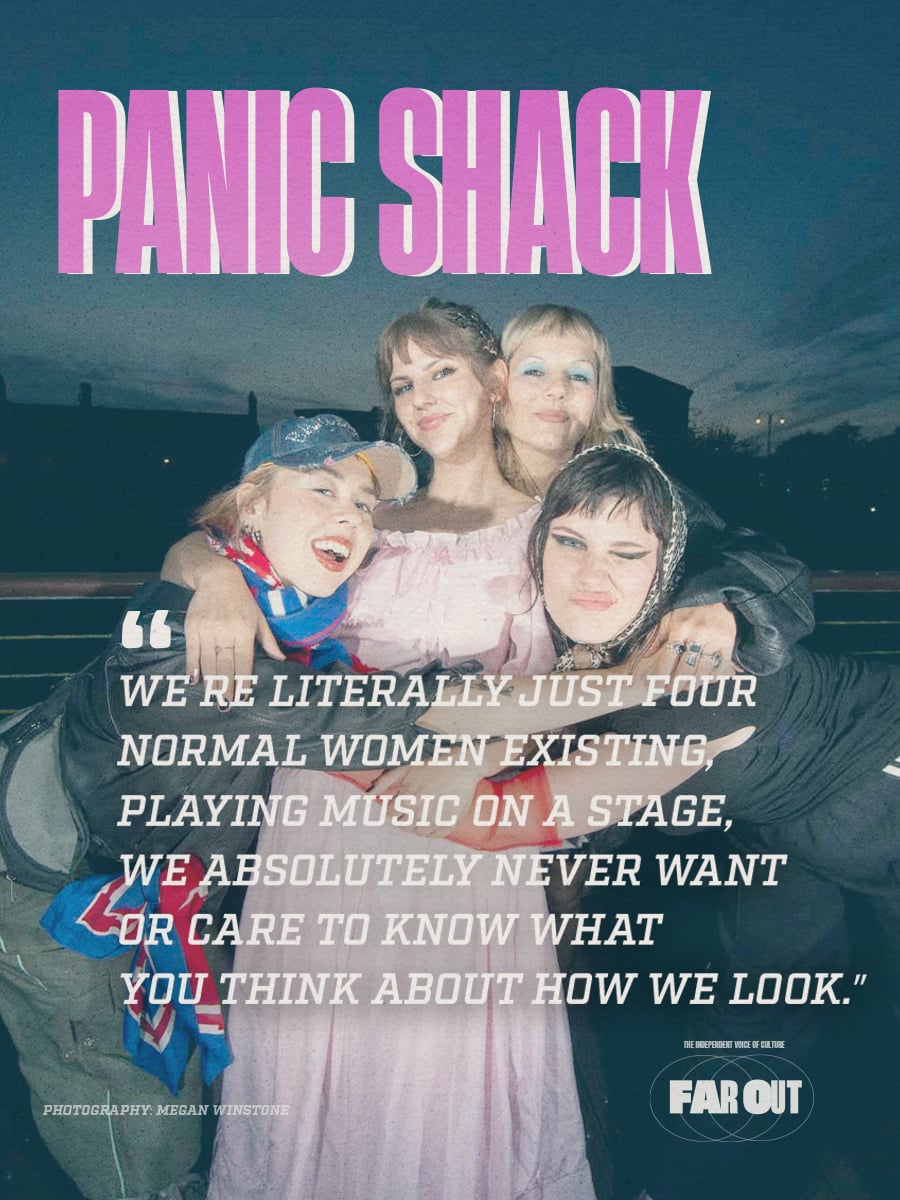
But through it all, the band have always had each other. Their success largely relies on their camaraderie, which largely relies on an alchemy that exists only between these four girls. While the drummer has sometimes changed, now settled on the brilliant Nick Dougherty, the crucial four have never wavered. For that, there is clearly a very good reason.
“Luckily, we have each other to vent to and scream into pillows with. We can find the humour in most things, but we’ve seen it happening to other artists as well. It’s scary, it feels like the ‘heroin chic’ days of the early noughties are back, if they ever really went away.”
The noughties never had the internet in quite the same capacity as we do. And so, maintaining the demands of being a full-time band in an age that requires tenured-track acts to be full-time content creators, Panic Shack is finding itself playing the role of digital firefighters too, battling against pockets of hateful flames.
But that same cyber space continues to provide them an environment in which they can build their own narrative, against it all and directly engage with fans who understand their identity. And of those, there are plenty.
The band have toured relentlessly over the last few years, earning their rightful place in the music industry and recently received their well-earned flowers by storming the UK charts. All of which goes to prove, not only is your vitriol missing the entire point, it’s feeding the fire of a rebellion you seem to be so desperately offended by.
