


Ozzfest coming back means only one thing: metal’s mainstream return

Metal in the 1990s was alive and kicking, but in the mainstream culture’s vision, it was going through something of an identity crisis.
The hedonism of its “glam” and “hair” subgenres was dying down, as the extremities of thrash and death metal pushed the genre further underground. Metallica topped the charts with their self-titled “Black Album” in 1991, while Anthrax and Slayer followed behind, but once the Seattle sound broke through with so-called “grunge,” metal fell out of popular favour. Persisting through it all, despite the odds, was Ozzy Osbourne, who decided alongside his wife, Sharon, that metal was not to have its last gasp.
Earlier this month, Sharon confirmed on The Osbournes podcast that the Osbournes’ legendary metal festival, Ozzfest, would not only make its long-awaited return in 2027, but that it would be taking place in Ozzy’s home of Birmingham, in Aston Villa, before making its trek to America.
“We’ve got to find a lot of young, new talent, because that’s what your dad would want,” Sharon told her son, Jack. Such is a sentiment that has been circling since January of 2024, when Sharon stated (again, on The Osbournes podcast) that the thought of giving Ozzfest another iteration had been on her mind.
“I’ve been talking to Live Nation about bringing [Ozzfest] back recently,” Sharon told Billboard in January of this year. “It was something Ozzy was very passionate about: giving young talent a stage in front of people. We really started metal festivals in this country. It was [replicated] but never done with the spirit of what ours was, because ours was a place for new talent. It was like summer camp for kids.”
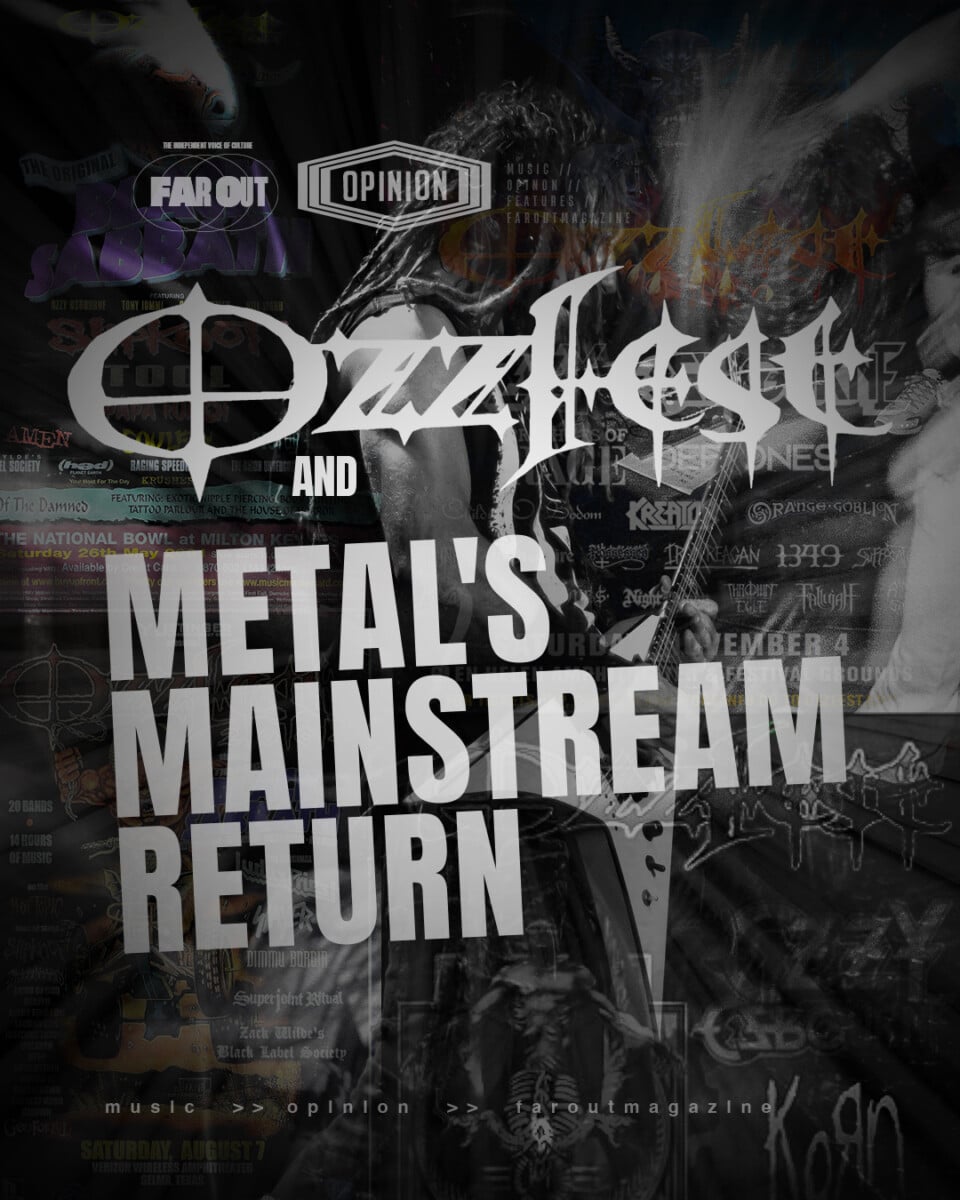
At the prospect of Ozzfest’s return, one can’t help but think that the festival can be the final push that metal needs to nourish its soul and amplify the talents that are keeping rock alive.
Some 30 years ago, Ozzfest was born from the fringes of Lollapalooza, a touring festival that began in 1991 that spanned alternative rock, rap, metal, electronic and more. But, even in all the festival’s eccentricity, a character like Ozzy Osbourne couldn’t possibly fit the bill. In 1995, Sharon had tried to get her husband on the lineup, but was met with, “Excuse me? You must be joking!”, as she explained on MTV’s 2002 documentary, Ozzfest Uncensored. In retaliation, Sharon set out to orchestrate a festival of their own.
“As soon as I put the phone down from the Lollapalooza people,” Sharon recalled, putting on a mock-conspiratorial voice, “I’m like, ‘Right, fuck you. I’ll tell you what I’m gonna do: I’m gonna do the Ozzfest!”
As it turns out, Sharon’s scorn and the subsequent inception of Ozzfest was brewing at the perfect time: while grunge had exploded earlier in the decade, making way for a new kind of adrenaline that was still subdued in comparison to the chaos of Ozzy Osbourne, established, of course, in both his tenures in Black Sabbath and his prolific solo output, which continued into the 1990s. Metal was slowly returning to the fold and, in Ozzy’s footsteps, came “nu metal,” the genre’s angst-fueled younger sibling that merged its sound with hip-hop, industrial and funk – a bridge, of sorts, between the era’s dominant genres of alternative and hip-hop.
In the US and the UK alike, plenty of metal and hard rock-focused festivals have persisted in Ozzfest’s wake, including Knotfest, Aftershock, Download, Welcome to Rockville, Louder Than Life and Sonic Temple, to name a few. Still, the rebirth of Ozzfest could mean metal’s long-awaited re-emergence into the mainstream, supported by the notion that, in the aftermath of Ozzy’s passing, the intention behind his namesake festival – to platform newcomers in metal and curate talents that could push the genre forward – will continue to thrive.
There is something about a legacy festival like Ozzfest returning that is thrilling, especially when considering how the intent from its first iteration can be revived in today’s standards. When it launched in 1996, Ozzfest became the antithesis of expectation. With Ozzy at the helm and Sharon’s vision providing the backbone for the festival’s dual reintroduction of the ‘Prince of Darkness’ and the new bands following in his footsteps, Ozzfest shocked new life into metal. Hopefully, the same can be done when it returns (as projected) in 2027.
Look at old footage from the Ozzfests of years past, and you’ll see what such an event meant to the young, disaffected kids who looked to metal and its culture as some sort of salvation. Kids crowd-surfing; the literal thrash of both bands on-stage and audiences alike, dirt-soaked with their ribs crushed against a stage barricade, but euphoric, nonetheless.
Surely, the history of Ozzfest also saw moments where the hedonism went too far: riots broke out, a feud between Sharon and Iron Maiden ensued and, in 2007, when the festival was free as a marketing tactic, 83 attendees were arrested in New Jersey, and two men lost their lives from suspected overdoses. Still, Ozzfest persisted through these moments as it set out to champion metal music as it dawned on a new era.
Ozzfest also gifted culture with some of metal’s biggest names of the late 1990s and the new millennium. The 1998 iteration of Ozzfest made household names of Limp Bizkit, just before “rap metal” hit the mainstream. In 2000, Canadian heavy metal band Kittie stormed Ozzfest’s “Second Stage” on the heels of their incredible debut album, 1999’s Spit. Before they were the biggest semi-anonymous band on the planet, Slipknot embarked on their first tour, joining the festival’s lineup a month before their self-titled debut album was released.
“We didn’t know what we were doing; it was our first major tour,” frontman Corey Taylor explained to MTV in 2001, his face obstructed behind his mask. “We didn’t even have an album out. We did it for free.”
Across Ozzfest’s initial then-newer bands like System of a Down, Soulfly, Linkin Park, Mudvayne and Deftones joined the Ozzfest legacy, while established heavyweights like Slayer, Sepultura and Pantera headlined, as well, rounding out the festival’s lineups across the US and the UK. It would be easy to envision some of these same bands returning on a modern-day lineup (where possible, of course), alongside newer bands that range the spectrum of metal and hard rock.
Black Sabbath’s farewell show, “Back to the Beginning”, gave a taste of which modern acts could make the cut: Halestorm, Gojira and Mastodon, to name a few. Countless other bands across metal’s many subgenres could spearhead Ozzfest’s revival, if given the chance to do so, and in turn, could bring a reminder of Ozzy’s legacy, once again, to the forefront of metal.
Ozzfest’s final iteration was nearly eight years ago, with a one-off New Year’s Eve Show on December 31, 2018, in California. The festival is long overdue for a return, and, as Judas Priest’s Rob Halford enthused to Billboard in 2024, modern culture is in dire need of the festival’s energy in live music culture. “I hope that Sharon is thinking about bringing the Ozzfest back. Because people want to go to an Ozzfest experience,” he explained. “And what she did was generate an enormous amount of interest beyond the Ozzfest experience. She brought a lot of people to the table, and that’s often overlooked.”
As scenes shift and generations continue to alter the live music experience, only time will tell whether Ozzfest’s return will occur, for one, but also, whether it will persist as it once did, many moons ago.
