


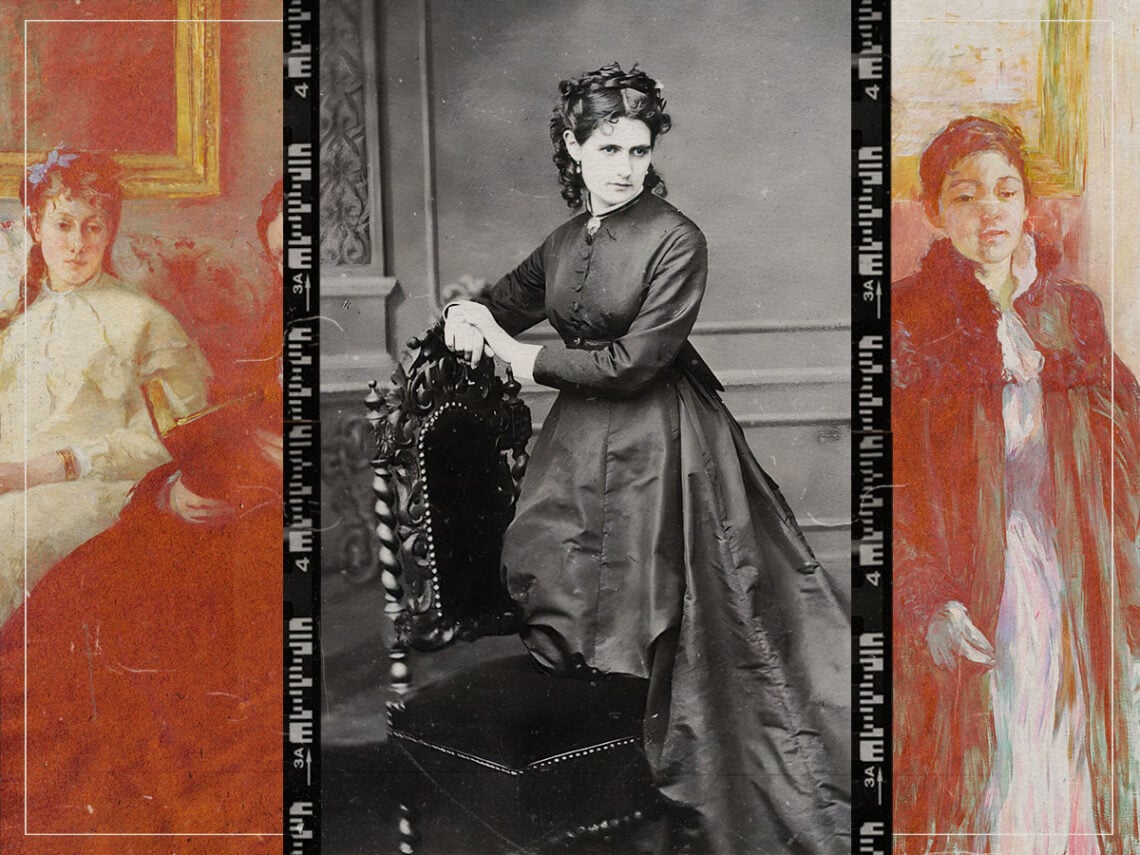
The overlooked impact of Berthe Morisot

Bethe Morisot was an iconic artist misunderstood as a muse. While she sat for numerous Édouard Manet paintings, she also produced her own masterpieces. But all done with the resigned knowledge that her position as a female artist meant her art would never have an equal impact. She and her sister Edma both pursued painting, but despite their shared gift, Edma abandoned it. After meeting the pair, Manet himself remarked: “What a shame they are not men”.
In a subtle revolt, when Morisot continued painting in spite of that, men were an afterthought. She poured her energy into painting impressionistic domestic scenes that thrust women into the spotlight. Her considered studies of women at home were dismissed as little more than “feminine charm”, although her style signalled the beginnings of a move towards looser brushwork and multimedia materials. She presented the women in her work fairly neutrally, which, if anything, was more revolutionary than creating portraits that overstated their societal position.
Morisot’s subjects have served as a time capsule of late 19th-century life, a visual guide to the gilded cage most women lived in. Their worlds were beautiful but often didn’t extend beyond picturesque houses and gardens. Her everyday setting and the family that populated it consume her work, which is an enduring celebration of womanhood.
It makes her 1890 admission: “I don’t think there has ever been a man who treated a woman as an equal, and that’s all I would have asked for, for I know I’m worth as much as they,” all the more tragic.
Even the most generous contemporary revisits of her work mention that she riffed on the work of men like Manet, Pierre-Auguste Renoir, and Edgar Degas as if she were incapable of creating her own motifs and style. Both she and Degas used a variety of mediums, oils, pastels and watercolours, but she is always considered the imitator. She used unprimed canvases, just like Manet, a man whose shadow she was constantly trying to outrun.
She was an originator, one of a pool of artists who pioneered Impressionism. At only 23 years old, she exhibited work in the Salon de Paris alongside them and continued to do so until her daughter was born. However, womanhood was considered to be a handicap to her career long before she had a child. During one 1874 exhibition, where her work sat proudly nestled between Manet’s, one critic said the Impressionists comprised “five or six lunatics”. On her specific effort, he said only that “one is a woman” and that Morisot’s “feminine grace” was evident. You’ll find that even now, she is primarily shown as a side attraction in Impressionist exhibits.
Although she is continually flanked by Manet, she executed one other tiny revolution in her lifetime. She sat for him 11 times – but never painted him once.
