


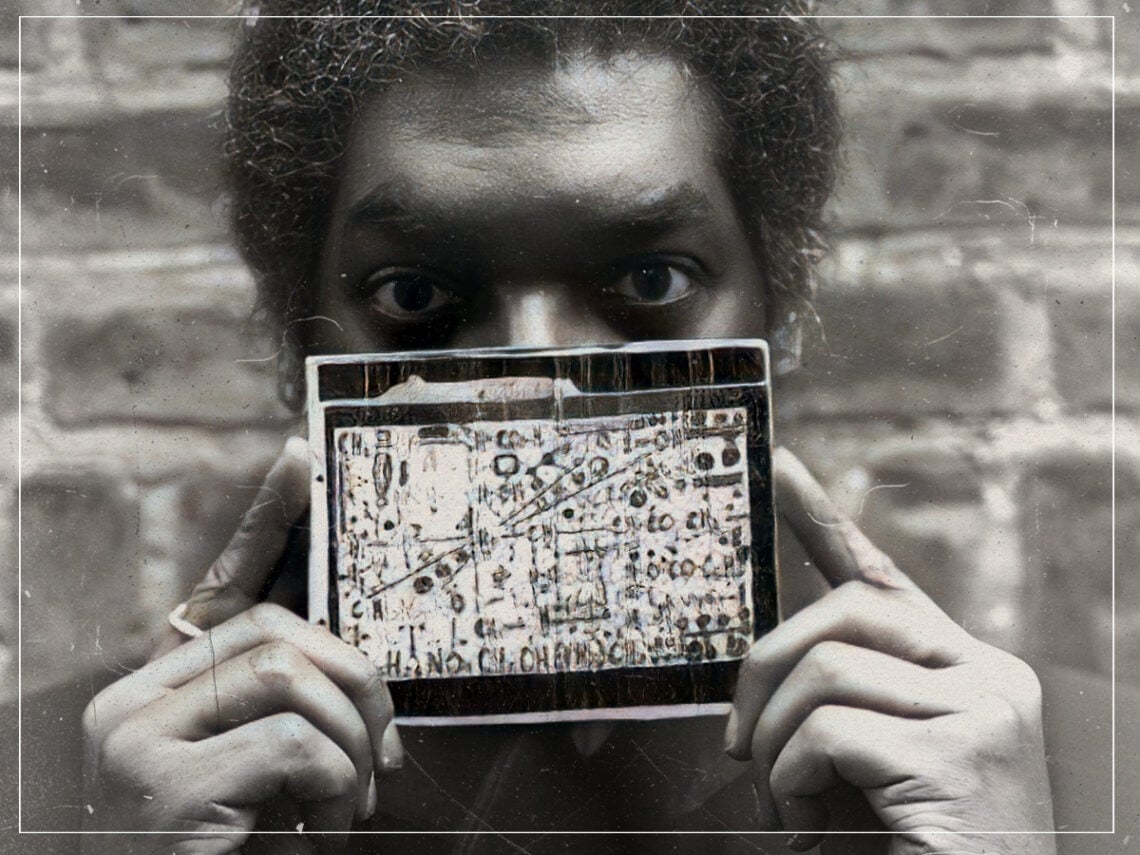
The intricate outsider artwork of Melvin Way

The late Melvin Way once described his artworks as sacred. “They’re all unknowable,” he’d argue. “Too intellectual”. And he was right. Way was discovered in the early 1980s and quickly became an almost messianic figure in the outsider art movement and is celebrated to this day. His work was frenetic, covering endless reams of paper in mathematical and chemical formulas, all of which he would store in his pockets. He was utterly revered. In a city teeming with a wannabe bohemian art crowd, he was a genuine New York artist who lived and breathed his craft.
Each of his pieces was like an elaborate map, scribbled in ballpoint pen. He often bound them with tape and random strings of theory, which he was well versed in after pausing his scientific studies because of a schizophrenia diagnosis. Way’s work used a language that often existed only to him – signs and scribbles were interspersed with formulae to create one swirling mass. He could spend months at a time working on one drawing, keeping it in his pocket for when a moment of inspiration struck.
When asked about their meaning, his effusive explanations were as compelling as his art. “It is inside the looking glass, the mirror,” he told Art et al. “Like 22-7th is a large number in the universe. If they find out that I went inside the looking glass through the computer and did this, it’s called physical science, okay?”. While Way was a student at the Techincal Career Institute, he began showing signs of mental illness, which worsened over time.
It’s a frustrating part of his appeal because a lot of audiences found his ramblings quaint but didn’t see the artistry. “I showed them the formula for the antidote for herpes, rabies, scabies, pneumonia, all at once,” Way once said. “I gave them the formula for that. I do the formula for cocaine, LSD, Caffeine.”
While they saw a mad genius, Andrew Castrucci saw brilliance, regardless of his illness and circumstances. He’d seen Way’s drawings in a homeless drop-in centre and set up an exhibition in the ’80s to exhibit them. That initial effort has seen his intricate drawings included in major Art Brut exhibitions and the Museum of Modern Art in New York.
When Way’s New York art dealer, Andrew Edlin, learned of his passing, he said: “We’re saddened by the news of Melvin’s passing and, at the same time, grateful he made it to the age of seventy, given the hardships he endured.”
Edlin said his complex, mystic works would continue to fascinate audiences across the globe. “[They] will continue to challenge those determined to decipher their meaning.”
For Way, that was never the goal. “These drawings knock out cancer and keep knocking it out,” he advised. “Professors and deans and medical students and all that, they be coming looking at my work and be knowing what I’m writing about, you know, they actually be knowing. Everything is a game.” Way navigated that game alone, operating on a different plain entirely, leaving behind a rich legacy of puzzles yet to be solved.
