


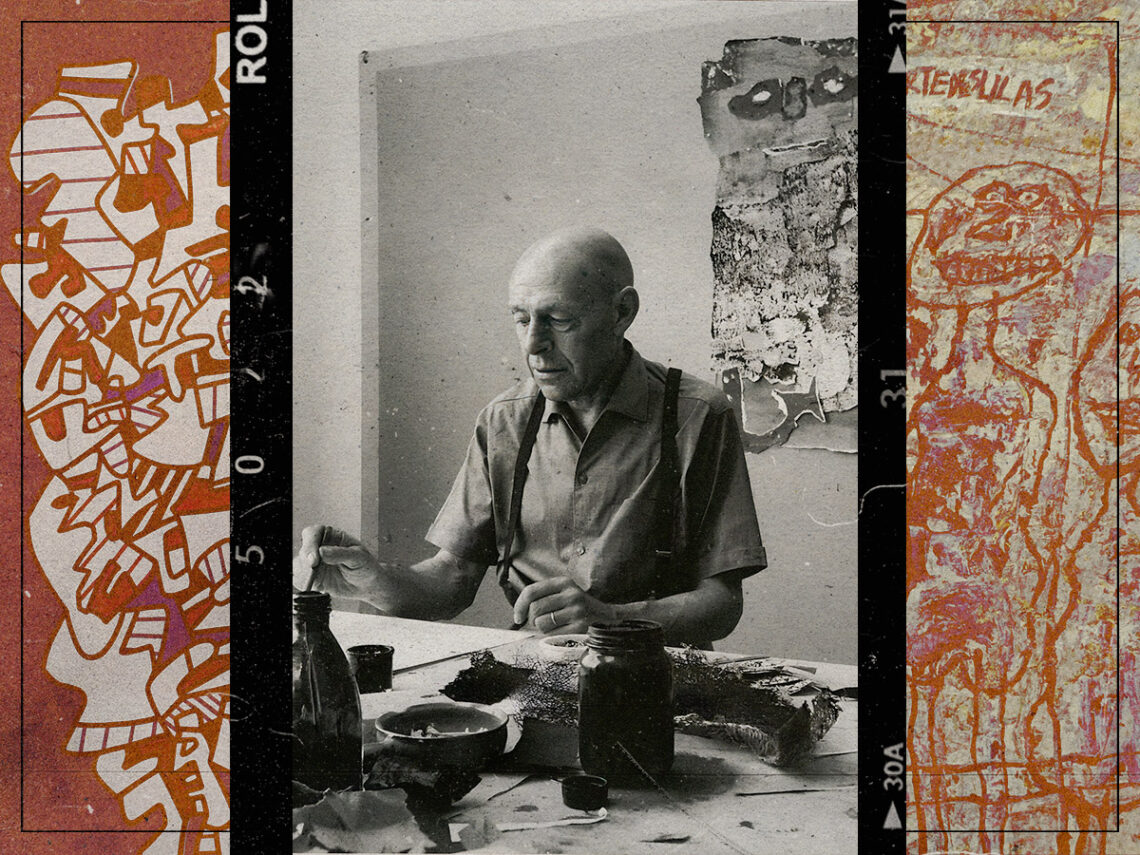
Jean Dubuffet’s complicated ‘Art Brut’ movement

Jean Dubuffet was a French painter and sculptor, whose embrace of so-called “low art” led to him entirely shunning art’s long tradition of favouring style over substance. It was Dubuffet who would coin the term “art brut,” (translating as raw art), a term that signalled an artist’s work existed outside the academic traditions of fine art.
It was the academic constraints of “art culturel” (cultural art) that Dubuffet felt lacked real heart. Art brut was far more encompassing of the untrained and the unskilled – but always, the highly emotive. It included the work of the mentally ill, prisoners, and children. Their often primitive style spoke to a raw expression of human emotion, unhindered by conventions of awe-inspiring beauty.
“The madman,” declared Dubuffet, “is a reformer, an inventor of new systems, intoxicated with invention.” The artists he dubbed “outsiders” were capable of charting their biggest hopes and fears to canvas, with an unflinching creative drive fuelling their visionary works – some of which weren’t even committed to canvas. Art Brut wasn’t limited by material, so scrawled notes by an asylum patient were held to the same lofty heights as ornate oil paintings.
One key element Dubuffet used to categorize these artists was isolation. He admired introverted, lonely artists, considering their work most important of all because it was borne out of sheer creative force at their most vulnerable – when they were alone.
“This is exactly what is required of the artist,” he wrote, “and explains why the creation of art is so worthless when it does not originate in a state of alienation, when it fails to offer a new conception of the world, and new principles for living.”
Dubuffet’s love of raw, unsophisticated art at times bordered on the morally bankrupt. Adolf Wölfli, for instance, is one of the most celebrated artists in the Art Brut canon – largely for the works he created in the Waldau Mental Asylum in 1895, after being committed for the sexual assault of several young girls.
The art brut movement could not be unfairly accused of romanticizing mental illness, and many artists who are now widely recognised as its key players never saw any recognition when they were alive. Wölfli was a diagnosed schizophrenic, whose violent temper could only be subdued when given pencils, and while his works were fascinating in their emotional depth, that he was a key figure spoke to Dubuffet’s hypocrisy in a sense, given that celebrating the work of an abuser was indeed style over substance.
In many ways, Dubuffet’s own position in the art world as a Parisian-trained artist made him the furthest thing from an outsider artist, and he owes a lot of the Art Brut concept to the 1922 book, The Artistry of the Mentally Ill, collated by German psychiatrist Hans Prinzhorn. The artists roaming asylums didn’t have the power to assemble a movement, but it didn’t stop Dubuffet from envying their creative lunges at free expression, and building a reputation off of the embrace of their work.
