


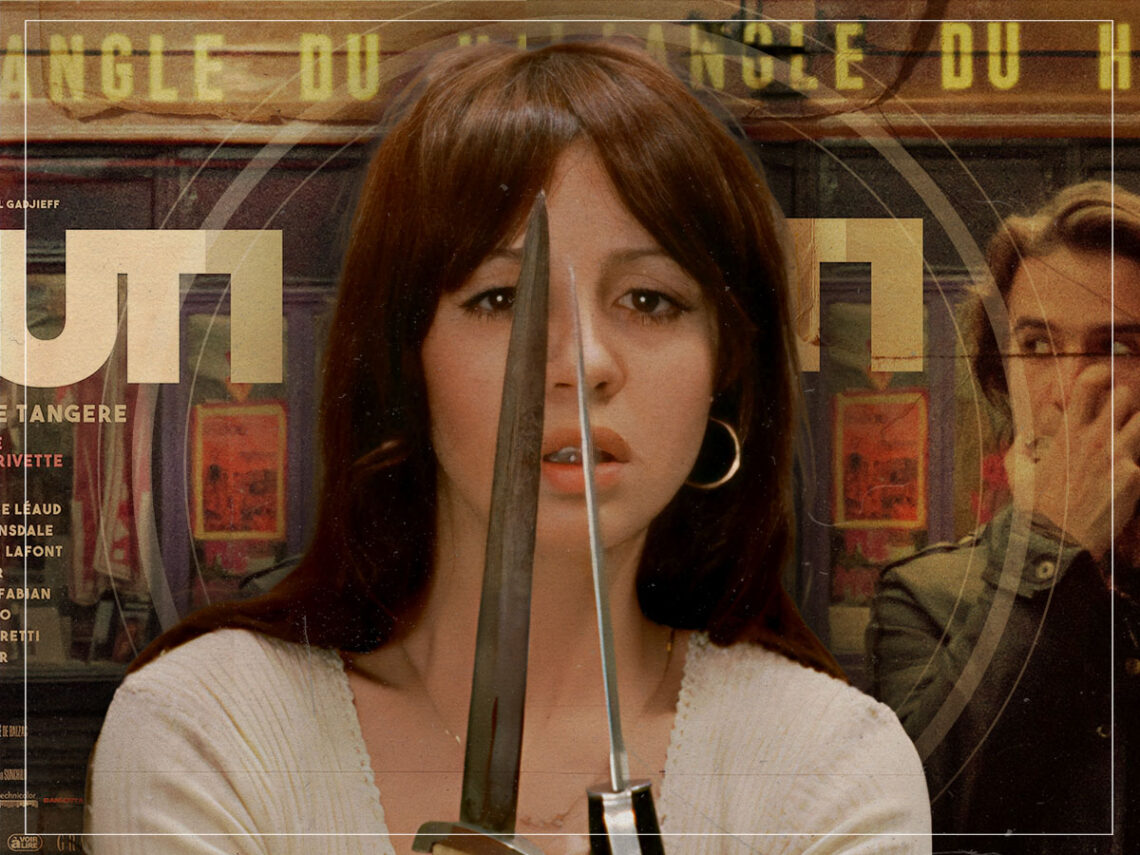
‘Out 1’: Jacques Rivette’s radical 13-hour experiment with performance

Running over 13 hours and operating within a loose framework of improvisation, Jacques Rivette’s Out 1 is an audacious exploration of narrative boundaries and cinematic possibility. A seminal work by the French New Wave auteur, the film defies conventional storytelling, challenging ideas of performance and pushing the limits of what cinema can achieve. It remains a daring and transformative piece, emblematic of Rivette’s bold approach to filmmaking.
Out 1 is a sprawling and elusive project that remains influential and confusing in equal measure. It is a surreal blend of theatre, cinema, and games that explores the themes of conspiracy and human nature.
Having long been fascinated by the possibilities of the intersection of film and theatre, Rivette originally conceived the 13-hour epic as a television series designed as a freewheeling improvisational experiment filmed over several months in 1970. The actors received minimal direction and only the vaguest descriptions of who they were playing, with Rivette encouraging an organic and unstructured interaction between the cast. The result is as chaotic as it is interesting.
Despite forming over half a day in its runtime, the film itself almost resists understanding or interpretation. Often described as a mystery, albeit without the usual resolutions that films of a similar genre would offer up, Out 1’s structure is winding and difficult, with characters that drift in and out of interactions that are bizarre and cryptic. This lack of cohesion stems from the plot being secondary to the filmmaking process, with Rivette putting his interest in challenging boundaries and established norms of what makes something fiction before his consideration of delivering a story that is compelling or even easy to watch.
At the core of Out 1 is the very idea of performance. Following loosely connected rehearsals of two Greek tragedies, Seven Against Thebes and Prometheus Bound, in unstructured lengthy scenes that show the actors struggling in real time. The lines between what the film is portraying and what the camera is capturing are blurred, leaving the audience feeling unsure of what is intentional and what is performed.
Unpolished, unpredictable and at times absurd, Out 1 shows its cast fumbling their way through a loose idea of dialogue and displays the process of preparing to perform in a stark light. Deconstruction, being at the heart of what Rivette wanted to achieve, leaves scenes in the film feeling less like a story but more like performance art, an interpretation of narrative rather than the offering of one. The director seeks to show us how performance happens and what the action of acting can reveal about people’s interactions with one another rather than the end result of what those performances look like.
13 hours of film would allow any director to explore every facet of whatever project they were working on. Some would use it to tell an in-depth epic and spend time with characters to establish motivation and meaning for an audience, others might use the time to show smaller, interconnected stories that follow similar themes or explore similar ideas. Rivette uses the time to allow for tangents and diversions from an already structureless film and sets up new characters and hints of a story, only for those hints to drift out of the film unresolved, offering up no direction or cohesive plot to follow. This fragmentation was fully intentional, with Rivette describing Out 1 as a “film in pieces” and one that he wanted audiences to try and put together themselves to find meaning in.
Out 1 remains as radical today as it was at its conception, with nothing similar being attempted on the same scale since, the experiment with form and narrative has made it an indisputably influential work of unconventional filmmaking.
