


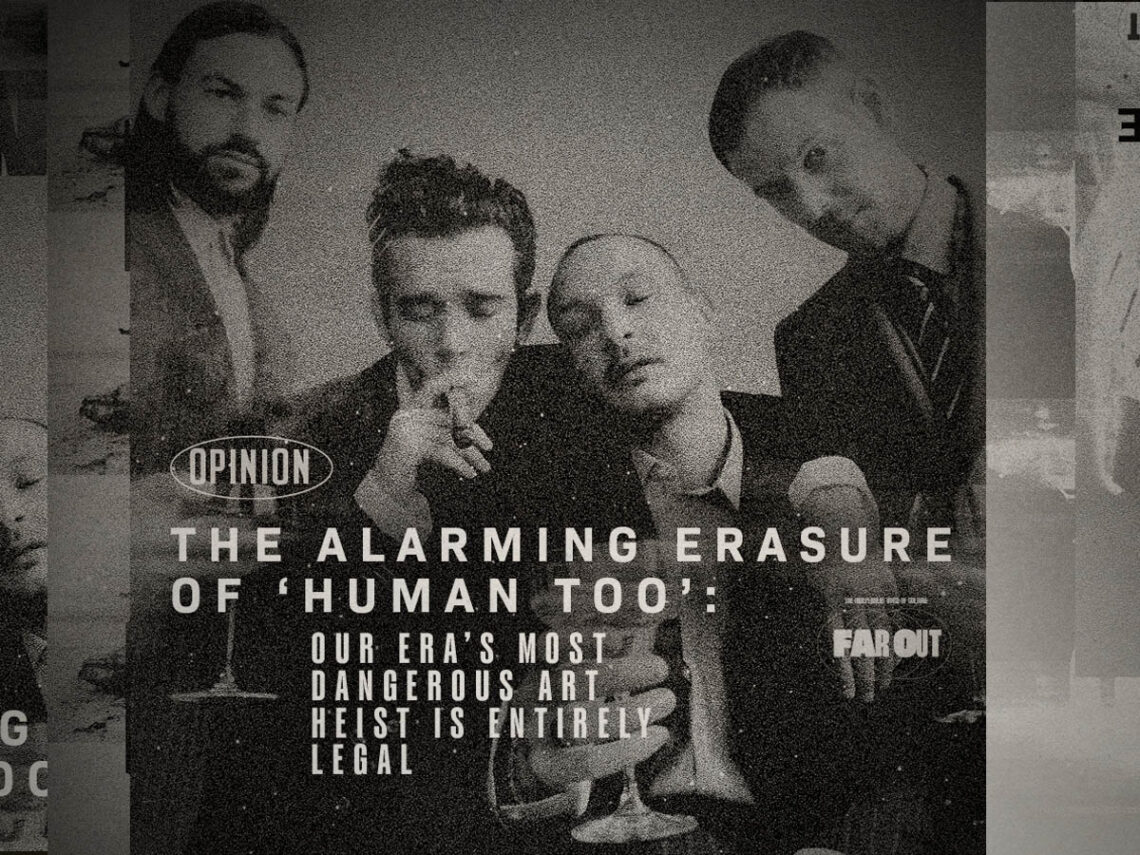
The alarming erasure of ‘Human Too’: Our era’s most dangerous art heist is entirely legal

An art heist has just taken place. Not the one at the Louvre. A far more brazen and boring one than that: The 1975 have deleted the song ‘Human Too’ from the album Being Funny In a Foreign Language on streaming platforms.
Even if you hate the band, hate the album, hate the song, this is something you should care about, because this deletion is not an isolated anomaly. Thankfully, when it comes to ‘Human Too’, legions of fans have a physical copy of the record as it was once intended on vinyl. But that’s not always the case.
Over on Netflix, whole movies that were never released on any physical format have been deleted to make room for the next one. Those movies now do not exist anywhere. There might be a master file on an editor’s laptop somewhere, but that seems rather precarious. They are, in effect, the burnt books of the digital age.
“An artist’s duty,” Nina Simone once said, “Is to reflect the times”.
The late record producer, Steve Albini, shared a similar sentiment, commenting, “I feel like my day-to-day job is being a vector of history. I’m making recordings which are going to sit on a shelf and then at some distant time are going to be discovered again.”
Adding, “Making a permanent record, I take that aspect of it very seriously. I’m certain that analogue recordings will survive over a scale of centuries. I have no certainty about any digital formats surviving that period.”
So, in 1,000 years’ time, should people want to glean an insight into life in the 20th century, they can turn to works like ‘Mississippi Goddam’ or listen to In Utero and get an earnest reflection of history – learning from it, in turn.
In essence, art is about permanence. Regardless of the intent, there is always an element of sketching ‘I was here, and this is what I saw’ onto a cave wall imbued within every song, album, movie, book, and endless etcetera. We call the collection of this creativity: culture.
Regardless of whether the erasure of one single, supposedly subpar ‘Human Too’ is important or not, culture always will be.
And the wider issue is not that this is subject to minor changes after the fact, but that minor changes also mean it’s subject to manipulation, censoring, destruction…on the one hand, you could argue that the decision to remove ‘Human Too’ from streaming platforms is no more meaningful than the decision to upload it in the first place. That’s the stance The 1975’s Matty Healy has taken, saying that the album is now simply “more how I want it to be.”
The vanishing of ‘Human Too’ exposes the fragility of digital culture
Songs are fleeting by nature – they do not have a fixed address. The notes and lyrics might have been different a thousand times over before they were recorded anyway, so what’s one final grand change on a medium where we don’t even hear the song as intended?
Well, that might be true for ‘Human Too’, but you don’t have to look too far into history to see why permanence is important. Franz Kafka’s posthumously published work that has illuminated the capricious nature of capitalist control would’ve been lost history if it weren’t physical. Herman Melville’s foundational Moby Dick might have been buried along with him. The Sibylle Baier album I’m listening to right now, discovered in a basement, might not have soothed my morning if it had been lost to the cloud.
There are so many ‘and so ons’, each with its own vital implication, that it is needless to continue, but the point that they amount to is that these works have survived because they did not change. In the digital age, when we can endlessly edit, remaster, and enhance creative works, we risk erasing the very imperfections and contexts that make them timeless. It seems corny and chilling in equal measure that ‘Human Too’ proved too human for the unfixed, reality-defying modern age.
And if we’re willing to do dismiss that as trivial so that an artist can make a published work more ‘as they intended‘ without a disclaimer – then we also risk opening the door to censorship so that art is more how governments intended, or companies can pay for their brand to be edited into a hit, and so on and so on until art no longer reflects the times but rather the latest flippant edit.
If these acts hadn’t occurred in the vague and nebulous digital world, they would be seen as acts of vandalism, theft, willful destruction, heists that rob us of reality and integrity – perhaps that‘s how we should start seeing them now, before minor tweaks set a dangerous precedent for major change.
So, when art can vanish or change at the touch of a button at the behest of any old unscrupulous whim, history can too.
I can see an age, not too far away, where Donald Trump can casually order the deletion of songs on Spotify on such a mass scale it is barely noticed, where a soda brand can pay Taylor Swift millions to change a lyric from ‘holy roller’ to ‘coca-cola’ on a song that is racking up billions of streams, and where foundational texts like Moby Dick never got the chance to posthumously change the world because they were entirely eradicated before any chance fora revisionist reappraisal could recognise its essential worth.
So, while it might seem vaguely ludicrous to fuss over the loss of a pop song that even the creator didn’t care for, its disappearance is a worrying portent of what might follow if the ethics of digital vandalism go unchecked. After all, you can tell a lot about a society from how it treats its art.
