


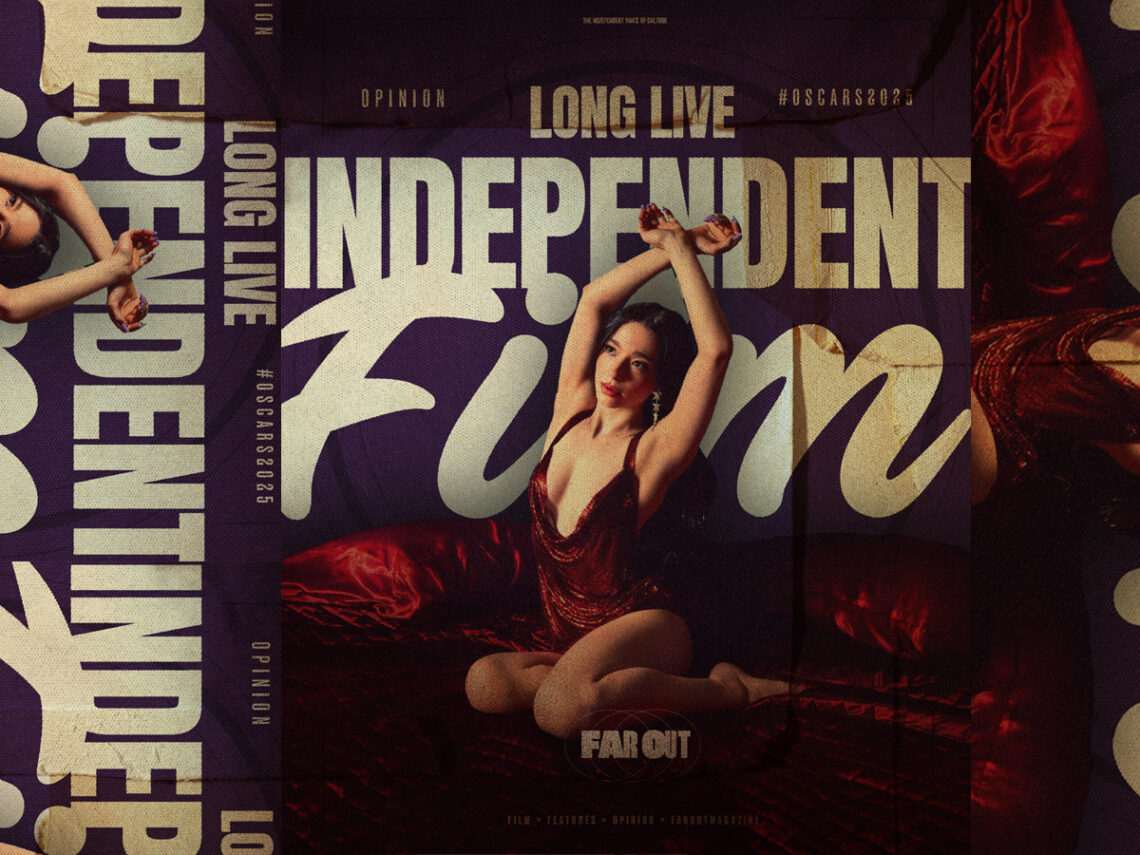
Oscars 2025: Independent film triumphs with ‘Anora’

The Academy defied habit this year, breezing past biopics, historical epics, and blockbusters to bestow a $6million indie movie with Hollywood‘s top prize. Sean Baker’s Anora is everything the Academy usually relegates to ‘Best Original Screenplay’ territory. It isn’t a film about a Great Man or even about a man at all. It doesn’t rely on lavish costumes and makeup to get its performances across. And its message isn’t toothlessly political or grandiose. It is, in short, everything that last year’s winner, Oppenheimer, was not.
Baker has been making indie movies for decades, often focusing on marginalised figures such as sex workers and single parents. His 2015 film Tangerine, for example, followed a transgender sex worker and was shot entirely on an iPhone. He’s the kind of filmmaker that the Academy rarely acknowledges, partly because the themes of his movies do not tell Hollywood (and America more broadly) the stories it wants to believe about itself and partly because his movies lack the scale of most previous winners.
Anora stars Mikey Madison as an exotic dancer who impulsively marries the young son of a Russian oligarch in a whirlwind romance. As soon as his parents find out, they send three of their henchmen to secure an annulment, and Anora quickly learns how expendable she is in the eyes of the wealthiest parts of society. It is a simple set-up that relies on its script, editing, and performances to move the audience. Its message about capitalism and acknowledging the humanity in others does not whack you over the head with monologues. It has the confidence to allow you to find those conclusions on your own.
The film was nominated for six Oscars and won five – ‘Best Picture’, ‘Best Director’, ‘Best Actress’, Best Original Screenplay’, and ‘Best Editing’. Baker made history, winning more Oscars in a single night (four) than anyone has ever won.
In his acceptance speeches, he echoed previous statements he’d made when collecting awards this season, championing independent cinema and begging Hollywood to respect, finance, and provide theatrical releases for indie films. “We are all here tonight because we love movies,” he said. “Where did we fall in love with movies? At the movie theatre. In a time in which our world can feel very divided, this is more important than ever: It’s a communal experience you simplydon’t get at home.”
He concluded with a rallying cry. “Filmmakers keep making films for the big screen; I know I will,” the director said. “Distributors, please focus first and foremost on the theatrical releases of your films. Parents, introduce your children to feature films in movie theaters and you will be moulding the next generation of movie lovers and filmmakers. And for all of us, when we can, please watch movies in a theatre and let’s keep the great tradition of the moviegoing experience alive and well.”
Whether or not Baker’s plea finds the right ears in Hollywood, it is clear that the Academy at least is ready to honour the type of cinema he is describing. Although there were several films with multi-million dollar budgets vying for ‘Best Picture’ this year, the majority of them were made for less than $30million, with three out of the ten being made for less than $10m – Brady Corbet’s The Brutalist ($9.6m), Anora ($6m), and Walter Salles’s I’m Still Here (a scant $1.5m).
Together, these three films accounted for nine out of the 24 awards handed out this evening, an astonishing achievement considering that action movies and musicals always dominate the technical and design categories. In short, it was a watershed moment for indie movies this evening, even beyond Anora’s historic sweep.
