


Oscars 2024: Why ‘Zone of Interest’ should win ‘Best Picture’

The 96th Academy Awards seems to be one of those years where the winners are somewhat easy to predict before the first drop of champagne has even been poured into the crystal-clear flutes. It appears as though the 2024 Oscars are reserved as being Christopher Nolan’s, with his wartime epic Oppenheimer being tipped for success in almost every single category, including ‘Best Picture’.
Quite why, in a year of so much competing talent, Oppenheimer has been picked as the ‘best of the bunch’ is genuinely curious, with the film not even being in the top half of the prestigious nominees. Though it might be a glitzy billion-dollar epic, Oppenheimer cannot compare to the nuance and genuine cinematic mastery of Jonathan Glazer’s Zone of Interest, just to name one of the ten nominees.
While Glazer’s celebrated arthouse film is set in the same era as Nolan’s biopic, its execution couldn’t be more different, with the former speaking to the banality of evil that festered throughout the Second World War. With no spectacular cinematography in the traditional sense, The Zone of Interest merely provides a peek into the reality of life during one of humanity’s most horrific acts of evil.
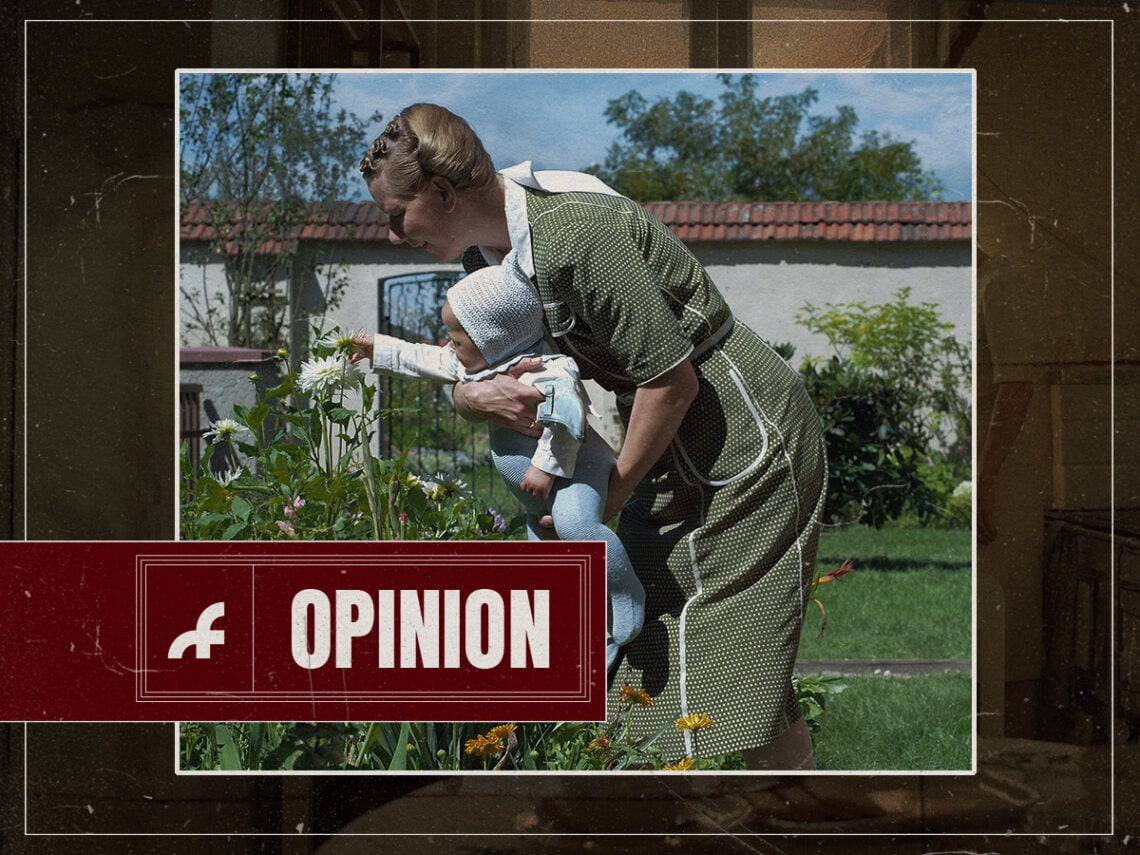
Set mere metres outside of the walls of Auschwitz concentration camp amid WWII in 1943, Glazer’s film focuses on commandant Rudolf Höss, who, with his wife Hedwig, builds a dream home for them and their children. Fit with a beautiful garden, an abundance of blossoming flowers and even a small swimming pool; the house is a place of escapist tranquillity as long as they ignore the screams and billows of smoke floating in from beyond the wall.
A film about the act of observation and, moreover, the act of not looking, The Zone of Interest is the perfect movie for the state of contemporary politics, speaking to the apparent apathy of governments across the world to adequately address acts of genocide and international crisis. It, indeed, seems as though such governments are not willing to act until the issue itself is on their doorstep, damaging their own way of life.
Speaking to contemporary acts of mass murder and war, but also to global catastrophes like the climate crisis, awarding Zone of Interest with the ‘Best Picture’ Oscar would be one of the most astute decisions of the award show’s recent history, proving that it remains part of the conversation of the contemporary zeitgeist.
On the contrary, giving the award to Oppenheimer would demonstrate the exact opposite. Sure, while it might show that they are tapped into what audiences are actually watching, with Nolan’s movie being the third-highest-grossing film of the year, it was also a WWII drama that failed to properly get underneath its subject matter, mismanaging the moral quandary of its protagonist while also refusing to show the plight that the atomic bomb caused on the Japanese people.
In times that desperately call for political stability and consistent level-headed agency, Zone of Interest provides a nuanced, objective look at the state of things, using the horrors of WWII as its anchor. A powerful and authoritative statement that itself developed a new cinematic language of emotional communication, giving the award for ‘Best Picture’ to anyone other than Zone of Interest would forgo a commanding political statement from Hollywood’s most treasured institution.
