


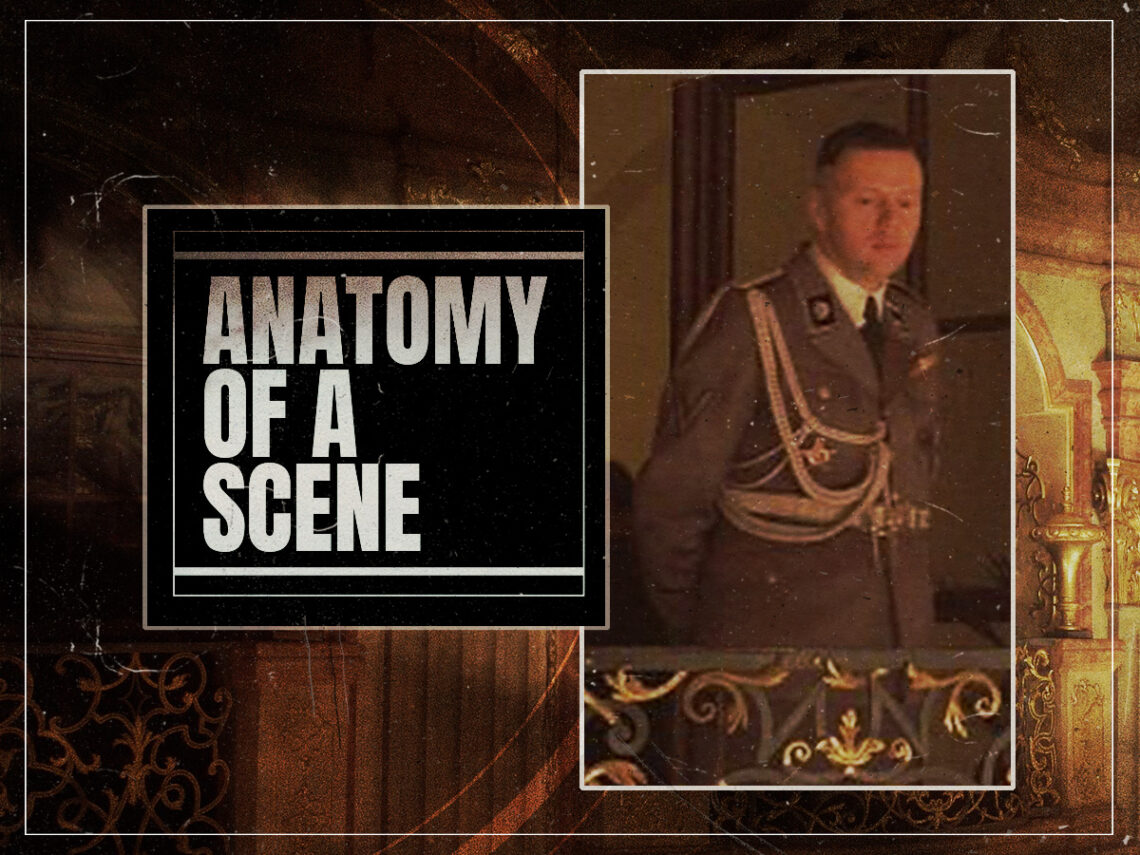
Anatomy of a Scene: Existential sickness in Jonathan Glazer’s ‘Zone of Interest’

There’s a responsibility when crafting any story about the Holocaust, one of the most vile examples of systematic human cruelty in history, to accurately represent the atrocity in all its evil, leaving no room for fancy Hollywood flair. Such remains appropriate for such classics as Steven Spielberg’s 1993 ‘Best Picture’ winner Schindler’s List and László Nemes’ remarkable Son of Saul, yet The Zone of Interest, from British director Jonathan Glazer, seems to be operating on another plane of cinematic understanding entirely, creating a new language by which not only the Holocaust can be understood but the conflicts that scar our modern world, too.
Adapted from the book of the same name by the late Martin Amis with the same degree of liberal, creative licence that he used when creating Under the Skin from Michel Faber’s novel back in 2013, Glazer takes the essence of what makes the former so haunting and applies it to his latest Oscar-nominee. Set just beyond the barbed-wire boundary of the Auschwitz concentration camp, the film occupies the home of commandant Rudolf Höss (Christian Friedel), where he lives with his wife Hedwig (Sandra Hüller) and their many children.
His children go about the humdrum of school and play while Hedwig keeps a sharp focus on maintaining her garden, which comes equipped with an impressive paddling pool, a vast greenhouse and just enough foliage to cover the concrete wall that separates their desperate haven from the horrors beyond. The family isn’t interested in what’s going on over the wall, and neither is Glazer, never allowing us to address the screams and gunshots in a sickeningly accurate representation of ‘out of sight, out of mind’.
Such individuals may sound like monsters, and in the annals of history, they indeed were, but in Glazer’s film, they are no less human than you and I, with the protagonist sharing an authentic passion for his family, animals and the environment. Evil though he certainly is, Hoss is a mere man who treats his wife with love and his work with diligence, which makes his presence as the central villainous character that much more terrifying.
This construction from Glazer is pivotal to understanding the film’s mesmeric final sequence, in which Hoss is shown leaving the government headquarters in which he and a party of Nazi officers had been celebrating their war efforts thus far. As he makes his way down the grand staircase at the end of the night, his footsteps echo throughout the vast corridors that glisten with darkness and, just for a moment, his body conquers his mind, and he begins retching on the marble steps.
While his mind seems to rationalise the horrors of his day job, his body refuses to follow suit, having a visceral reaction to the truth, which he silently reacts to as he steadily shuffles down the stairs, momentarily stopping to retch. His cries go unheard in a ghostly building devoid of any other presence, representing something of a subconscious hellscape for Hoss, who descends the seemingly endless flight of stairs as if there is no way out at all.
But then, Glazer provides one, with Hoss glaring down the dark hallway to see a pinhole of light that pierces the blackness, creating a brief window to the future in which his workplace of Auschwitz has become the museum that it is today. Here, workers meticulously clean every inch of the stark gas chambers and exhibition spaces, silently going about their work in a space that exists in a far different context than its state in the 1940s.
It’s the first time we see the inner workings of Glazer’s ‘Zone of Interest’, and its industrial appearance creates a sobering fog, yet, even here, there seems to be a disconnect between its insidious history and the way the filmmaker chooses to capture the environment. Aside from pictures of the victims of the Holocaust that can be briefly seen out of focus to the side of one shot, even in a contemporary context, the movie asserts that it remains challenging to face this subject, as well as similar modern conflicts, head-on.
Staring at this vision, it seems as though Hoss briefly questions his own rationality, retching at the legacy he is creating through his systematic approach to human torture, suffering and murder as he witnesses the aftermath of what’s to come. He soon gets over this brief existential sickness, however, departing from this strange vision as if it hadn’t happened at all, returning to the comfortable life that his job allows him to have, as long as he separates the morality of his work from his actions.
Drawing to a distressing close, in which musician Mica Levi forces you to question one’s own mental stability with a song that stabs inside your mind with violent industrial clangs, Glazer leaves us with the haunting echoes of his tragic horror. Probing the mind and forcing existential introspection, The Zone of Interest thrusts reality into the faces of those who regularly turn a blind eye and torments them with the consequences of such a decision.
