


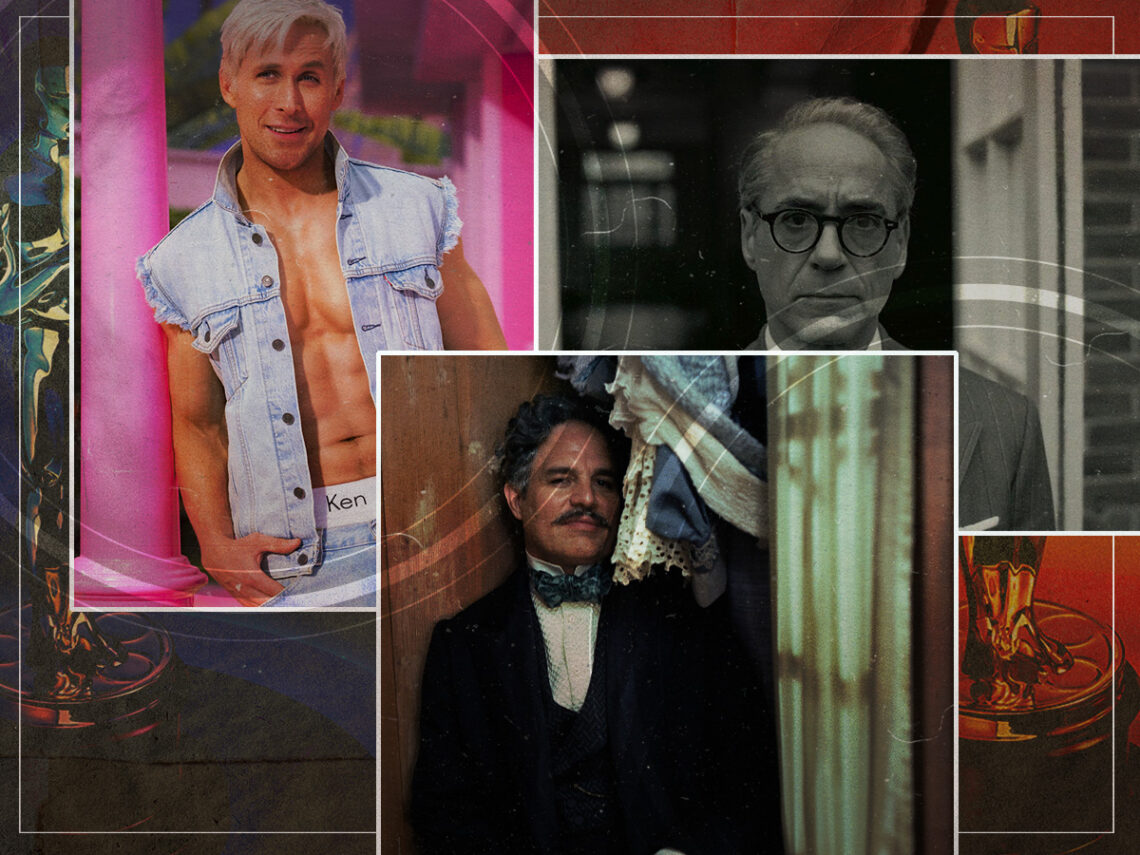
Oscars 2024: The fascinating toxic battle for ‘Best Supporting Actor’

While the main spotlight at the Academy Awards is often cast on the coveted ‘Best Actor’ and ‘Best Actress’ categories, this year’s ‘Best Supporting Actor’ is shaping up to be the more interesting battle. This is owing, in part at least, to the fact that four of five of its nominees have played, though delivered in starkly varying manners, characters doused in the ever-burning liquids of toxic masculinity.
Robert De Niro in Killers of the Flower Moon, Robert Downey Jr in Oppenheimer, certainly Ryan Gosling in Barbie, and absolutely definitely Mark Ruffalo in Poor Things all depict the darker, more self-obsessed and more ridiculous facets of living in a man’s body. Though Sterling K. Brown’s Cliff Ellerson in American Fiction escapes the microscope, he is also not without his issues.
Putting Brown to one side, though, it’s clear that this year’s ‘Best Supporting Actor’ category is dominated by those who have played a character with at least some gender-aligned personality defect. For starters, De Niro’s William King Hale sets about taking full advantage of the oil-rich Osage Nation in Martin Scorsese’s Killers of the Flower Moon. He’s driven by a greed for power and wealth, historical male characteristics, and is willing to deceive and murder (even his own family members) to achieve his goals.
It’s jealousy that rings through Robert Downey Jr’s effort as the United States Atomic Energy Commission member Lewis Strauss in Oppenheimer. He harbours personal resentment for Cillian Murphy’s Robert J. Oppenheimer largely due to the misguided belief that he derided him when in conversation with Albert Einstein in 1947, but also for dismissing his scientific claims. This tittle-tattle of ego led to a personal vendetta, and Strauss actively sought to destroy his political influence after World War II.
This is where things really heat up in the ‘Best Supporting Actor’ category, though, and it’s hard to decide who’s the more toxic of Ryan Gosling and Mark Ruffalo. Beginning with Gosling, who plays Ken in Greta Gerwig’s somewhat snubbed Barbie, opposite Margot Robbie and her titular iconic doll, he truly embodies everything about masculinity that ought to be ridiculed.
The pretentious beliefs about The Godfather, the singing of Creed on the beach, the lad’s pad filled with just about as much blokey stuff as one can find, the obnoxious fur jacket, but most of all, the complete lack of awareness of the dominant patriarchal ideology. This ignorance is only trumped by the sheer joy Ken has upon discovering its wonders and the perfect world he can live in outside of Barbie’s Ken-hating plastic existence.
Gosling delivers Ken with perfect airhead comedic timing. Though it can perhaps overshadow the film’s feminist message, it somehow manages to contribute to it, too. But where Ken was bad, perhaps Mark Ruffalo’s chauvinistic, debauched lawyer, Duncan Wedderburn, is even worse — the epitome of a spoiled child turned man of substance.
It’s Duncan who leads Emma Stone’s Bella Baxter from her guarded life, post-suicide revival, and towards what begins as a period of sexual liberation. With each scene, it’s proven that his perfect partner is essentially an infantile child in a woman’s body who just wants to fornicate all the time. Duncan, with about as high an opinion of himself as possible, urges Bella not to fall in love with him despite giving her three orgasms in a row, the line delivered with a level of smarm previously thought impossible.
But as Bella begins to realise that there is more to life than sexual pleasure and thus slowly rejects Duncan and his tirelessly working organs, the tables are flipped, and he meets his newfound and surprising love for Bella with rage, jealousy, bitterness, confusion and obsession. It’s archetypal of a spoiled child who can’t get his own way and delivered with supreme gusto by Ruffalo who plays the abhorrent wretch with at least a degree of wreaking charm.
So the ‘Best Supporting Actor’ award at this year’s Oscars is rammed with the most repulsive facets of the male human psyche, the kind of behavioural traits that lead to pain, deception, war and indeed every other type of malicious ill that this unfortunate world suffers. It’s an admittedly strange collection of performances that suggest an obsession with examining such characters through the cinematic medium.
While art is imperative to the hopeful dissolution of such people in our society outside of the cinema, their widespread inclusion at this year’s Academy Awards is indicative of their necessity. On the one hand, the dramatic performances of Downey Jr and De Niro showcase the dangers of such men in positions of power and the disastrous consequences they can cause. On the other, Gosling and Ruffalo deliver comedic takes on toxic masculinity, which suggests either one of two things. Firstly, those negative masculine traits are still just not funny and rather embarrassing. Alternatively, that comedy is still the best vessel to confront social norms, values and conventions and consider what ought to be changed.
Regardless of how such performances ought to be considered, it’s fair to say that if it’s examinations of toxic masculinity that you want, then the ‘Best Supporting Actor’ category is good value for money, indicative of our cultural concerns of the past decade or so.
