


The ending of ‘American Fiction’ explained

The 2024 Oscars demonstrate one of the finest years of ‘Best Picture’ nominees in recent memory, with the Academy doing a surprisingly good job of reflecting the colourful dynamism of modern cinema. While the Christopher Nolan movie Oppenheimer and Yorgos Lanthimos’ erotic drama Poor Things battle it out for the top prize, one shouldn’t ignore the humble existence of Cord Jefferson’s American Fiction.
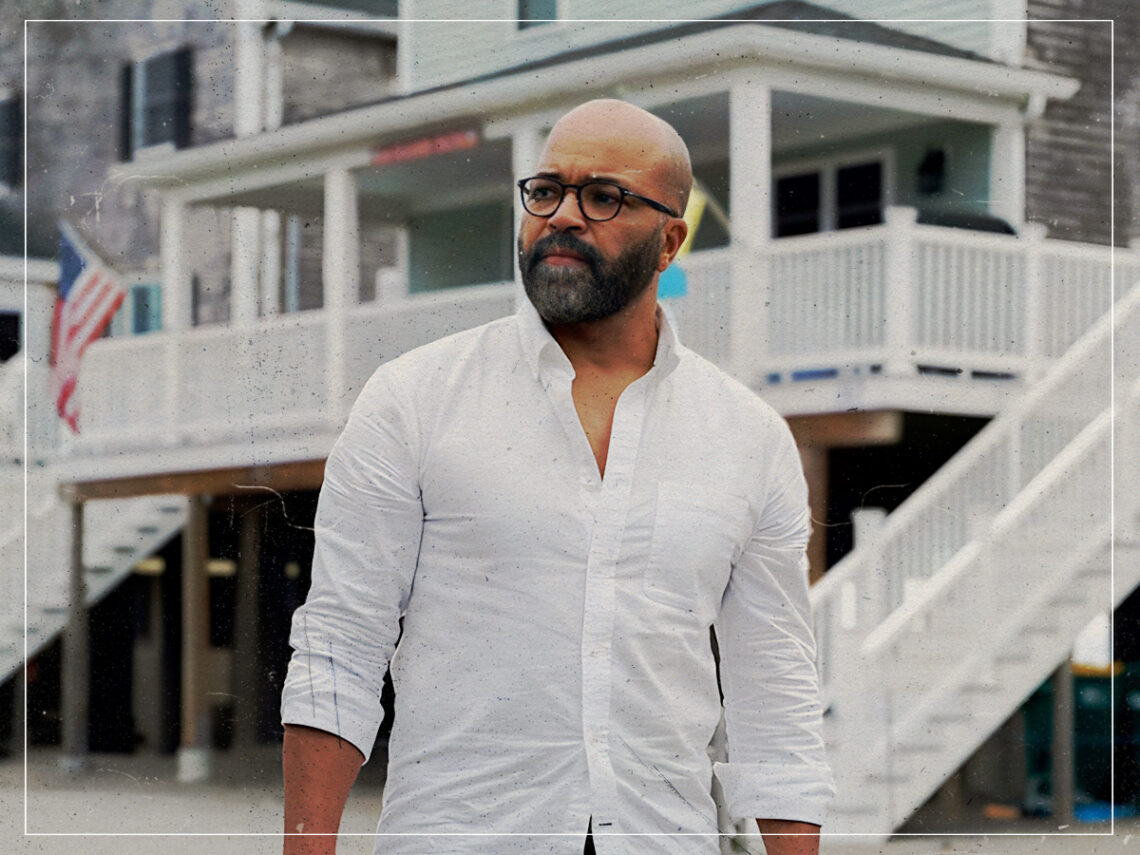
A satire that casts a magnifying glass over how the world of art, literature and cinema can stereotype the lives of Black people, Jefferson’s Oscar nominee tells the story of an acclaimed novelist named Monk (Jeffrey Wright) who surrenders his integrity in favour of writing the kinds of books that play into such prejudices. While he does this as an act of protest, his provocative novel ends up being a hit with the publisher, placing Monk in a moral quandary.
Nominated for five Academy Awards, including ‘Best Adapted Screenplay’ and ‘Best Performance by an Actor in a Leading Role’ for Wright, American Fiction has managed to capture the imagination of audiences thanks to the sharpness of its comedy and the pertinence of its opinion. Taking just over $22million at the box office, the film is a callback to similar satires like Spike Lee’s Bamboozled that aim to question and explain issues of Black stereotypes in contemporary society.
As lead star Jeffrey Wright told USA Today about the film, “The story is about a man and a book and his frustrations with the publishing world, but that really is a metaphor for dynamics that exist in terms of messaging and misrepresentation across the landscape of American society”.
Explaining the ending of American Fiction
Despite writing his novel, mockingly titled Phuck, as a protest, ultimately, audiences respond positively to the book alongside self-respecting critics. Such reaches a head at the end of the movie when Monk finds himself the recipient of a literary prize thanks to the novel. Written under a pseudonym, no one realises Monk has penned the book until he takes to the stage at the award show and reveals that he wrote the work as a protest.
Yet, just before he begins his climactic speech, the screen cuts to black. Monk is on a movie set with the producer Wiley (Adam Brody), seen earlier in the movie, discussing how best to end their movie, with it being revealed that American Fiction is actually a movie within a movie and is better seen as an adaptation of the making of the fictional book Phuck.
Monk is keen for the movie to end as the audience has just witnessed it, cutting to black to keep the conclusion ambiguous, but the producer doesn’t see this as good enough to get punters through the cinema doors. Instead, Monk suggests a romantic ending where he reconciles with his lover Coraline (Erika Alexander), but this is, too, refused, with Wiley preferring a tragic ending where the writer is shot by police while accepting the award.
Despite hating the idea which takes away all authenticity from the story, Monk acknowledges that such sensationalised endings have become so ingrained within ‘Black stories’ that without such tragedy, it might not even be recognised as one.
The baffling finale suggests that the ending was engineered to specifically appeal to the tastes of popular audiences, with this also having a major impact on the rest of this film up to this point. After we discover that American Fiction is really a ‘film within a film’, it could certainly be seen that the rest of the movie, including the death of his sister and the breakdown of his relationship, was also created to be purposefully sensational.
What the conclusion does show for definite, however, is that Monk has come to discover that he needs a commercial audience in order to find financial stability and that he sees the exploitation of such ‘Black stories’ as the best way to do so.
As Cord Jefferson told USA Today, “He finally understands that like, ‘Oh, being mad at these people on the ground with me is ridiculous.’ In fact, these people are operating within a system at an institution that has existed far before any of us”.

What is Blaxploitation?
The Blaxploitation film is a sub-genre of the exploitation movie that came to fruition in the 1970s. Such films were often low-budget and existed outside of the Hollywood mainstream, starring Black actors in sensational crime stories that challenged popular filmmaking, with influential examples including Gordon Parks’ Shaft and Melvin Van Peebles’ Sweet Sweetback’s Baadasssss Song.
Blaxploitation cinema came around, in part, thanks to the influence of the Black Panthers, a Black power political organisation demanding Civil Rights across America. Calling for Black filmmakers to reclaim their image in Hollywood, an influx of such movies was made in the era where Black actors became lead stars and action heroes rather than merely supporting characters in major movies.
The acclaimed modern filmmaker Quentin Tarantino has long paid homage to the era of Blaxploitation cinema with such movies as 1997’s Jackie Brown and 2012’s Django Unchained, yet the prominent Black filmmaker Spike Lee has criticised him for his approach to such subjects. “He says he grew up on Blaxploitation films and that they were his favourite films,” Lee once stated in reference to Tarantino, “But he has to realise that those films do not speak to the… African-American experience. I mean the guy’s just stupid”.
What is the Erasure book?
Erasure, by writer Percival Everett, is the book on which Jefferson’s American Fiction is based. Dealing with similar themes, the novel, released in 2001, largely deals with the personal consequence of sensationalising one’s own life and turning the art one once held with great importance into a palatable commodity for audiences across the globe.
Speaking to WNYC about his experience with the book, the director shared: “I’d never heard of Erasure. I read a synopsis. I went bought it and devoured it immediately. As I was reading it, I got the wind in my creative sails again. 50 pages into it, I was thinking that I might want to adapt it into a screenplay, and about 100 pages into it, I started thinking that I might want to direct that screenplay once it was written”.
Continuing, he added that once he talked to Percival about the adaptation, stating: “He felt like I understood the spirit of Erasure, and I understood the essence of what he was getting at. Yes, he gave me the rights for free for six months, and he said, ‘Go write a script, and if anything comes of it, then you can pay me then’, and that’s what I did”.
