


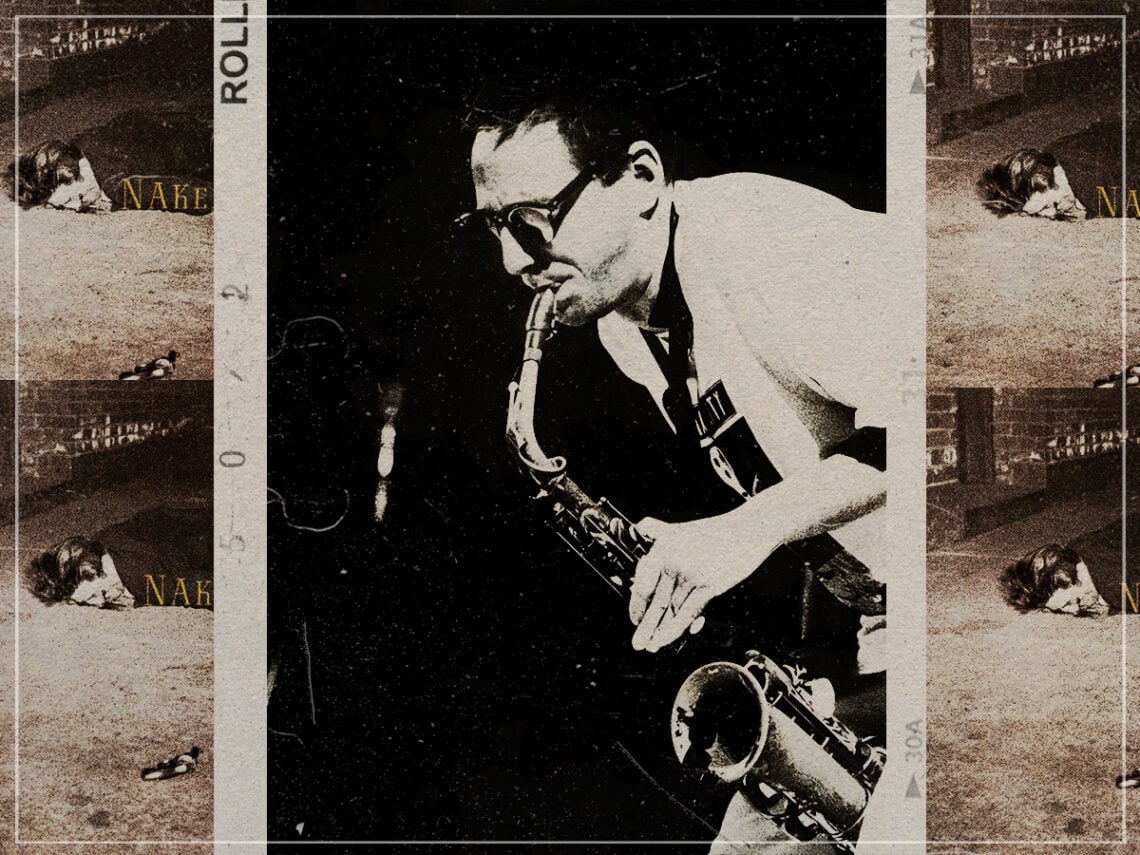
The organised chaos of John Zorn’s Naked City

Anyone who has watched Michael Haneke‘s Funny Games will remember the opening sequence, which sees a perfect-looking family enjoying a car ride en route to their holiday home, listening to classical music. However, signalling that events are about to take a turn for the worst, the title cards flash up alongside the sounds of frenetic saxophones and thrashing guitars, shocking the audience into instant submission.
This intense track is ‘Bonehead’ by Naked City, the strange avant-garde band led by experimental saxophone genius John Zorn. The song is the perfect soundtrack for the imminent violence about to occur in Haneke’s film, but ‘Bonehead’ is just the tip of the Naked City iceberg. You’ve probably never heard anything quite like a Naked City album, which blends an odd amalgamation of genres – hardcore punk, grindcore, heavy metal, surf rock, freeform jazz, and many, many more.
Zorn was born in 1953 and spent his youth listening to a wide array of genres, finding an early interest in avant-garde composers such as György Ligeti. He soon picked up the saxophone and joined New York’s underground scene during the 1970s. Through the decade, Zorn established himself as a key experimental figure. However, it wasn’t until 1985, when he released a reimagined collection of Ennio Morricone pieces, The Big Gundown, that he gained wider recognition. Even the iconic composer approved of Zorn’s work.
He soon decided that he wanted to create music with others, forming Naked City in 1988. Yet, a band led by Zorn couldn’t be expected to stick to any form of musical convention. Instead, he described Naked City as a “compositional workshop”, recruiting several musicians and requiring them to push their creative boundaries to the limits.
Many of Naked City’s songs are so short and chaotic that it’s questionable whether you can even call some of these pieces ‘songs’ in the first place. ‘Bonehead’ comes in at just 55 seconds, launching straight into a frenzy of instruments that’s enough to knock even the most seasoned freeform jazz fan off their feet. Elsewhere, ‘Thrash Jazz Assassin’ is 48 seconds, moving through punchy instrumentals, a saxophone freakout and mini drum and guitar solos without a pause for breath.
Interestingly, the band would cover classical composers, putting their own wild spin on tracks by the likes of Claude Debussy, Alexander Scriabin and Olivier Messiaen. Yet, it’s important to note that Naked City didn’t just limit themselves to short tracks either; the eponymous first piece on Grand Guignol, for example, is 17 minutes long. However, Grand Guignol demonstrates Naked City’s best short ‘hardcore miniatures’, aided by the piercing screams or abstract shouts of Yamatsuka Eye.
Naked City’s music is far from easy listening, and over their six albums, beginning with 1988’s self-titled debut and ending with 1993’s ambient-inspired Absinthe, the band never compromised their endless experimentation. They eventually disbanded in 1993 when Zorn felt ready to move on to other projects, although they briefly reunited for some live shows in 2003.
