


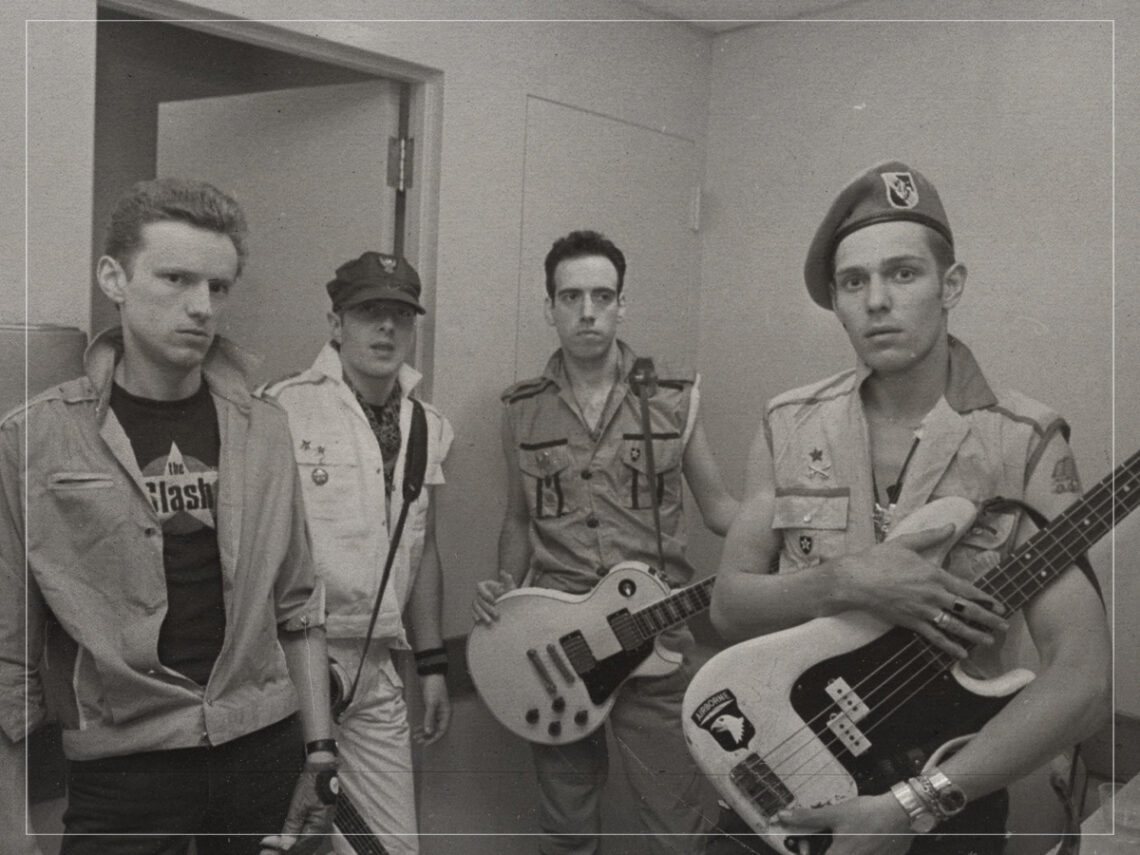
“For what they did”: the only punk band The Clash ever respected

With their self-titled 1977 debut, The Clash expounded on the punk ethos with their signature brilliance, defined with politically-charged lyricism, adrenalised noise and an immeasurable talent.
In 2003, the year The Clash were inducted into the Rock and Roll Hall of Fame, awarded a Grammy for their Westway To The World documentary and deemed “Godlike Genius” at the NME Awards, Mick Jones and Paul Simonon reflected on the band’s legacy to GQ, notably in the aftermath of Joe Strummer’s passing in December of 2002, at just 50 years old.
When asked which peers of theirs they revered as they were rising to fame, Jones offers his choice: “The Sex Pistols, for what they did,” he surmised. He acknowledged that his choice may be surprising, considering the band’s short-lived fame and demise some 25 years earlier.
“Yeah, I know what you’re getting at,” Jones reasoned, “But at the time the Pistols weren’t together long enough to enjoy the fruits of their success. Reforming is their way to sort of get a pat on the back.”
Referring to the Sex Pistols’ reunion in 2002, playing London’s Crystal Palace and embarking on a North American tour the following year, Jones had a point: despite one’s opinion of them, the Sex Pistols broke through and brought punk into the mainstream in the way that few other bands could; and, albeit in a semi-manufactured sense under Malcolm McLaren’s eye, they had the energy, the raw talent and the confidence to do so.
“The Pistols were the only people we socialised with at the time,” Simonon stated. Indeed, as Jones first played in the protopunk band London SS – managed by Bernard Rhodes, an associate of McLaren’s and friend of the Pistols – he became friendly with the Pistols’ Glen Matlock and Steve Jones, who helped audition potential new members for London SS. Rhodes continued to manage Jones after the band broke up in 1976, and that February, Jones saw the Sex Pistols live for the first time.
“You knew straight away that was it, and this was what it was going to be like from now on,” Jones later described, as quoted in John Robb’s Punk Rock: An Oral History. “It was a new scene, new values – so different from what had happened before. A bit dangerous.”
Joe Strummer was a professed fan, too. He described seeing the Pistols open for one of his band’s gigs to Record Collector: “The Pistols came out that Tuesday evening, and their attitude was, ‘Here’s our tunes, and we couldn’t give a flying fuck whether you like them or not. In fact, we’re gonna play them even if you fucking hate them.’”
The Clash’s debut gig was on July 4th, 1976, opening for the Pistols in Sheffield. Together, they bore witness to The Ramones’ legendary visit to London, attending their gig at Dingwalls. Still, even as certain Pistols held their own opinions of The Clash, their music remained central.
“What you’re doing with your life now is more important,” Simonon posited, concluding, “I don’t really buy that – whether you’re middle class or not – it’s what you do with your life that is important. That’s the thing about punk. It changed their lives, and it changed ours too.”
