


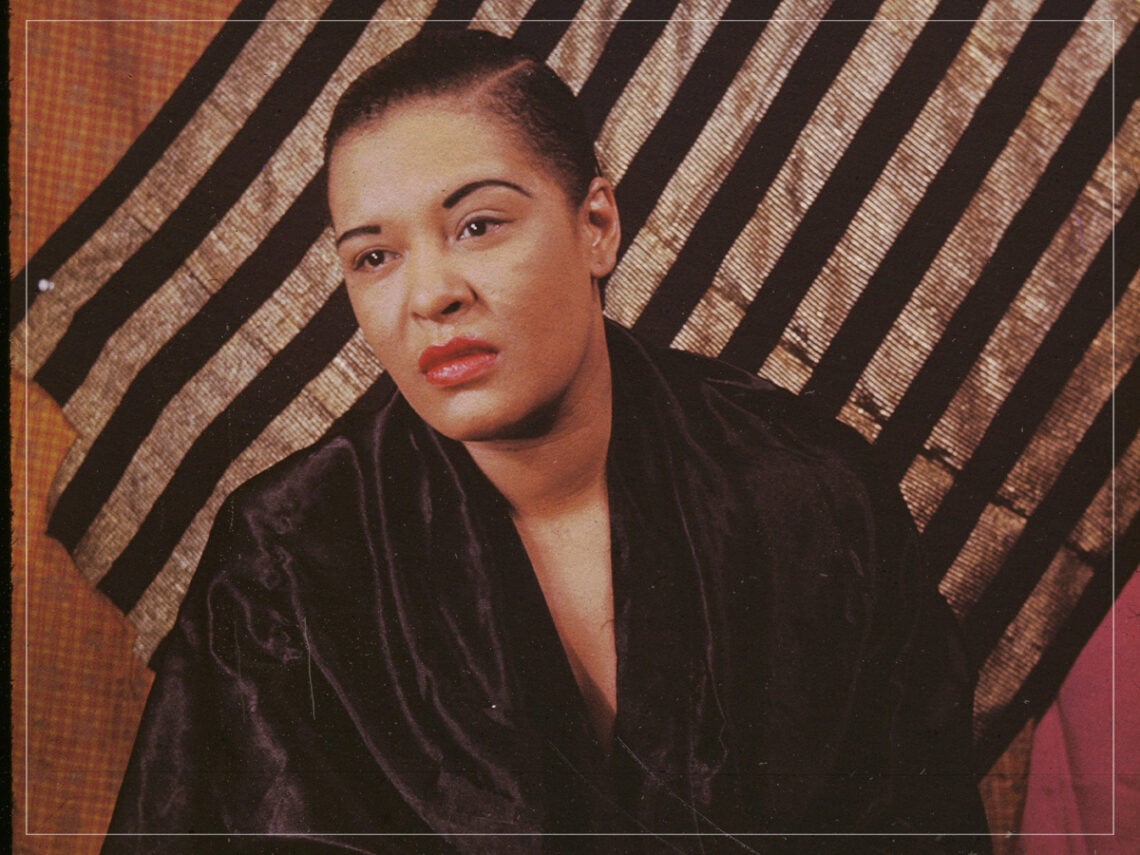
The one thing Billie Holiday considered “childish” about her own artistry

“You just have to have it in you,” Billie Holiday once said, discussing how jazz wasn’t created by one person or a specific moment in time, but a feeling that carries through the ages. “It’s good music and a good feeling.”
This immediately set Holiday miles ahead of most of her contemporaries, as from day one, she’d always understood that any music, not just jazz, comes from that instinctive know-how or the kind of improvisation that blossoms in the moment because you’re just feeling your way through and inviting others to do the same.
She had the knack for it in the same way Nina Simone did, who once said that while the masters or music are clear – John Coltrane, Dizzie Gillespie, Miles Davis – they all “knew what they were doing” because they understood the basic principals of musical excellence: “The structure, the cleanliness, the tone, the – nuances, the implications, the silences, the dynamics, the pianissimos, the fortissimo.”
Perhaps that’s why Simone also once likened music to god: because it had this inexplicable ability to make her feel like she was a part of something more, to make her feel things she hadn’t experienced outside of music. For Holiday, this was very much the same. But this understanding and basic enjoyment also came from a broader acknowledgement of the contexts that put her in her position in the first place.
We often talk about 1950s legends like they’re restricted to a select few (Elvis Presley, Buddy Holly) while looking at the worlds created by people like Holiday, Simone, Ella Fitzgerald and Aretha Franklin like they’re entirely separate, like they weren’t people who had to work infinitely harder to make a name in a deeply prejudiced society where even Black people had to look a certain way to be respected as much as their white counterparts.
With Holiday, people now regard her appearance (specifically, her iconic gardenia) as a symbol of resistance, a poised delicacy in the face of systemic racism that proved her resilience and strength, even though the reasons she started wearing it stemmed from something far simpler. She’d reportedly worn it for the first time when she’d accidentally burnt her hair backstage before a show and fashioned a cover-up in her desperation to hide it.
But it soon became an integral part of her look, something that people immediately pictured at the mere mention of her name, and still do. Something that’s still very much a part of her legacy, even though its emergence was nothing more than a temporary fix. In 1956, Holiday actually reflected on how she felt about the gardenia and why she no longer wore it. “I’ve always loved gardenias,” she told Music USA.
Continuing, “One night I just wouldn’t go on. I couldn’t sing without my gardenia. So, it became a trademark; and I just thought I couldn’t sing if I didn’t have my gardenia in my hair.” When asked why she ditched it, she said: “I got over that. It was just a childish thing.”
Perhaps it’s more profound to look at it that way: something that once provided a stand-in to cover up a hidden discomfort eventually fell away, revealing a version of Holiday who no longer felt she had to overcompensate to prove she wouldn’t crack under pressure. It had been her proud body of armour for a while, before she finally felt strong enough and powerful enough to step out as herself, without something physical to hold on to.
