


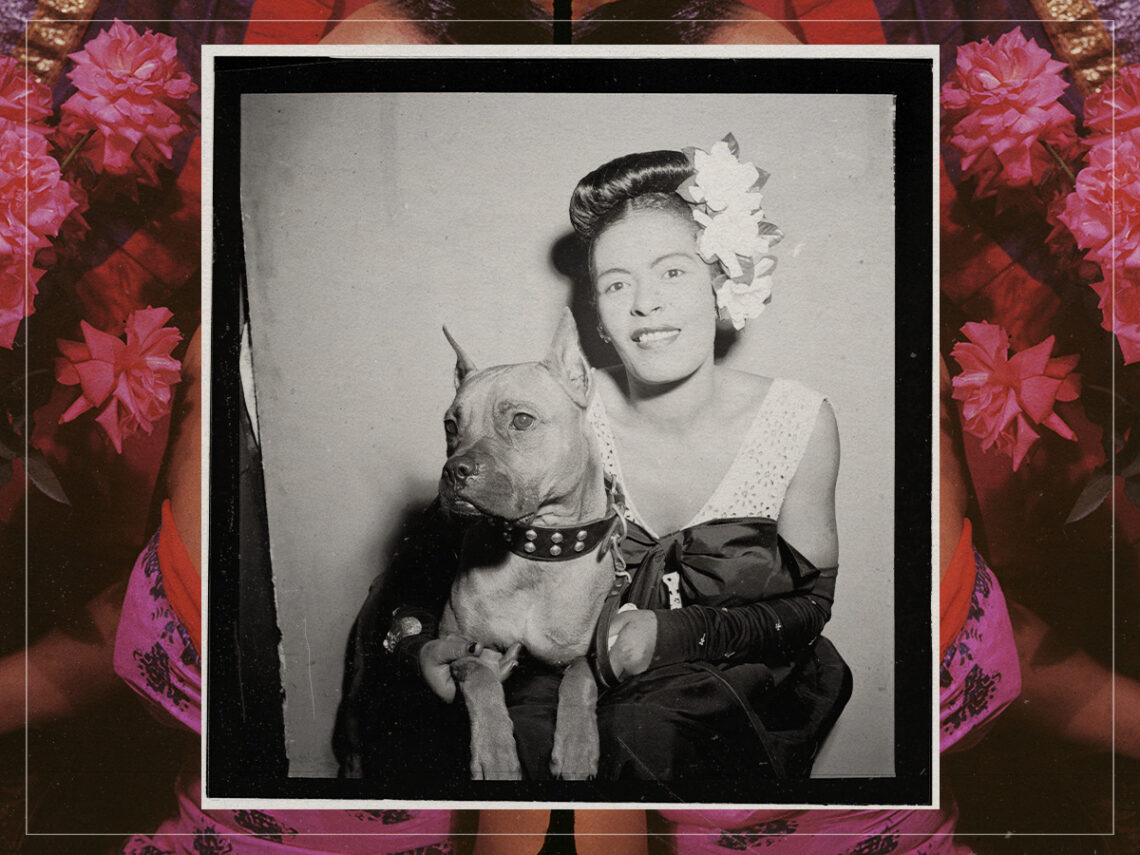
How Billie Holiday’s gardenia became a symbol of empowerment

Michael Jackson wore a singular white glove. Prince adorned an iconic purple coat. Elton John has his glamorous big glasses. Robert Smith barely goes before an audience without his smudged makeup punctuating his eccentricity. David Bowie once wore a jarring lightning bolt across his face as part of a fictional faćade. Billie Holiday had her gardenia; only, in this case, it represented something far more deeply rooted in societal oppression and female empowerment.
Artistically, Holiday was well and truly one of a kind. As someone whose voice was about as devastating as her importance to musical culture and the societal movement of the time, Holiday’s story was one filled with equal parts turbulence and triumph, carving a path for herself throughout the 1950s like a traveler would hack away vines and branches in their path; undetected to a degree but unflinching and purposeful in their movements.
Aesthetically, Holiday also became one of the most familiar spectacles, her gardenia sitting neatly in her hair like a carefully placed piece of her costume, soon to become one of her most iconic items that not only signified effortlessness and elegance but which actually came to represent something far more complicated, something gorgeously defiant masquerading as an item of the utmost beauty. A powerful emblem that said, “I am here, brave and strong, just like the many who came before me.”
Though to many it remains merely an item Holiday once picked up by accident (because that’s how she started wearing the gardenia; when she had accidentally burned her hair backstage and put it there to hide her horror), it actually appeared during a time when Black women, both in the spotlight and outside of it, were facing incredibly oppressive expectations and ideals when it came to beauty, many struggling with the attempt to appear a certain way with traditional female elegance.
Something so delicate and meticulous as a gardenia not only made Holiday stand out with a more pronounced ferocity, it also gave her a sort of intimate aura that appeared both hard and soft, like she didn’t fear occupying the limelight or standing out, but gave off a more dignified resilience that appeared as though she kept her composure amid immense scrutiny. In other words, as a Black woman in the music industry, she faced criticism from every corner. But something so simple as her white flowered embellishment made her appear unbothered, safe from reckless gazes and perfect strangers.
At the same time, Holiday’s physical manifestation of resistance (and how this emerged from the gentleness of her exterior) instated another subtle attitude towards empowerment for countless Black artists who followed suit, particularly when it came to oppression and the ways different singers would use certain aspects of their appearance as a representation of their strength during times when pressures pushed them to crack.
A lot of the time, this meant rephrasing the parameters of glamour in their appearances, and how elegance could be curated through simplicity, like Diana Ross’ simplistic yet incredibly polished style or even in a broader way people costumise as a weapon: sometimes even the simplest fits can appear empowering, like Holiday’s gardenia, or poised for battle with a sort of calm posture, like Beyoncé’s sequined bodysuits that could easily be mistaken for a more understated body of armour.
Perhaps more poignant wasn’t ever the nature or meaning behind Holiday’s gardenia itself, but how such simplicities on the surface held deeper meanings when looking at her life and career. Like how she knew and felt suffering perhaps deeper than many of her contemporaries, but concealed it with pretences that even she was aware of. The delicate white flowers were never a stand-in for someone attempting to hide, but a statement against the propensity of the industry and its followers to ignore the realism of stories like hers.
As she once said: “You can be up to your boobies in white satin, with gardenias in your hair and no sugar cane for miles, but you can still be working on a plantation.”
