


“I love it to death”: The underrated song Elton John has loved since 1969

It’s probably hard for someone at the level of fame as Elton John to remember absolutely everything they’ve done.
As much as they may love to play music, his vast array of hits, coupled with the endless stream of contributions to other people’s albums, would lead even the most prolific artists to rack their brains to figure out what every song they wrote sounded like. Although it had been another lifetime since John started, he felt that this initial collaboration between him and Bernie Taupin was still an essential piece of his career.
For an artist whose catalogue stretches across decades and contains countless classics, it takes something special for an early song to retain its significance. Yet some recordings endure not because they were massive hits, but because they captured the moment everything started to make sense.
Then again, John never seemed to have too many strikeouts in terms of melody. There are plenty of albums where he got bogged down by the production, like Victim of Love, or was coked out of his mind like Leather Jackets, but that’s usually balanced out with his sense of melody, which may as well be a superpower considering how many iconic songs he’s had a role in.
Which is strange when looking at how John and Taupin came together. Despite being joined at the hip musically and lyrically, each of them came together through rejection, with the label thinking that they weren’t going anywhere and John eventually getting Taupin’s information out of desperation.

Few creative partnerships have produced such extraordinary results from such unlikely beginnings. What initially appeared to be a last throw of the dice soon became one of the most successful songwriting relationships in popular music history.
But once they did have an album to their name, it’s not like Empty Sky would give Led Zeppelin a run for their money on the charts or anything. The songs were still strong, but there was that distinctive personality of John’s later work that was missing, coupled with production choices that sounded too rooted in the 1960s to have any real staying power past a casual radio single.
Of all the tunes on the record, the title track offers a subtle glimpse of the magic they would capture later. While the eight-minute runtime meant that no one would hear it on the radio, there is a charm to hearing John make something like this rock and roll right out of the gate, even introducing some moments that predict where he would be going once he stepped into his glam-rock boots.
Even years later, John admitted that he never got tired of hearing this song when reminiscing, saying, “A great rock & roll track. I love it to death. I remember doing the vocal in the stairwell to get that echo, in a very small studio in London. ‘Empty Sky’ has something magical about it. It came together so brilliantly, and still sounds so good. It’s hard for a piano player to write a rock & roll song. It sounded like a Stones song. I thought, ‘I can do this.’”
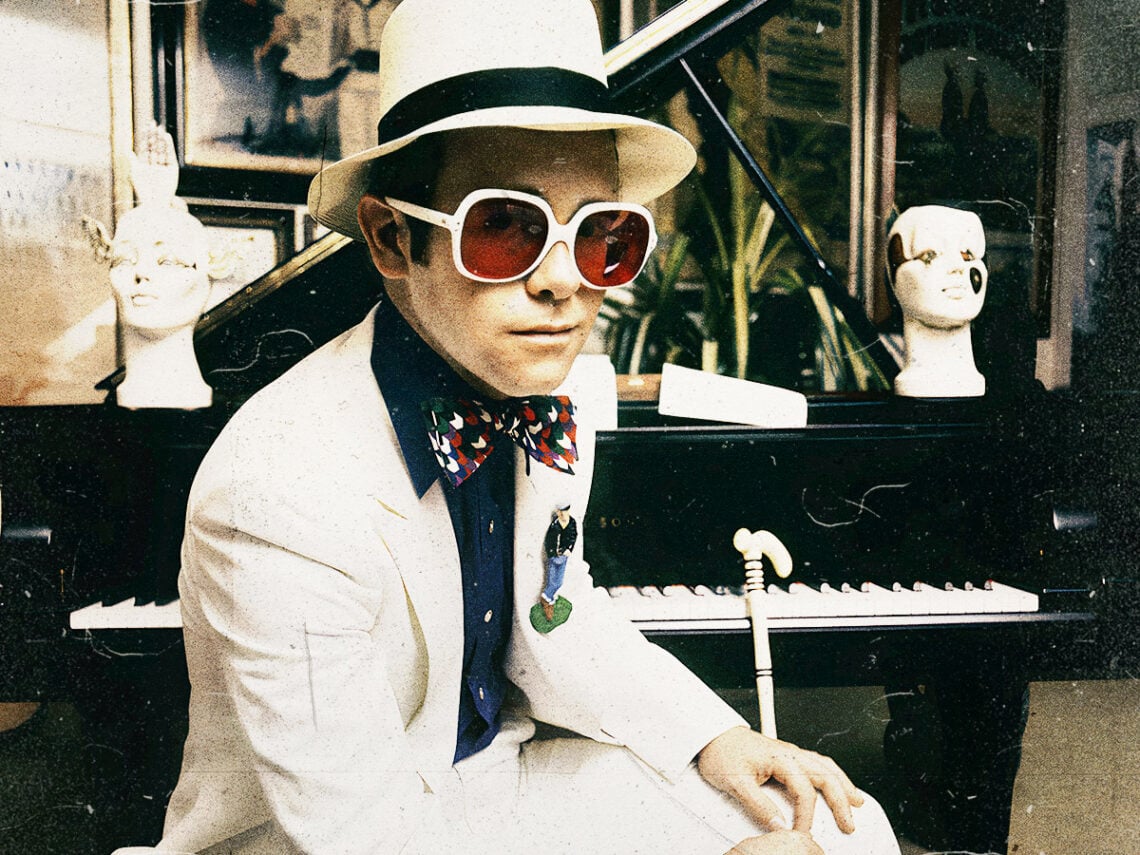
And once he did get his bearings, it didn’t take him long to start lighting up the charts. As much as people loved him for the outrageous outfits and the number of hammy performances he could give, John was always a singer-songwriter at the end of the day, and his songs with Taupin were still brilliant if he took off the outrageous glasses and played them as a gentle piano ballad.
But ‘Empty Sky’ was about more than making something epic without a care in the world. He wanted to prove that piano players could write rock and roll too, and in a world where people like Jimmy Page were the biggest names in the world, John made the kind of epic rock tune that did Little Richard proud.
In many ways, that ambition would come to define John’s entire career. Whether performing delicate ballads or arena-filling rock anthems, he consistently sought to expand perceptions of what a piano-led artist could achieve.

Never Miss A Tale
The Far Out Classic Rock Newsletter
All the latest Classic Rock content from the independent voice of culture.
Straight to your inbox.