


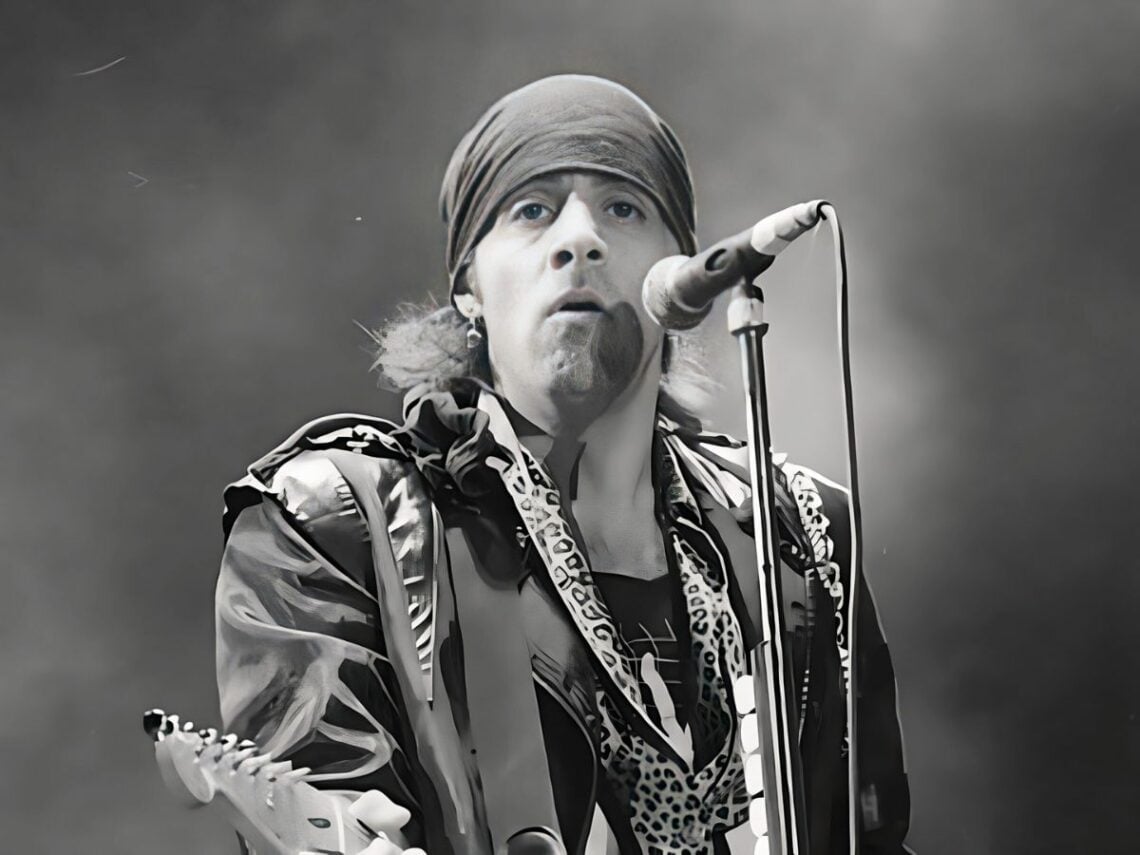
The one singer Steven Van Zandt compared to Mick Jagger: “This was huge”

If there’s one person who knows a thing or two about rock and roll, it’s Steve Van Zandt. It’s fair to say that the E Street Band veteran has clocked up what can only be described as an encyclopaedic knowledge of the genre in the course of his 73 years, over half a century of which he has spent electrifying stages all over the world while backing up ‘The Boss’.
The benefit of having a rock god status is that you can impart your wisdom and knowledge down to the masses, which is exactly what Van Zandt does – and he says there was one “huge” band that audiences could only be readied for with the help of such giants as Rhe Rolling Stones.
Back in 1964, The Stones were on the cusp of stratospheric fame. Mick Jagger and co had already been doing the rounds, gradually winning audiences over with their revolutionary howling and growling tones. This was, according to Van Zandt, a precursor to set the stage for bands with a less conventional sound and squeaky-clean image, and here The Animals came out to play.
In an interview earlier this year, Van Zandt said of the Newcastle-bred band’s seminal hit, ‘House of the Rising Sun’: “This was huge. The Stones had prepared us for a group like the Animals, a different kind of pop.”
But it was more than simply a shaken-up sound. The bands’ respective frontmen, Jagger and Eric Burdon, channelled much of the same exciting stage presence and vocal prowess, hence making their distinctive tones a hit with the crowds.
Van Zandt explained this sensation further: “Burdon had that same way of singing as Jagger, in a lower register. He was right down there with that more primitive vibe. It [‘House of the Rising Sun’] was number one for weeks.”
It’s easy to see, then, how frontmen like Burdon and Jagger went on to become the poster boys for the British invasion. It was a cultural phenomenon which reached its peak not long after The Stones and Animals had broken onto the scene in the mid-1960s, where British rock and pop acts began to gain significant prominence in the US, signalling the era-defining rise of youth counterculture on both sides of the pond.
This was set into motion in 1964 with the arrival of The Beatles onto American shores, with the likes of The Stones, The Animals, and a multitude of others, including Gerry and the Pacemakers, the Bee Gees, and Dusty Springfield, following pretty quickly behind.
In the most simplistic terms, what happened next changed the course of music history forever, with rock and roll supercharging hearts worldwide. But even after the era had moved on well into the 1970s, its legacy was to have laid the foundation for Van Zandt and his fellow E Street Band-ers to start making waves, and they have continued the rock revolution ever since. The lifeblood still pumping the genre can be owed in no small part to the likes of Van Zandt, but the impact of his predecessors is still completely palpable more than 60 years on from their inception. Every single one of them has more than earned their space in the history books.
