


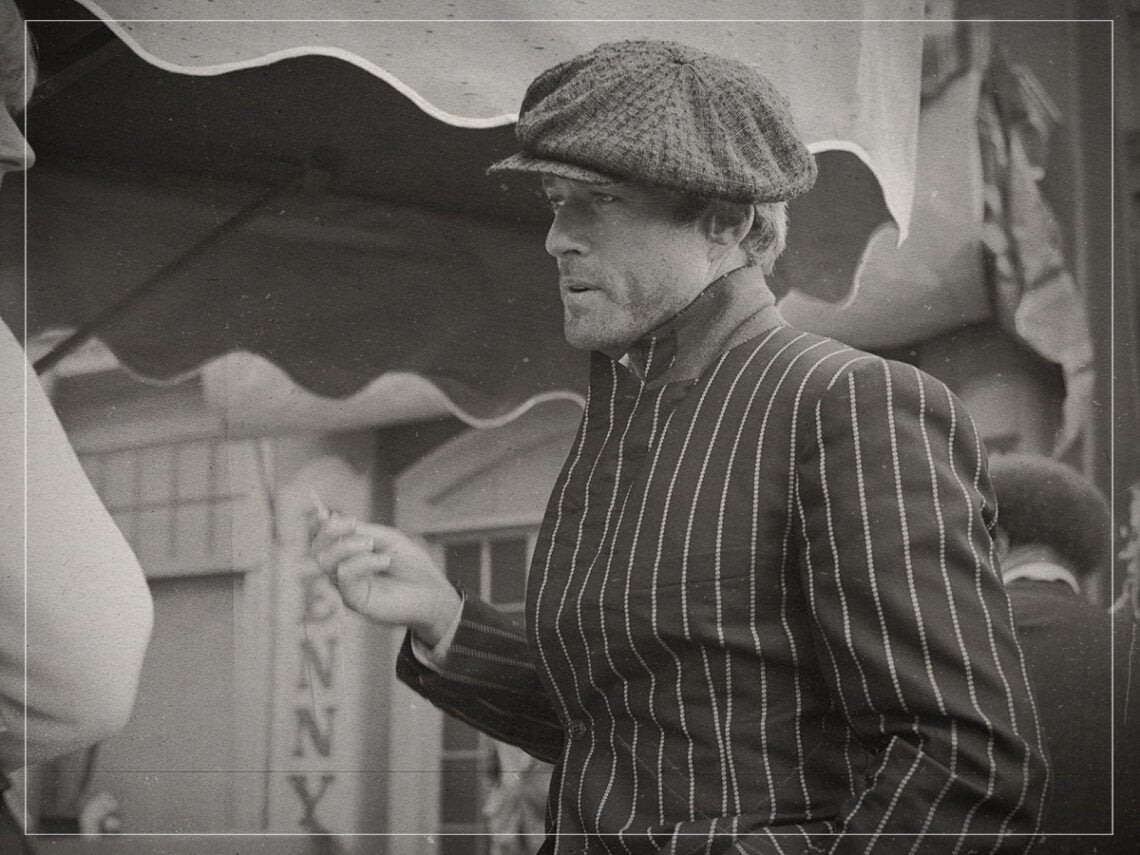
The one role Robert Redford hated playing: “I felt restricted”

In 1973, Robert Redford shot to superstardom with his Academy Award-nominated turn in the heist caper The Sting. His star had been building since 1969’s Butch Cassidy and the Sundance Kid, but this was his true coming out party, and he wanted to follow it up with the lead role in an adaptation of a classic piece of literature. He pursued the role hard and eventually won it, but when the dust finally settled on the picture, he realised it wasn’t all it was cracked up to be. In fact, he hated playing the part.
When famed Paramount Pictures producer Robert Evans set up an adaptation of his wife Ali MacGraw’s favourite book, his initial plan was for her to star as the female lead opposite Warren Beatty as the mysterious male lead. However, MacGraw soon became embroiled in an affair with Steve McQueen, whom she met on the set of The Getaway, leading to her divorce from Evans. Around this time, Beatty declined to star in the movie – perhaps because he had also dated McGraw, and Jack Nicholson rejected it, too.
By the time Evans turned his attention to Marlon Brando, whose comeback with The Godfather and The Last Tango in Paris had made him hot property again, Redford had also thrown his hat in the ring. Brando soon priced himself out of the role, which left Evans with Redford, who hadn’t quite received his Oscar nod for The Sting yet.
Preposterously, Evans didn’t want Redford for the role because he believed the character in the book had dark hair – despite F Scott Fitzgerald’s book never stating the colour of protagonist Jay Gatsby’s hair. Director Jack Clayton was forced to step in to point this out to the producer, and he then talked Evans into hiring Redford, who desperately wanted to play Gatsby. Redford was soon cast opposite Mia Farrow as the flighty Daisy Buchanan and The Great Gatsby began shooting in ’73.
Sadly for Redford, though, the part he campaigned for turned out, in practice, to be a bitter disappointment. In 2014, he admitted to Maureen Dowd, “I felt restricted. And yet, that was sort of the point I think that the director wanted to make, that the character – and I get this – the character was somewhat restricted by the fact that there was an artificial part to him because he wasn’t really who he was.”
Indeed, Redford is bang on in that assessment. In the book, Gatsby is a millionaire who came by his riches in murky fashion, and his entire personality is a constructed illusion designed to obfuscate his true self. Naturally, this leads to him being hard to get a handle on for the other characters because so much about him is hidden. What Redford didn’t anticipate, though, was that these restrictions Gatsby placed on himself would mean he would also feel confined and suffocated by the role.
While Redford liked the hidden depths of the character, he was frustrated that the movie didn’t find more ways to let him dig into the differences between the personal and public versions of Gatsby. “I thought that could have been emphasised even more with some private scenes showing the contrast,” he mused, “showing the real him and the constructed him rather than just the constructed him.”
Considering how he felt about playing Gatsby, it’s perhaps unsurprising that Redford wasn’t particularly keen on revisiting the role when Baz Luhrman and Leonardo DiCaprio made a gaudy new version of the story in 2013. When asked if he watched that 3D extravaganza, Redford simply answered, “I didn’t see it.”
