


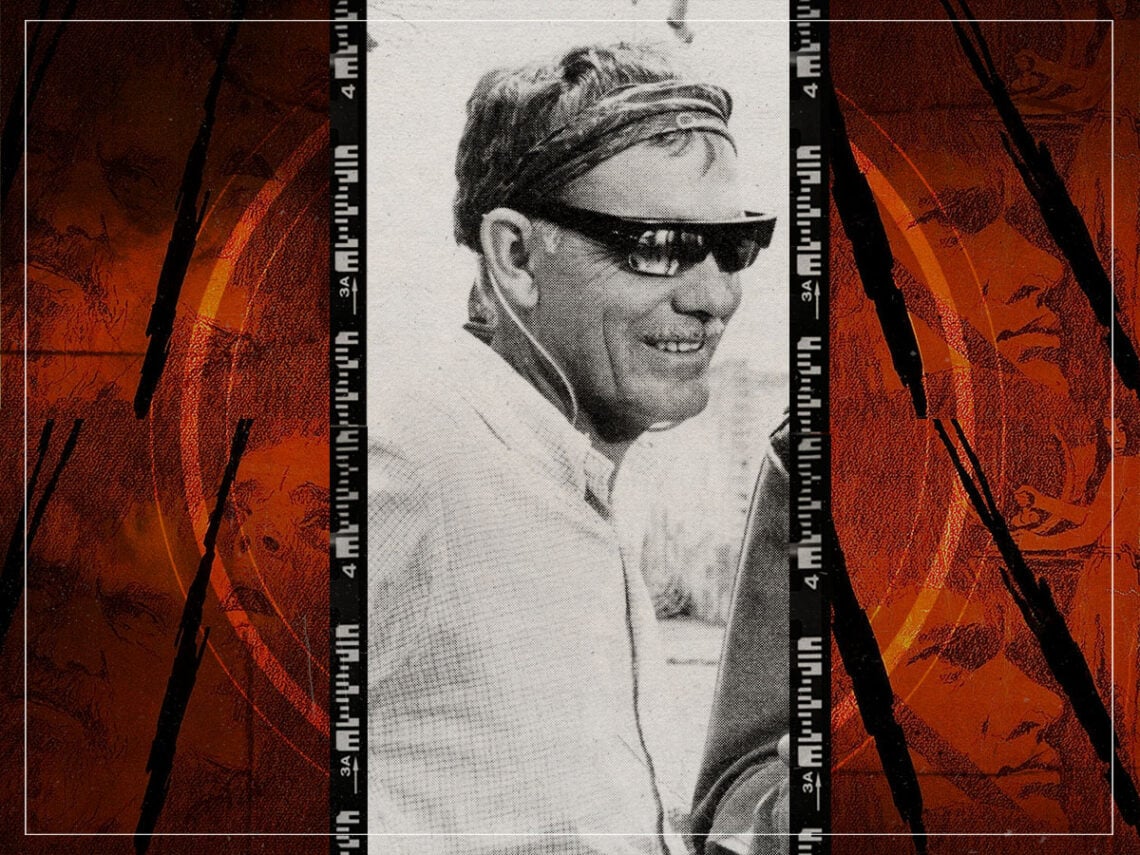
The director who called Sam Peckinpah overrated: “I think he was a very limited writer”

When we talk about westerns and their evolution in film history, names like John Ford and Sergio Leone immediately pop up in the conversation. However, American auteur Sam Peckinpah also deserves to be mentioned in the same breath for the way in which he revitalised the fading frameworks of the genre.
Through works like The Wild Bunch and Pat Garrett and Billy the Kid, Peckinpah built a new vocabulary for westerns, which had a huge impact on future generations of filmmakers, including Quentin Tarantino, who was mesmerised by Peckinpah’s ultraviolent approach. However, not everyone was impressed by the impact Peckinpah had on the genre and one notable member of that group was fellow director Walter Hill.
Hill was a renowned American film director, screenwriter, and producer who was also celebrated for his distinctive techniques, which revitalised the American western. His career began in the late 1960s, and he has since made significant contributions to both film and television projects about guys in cowboy hats.
Hill’s initial foray into the film industry was as a screenwriter. After a botched attempt to become a comic book artist, he built his name for his work on films like 1972’s The Getaway, an action thriller based on Jim Thompson’s novel. Sam Peckinpah directed the film, which starred Steve McQueen and Ali MacGraw. This collaboration marked a significant milestone in Hill’s early career and contributed to Peckinpah’s esteemed filmography.
“He wanted to be on the fringe, bristling against the Hollywood establishment.”
walter hill
Transitioning to directing, his debut film was 1975’s Hard Times, featuring Charles Bronson as a drifter participating in street fights during the Great Depression. This film showcased Hill’s talent for crafting gritty, character-driven narratives. He stated, “Every film I’ve done has been a western,” emphasising his focus on stripped-down moral universes where characters confront challenges beyond societal norms.
In a conversation with BFI, Hill thinks back on his professional relationship with writer and director Sam Peckinpah. And not without some malice, saying, “I don’t want to be disrespectful to Sam in any way, but I think he was a very limited writer. I don’t think he really wrote anything that wasn’t a western. He was mainly a television writer. He wrote when television was making probably the least demands on the audience. I don’t think he was a distinguished sensibility until he was a director.”
Continuing the “not to be rude, but I’m about to say something very rude” tonality of his statement, he added, “Although he didn’t like to admit it, he had seen a lot of European movies, and he was very well versed in Kurosawa. He was also very well-versed in the history of the western. Those things synthesised. If he was in one sense a very Hollywood guy, he was also a Hollywood outlaw. He wanted to be on the fringe, bristling against the Hollywood establishment.”
Despite some of his misgivings about his collaborator, Hill has expressed admiration for Peckinpah’s directorial prowess. In a six-minute feature titled Slow Motion: Walter Hill on Sam Peckinpah, Hill paid tribute to Peckinpah, sharing insights into their working relationship on The Getaway and discussing Peckinpah’s influence on his own work.
Whatever Miller may have thought of Peckinpah’s abilities as a writer, Hill’s respect for Peckinpah is also evident in his directorial choices. In 1987’s Extreme Prejudice, Hill acknowledged that he “tipped [his] hat to Sam a couple of times,” indicating deliberate stylistic nods to Peckinpah’s signature techniques. Whatever they may have thought about each other behind closed doors (or in very public interviews), Peckinpah’s influence is discernible in Hill’s subsequent works, underscoring the enduring impact of their partnership.
