


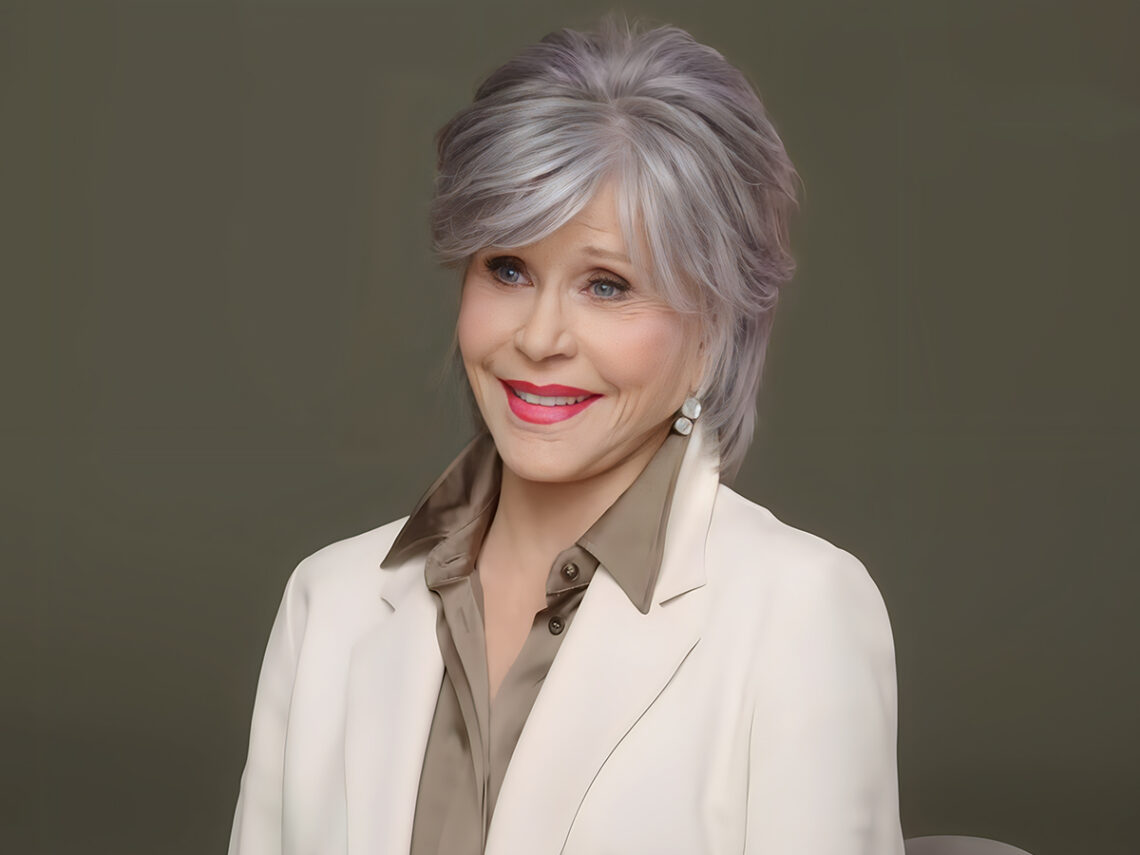
The one role Jane Fonda hated playing: “I swore I’d never make another film in my life”

Being the child of a Hollywood icon is often a double-edged sword. On the one hand, you have a potential path into the movies that millions of others would kill for simply because of your family name. On the other hand, though, the worst case scenario is you’ll be immediately dismissed as a nepo baby, and the best case is you’ll need to struggle for years to escape the shadow of your acclaimed parentage.
Jane Fonda, for example, has admitted she was burdened by the looming presence of her father, Henry Fonda, in her early career. In fact, one of her first acting experiences was so awful that she swore she’d never subject herself to making another movie.
In her late teens and early 20s, Fonda was like many young people scrambling around in the dark as she tried to figure out what she wanted to do with her life. She attended Vassar College, the liberal arts school in New York City, for two years but despised it passionately. After leaving the school, she convinced her father to allow her to relocate to Paris for six months to study painting, but later admitted she was simply feeling lost and thought a change of scenery might help her find her purpose.
When Fonda returned home, she took piano lessons, enrolled at the Art Students League, and tried to learn French and Italian, but she wound up quitting each misguided hobby. By this point, she was 21 and was beginning to panic that she’d never find her calling—but then she stayed with her father in Malibu and met his neighbour: Lee Strasberg, the famous method acting pioneer and owner of the Actor’s Studio.
Until this point, Fonda’s only acting experience was a charity performance of The Country Girl in Omaha, Nebraska, when she was 16. She was on stage next to her father, but he confessed to the Chicago Tribune, “It was a very small part, and she couldn’t have cared less about acting. My sister suggested her, and Jane just did it for a lark.”
Suddenly, though, Strasberg saw something in Fonda’s eyes that spoke to him—an “absolute panic” that was fascinating. Through the famed acting teacher, she realised she’d been reticent to admit to herself that she loved acting because she was scared she wouldn’t be good at it, thereby failing to live up to her family name. After two months of learning under Strasberg, though, she admitted, “My life changed”.
Before she knew it, Fonda landed her first movie role as the romantic lead in 1960’s Tall Story next to Psycho’s Anthony Perkins. The film’s director was Joshua Logan, her godfather, and he was convinced she had star potential. Unfortunately, she still didn’t believe it herself, and all her insecurities reared their ugly heads during the production. “I really hated it,” Fonda admitted. “I played a college girl in love with a baseball hero, and I looked like a chipmunk. I lost whatever self-confidence I’d recently learned.”
Fonda revealed that working in Hollywood just made her sad, as everywhere she looked, it felt like she was seeing women more beautiful than her. “That depressed me,” she confessed. “I was unhappy and scared. I spent a whole weekend crying in my apartment and I swore I’d never make another film in my life.”
In truth, Fonda’s unpleasant experience must have been compounded by the imposter syndrome she was feeling. Speaking about being cast by Logan, she scoffed, “I know he only gave me the part because of my father.” At the time, she also admitted to the Yonkers Herald-Statesmen, “Of course, I’m very grateful to Mr Logan. Because of my name, I’m getting the kind of role it would ordinarily take years to earn.”
Ultimately, it would take years for Fonda to feel worthy of the opportunities she had been given because of her father’s fame—and the only way she could achieve that change in her own perception was to keep making movies.
